


Odoo Inventory Management: A Complete Guide for Modern Businesses
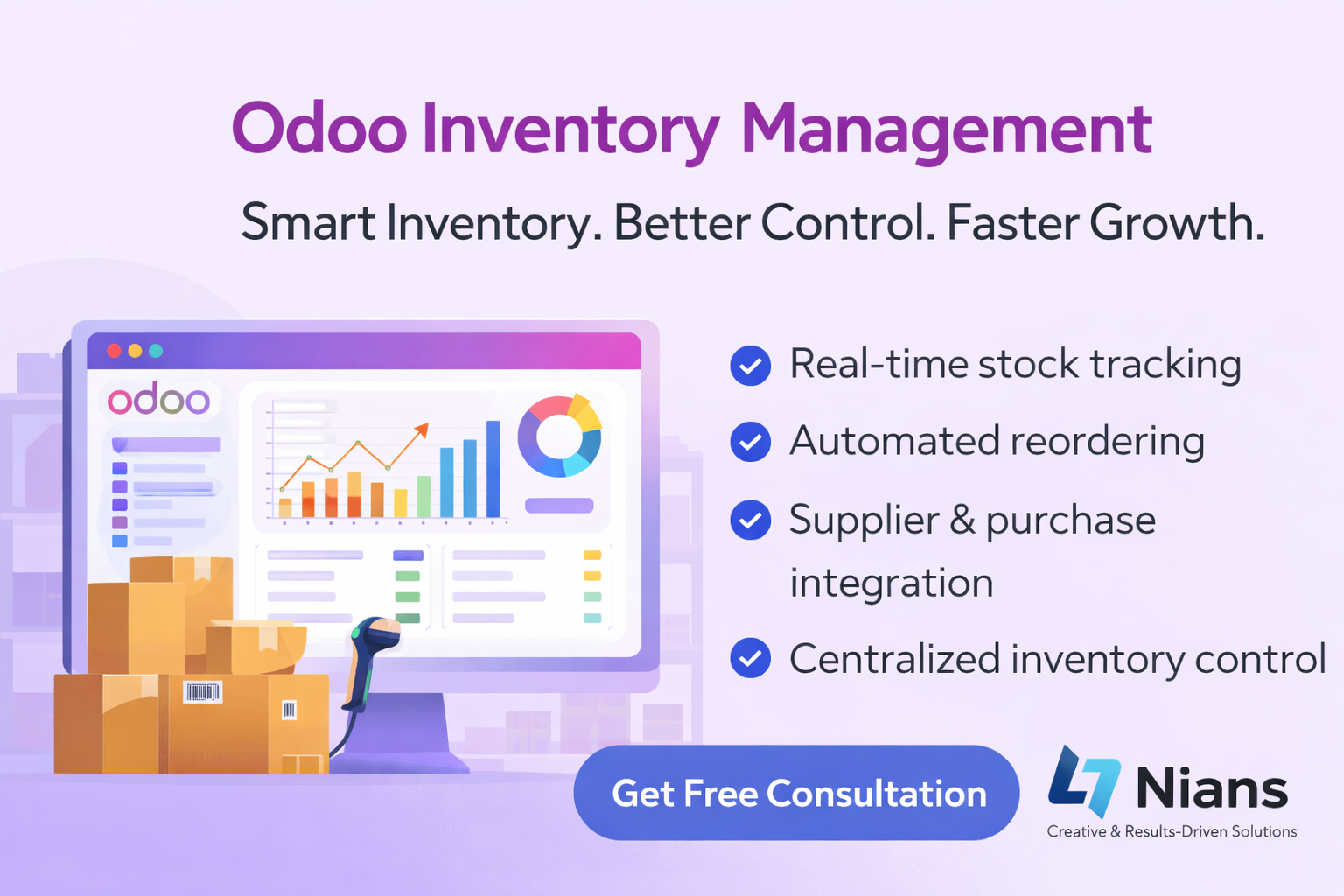
In today’s fast-paced business environment, managing inventory efficiently is crucial for success. Whether you run a retail store, manufacturing unit, or eCommerce business, having control over stock levels can directly impact profitability and customer satisfaction. This is where odoo inventory management comes into play, offering a smart and automated solution to streamline operations.
What is Odoo Inventory Management?
Odoo inventory management is a powerful module within the Odoo ERP system designed to help businesses track, manage, and optimize their inventory in real time. It allows organizations to control stock movements, monitor warehouse operations, and integrate inventory with other business processes like sales, purchasing, and accounting.
Unlike traditional inventory systems, Odoo provides a centralized platform where all inventory-related data is updated automatically, reducing manual effort and errors.
Why Inventory Management Matters
Inventory is often one of the largest assets a business holds. Poor inventory management can lead to stock shortages, overstocking, delayed deliveries, and financial losses.
With odoo inventory management, businesses can:
-
Maintain optimal stock levels
-
Reduce operational costs
-
Improve order fulfillment
-
Enhance customer satisfaction
-
Make data-driven decisions
Key Features of Odoo Inventory Management
1. Real-Time Inventory Tracking
One of the biggest advantages of Odoo is its real-time tracking capability. Every stock movement—whether incoming or outgoing—is updated instantly. This ensures accurate inventory data at all times and eliminates the need for manual updates.
2. Advanced Warehouse Management
Odoo supports multi-warehouse operations, allowing businesses to manage multiple locations from a single dashboard. It also enables:
-
Picking, packing, and shipping processes
-
Internal transfers between warehouses
-
Custom warehouse routes and workflows
These features make it suitable for both small businesses and large enterprises.
3. Automated Replenishment
With smart replenishment strategies like minimum stock rules and automated purchase orders, Odoo ensures that businesses never run out of stock.
This automation reduces human intervention and improves efficiency in procurement.
4. Barcode and Automation Support
Odoo integrates barcode scanning for faster warehouse operations. This feature helps in:
-
Quick product identification
-
Faster stock updates
-
Reduced manual errors
It significantly improves productivity in warehouses.
5. Multi-Warehouse and Multi-Location Management
Businesses can manage multiple warehouses and track inventory at different locations. This is especially useful for companies with complex supply chains or distribution networks.
6. Detailed Reporting and Analytics
Odoo provides comprehensive reports on stock levels, inventory valuation, and product movements. These insights help businesses make better decisions and forecast demand accurately.
Benefits of Using Odoo Inventory Management
Improved Efficiency
Automation of routine tasks such as stock updates and order processing saves time and reduces operational workload.
Better Accuracy
Real-time updates and barcode scanning minimize errors, ensuring accurate inventory data.
Scalability
Odoo is highly scalable, making it suitable for businesses of all sizes. As your business grows, the system can adapt to increasing complexity.
Seamless Integration
Odoo integrates inventory with other modules like sales, purchase, and accounting, creating a unified business ecosystem.
Cost Reduction
By optimizing stock levels and reducing waste, businesses can significantly cut costs and improve profitability.
How Odoo Inventory Management Works
The workflow in odoo inventory management is simple yet powerful:
-
Products are added to the system
-
Stock is received from suppliers
-
Items are stored in designated locations
-
Orders trigger stock movement
-
Inventory updates automatically in real time
-
Reports reflect accurate stock data
This automated flow ensures smooth operations and better control over inventory.
Use Cases of Odoo Inventory Management
Odoo is widely used across various industries, including:
-
Retail businesses for stock tracking
-
Manufacturing for raw material management
-
eCommerce for order fulfillment
-
Distribution companies for warehouse operations
Its flexibility makes it adaptable to different business needs.
Enhance Your Inventory with Odoo Solutions
To fully leverage the benefits of Odoo, businesses often integrate it with purchasing solutions. This integration helps streamline purchasing workflows, ensuring better coordination between inventory and procurement.
Conclusion
In conclusion, odoo inventory management is a robust and flexible solution that helps businesses gain complete control over their inventory. With features like real-time tracking, automation, and seamless integration, it eliminates the challenges associated with traditional inventory systems.
By adopting Odoo, businesses can improve efficiency, reduce costs, and deliver better customer experiences. Whether you are a small business or a large enterprise, investing in a smart inventory management system like Odoo can be a game-changer for your operations.
If you're aiming for growth and operational excellence, Odoo inventory management is definitely worth considering.

 Arabic
 Français
 Español
 Português
 Deutsch
 Türkçe
 Dutch
Dutch
 Italiano
 Russian
 Romaian