


Software Modernization Services: A Complete Guide to Upgrading Legacy Systems
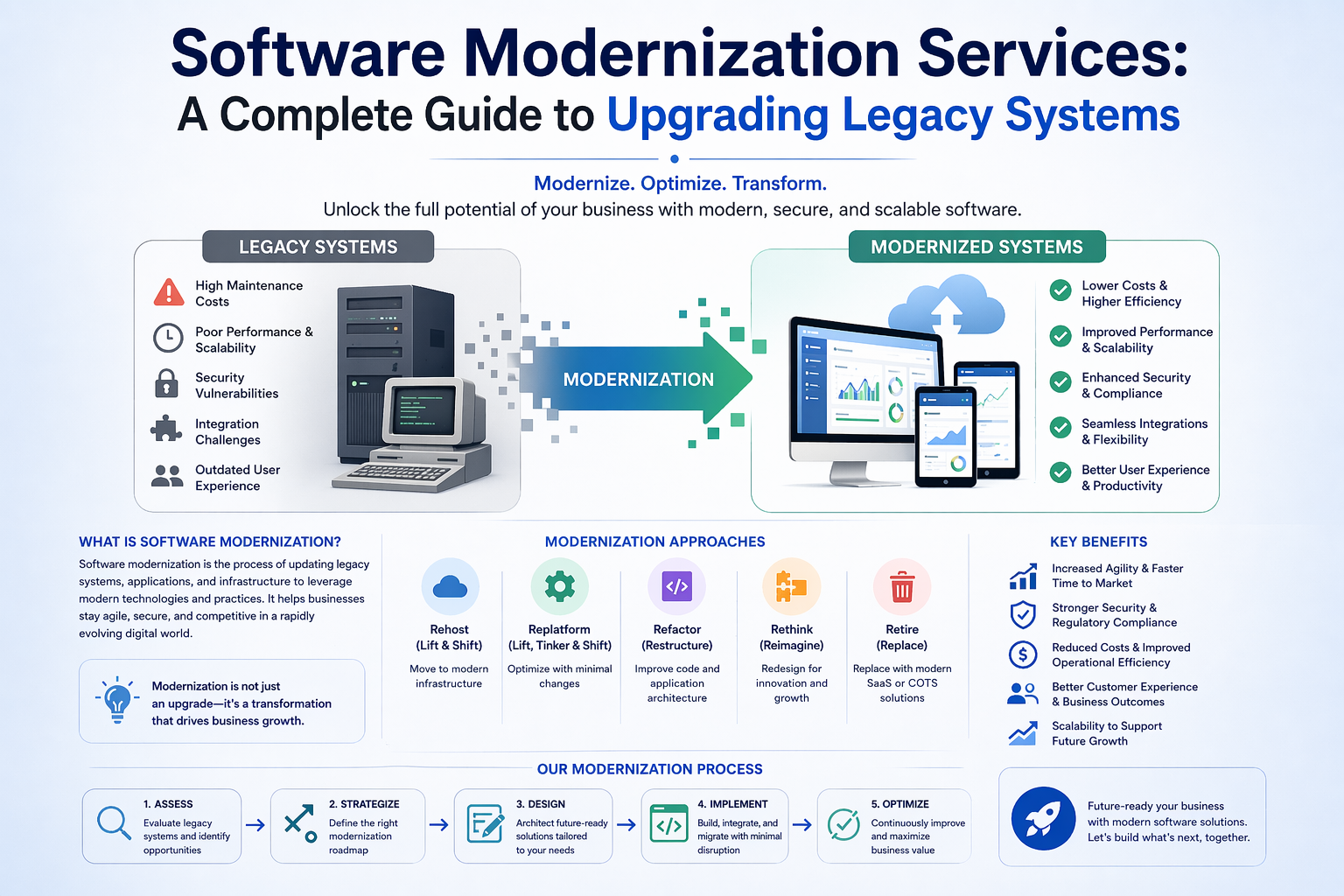
In today’s fast-paced digital world, businesses must constantly evolve to stay competitive. However, many organizations still rely on outdated legacy systems that limit growth, reduce efficiency, and increase maintenance costs. This is where Software Modernization Services come into play.
Software modernization is the process of updating and transforming legacy applications into modern, scalable, and efficient systems. By adopting new technologies, businesses can improve performance, enhance security, and deliver better user experiences.
What Are Software Modernization Services?
Software Modernization Services involve upgrading existing applications to align with current technology standards and business needs. Instead of completely replacing old systems, modernization focuses on improving and optimizing them.
This process can include:
- Migrating applications to the cloud
- Updating outdated code and frameworks
- Improving system architecture
- Enhancing user interfaces
- Integrating modern tools and technologies
By modernizing their software, businesses can extend the life of their applications while improving functionality.
Why Businesses Need Software Modernization
Legacy systems often create challenges that hinder business growth. These systems may be slow, difficult to maintain, and incompatible with modern technologies.
Software Modernization Services help businesses overcome these challenges by:
- Reducing operational costs
- Improving system performance
- Enhancing security and compliance
- Enabling integration with modern tools
- Supporting scalability and future growth
Modernized systems allow businesses to respond quickly to market changes and customer demands.
Key Approaches to Software Modernization
There are several approaches to modernizing software, depending on the business requirements and system complexity.
Rehosting (Lift and Shift)
This involves moving applications to a cloud environment without making major changes. It is a quick and cost-effective way to improve scalability.
Refactoring
Refactoring focuses on improving the internal structure of the code without changing its functionality. This enhances performance and maintainability.
Replatforming
This approach involves making minor changes to optimize the application for a new platform while retaining its core functionality.
Rebuilding
In some cases, applications need to be partially rebuilt using modern technologies to improve performance and user experience.
Replacing
When a system is too outdated, it may need to be replaced entirely with a new solution.
Benefits of Software Modernization Services
Improved Performance
Modern applications are faster, more responsive, and capable of handling higher workloads.
Enhanced Security
Outdated systems are more vulnerable to cyber threats. Modernization ensures better security measures and compliance with industry standards.
Better User Experience
Modern interfaces and improved functionality provide a seamless experience for users.
Cost Efficiency
Maintaining legacy systems can be expensive. Modernization reduces maintenance costs and improves operational efficiency.
Scalability and Flexibility
Modern systems can easily scale to accommodate business growth and changing requirements.
Role of Emerging Technologies
Modernization is not just about upgrading systems it’s about adopting new technologies that enhance business capabilities.
Technologies such as Artificial Intelligence (AI), Machine Learning (ML), and cloud computing play a significant role in modern software solutions. These technologies enable businesses to automate processes, analyze data, and deliver personalized experiences.
Additionally, integrating modern systems with CRM Software Development solutions can improve customer management and streamline operations. Businesses offering Lending Software Development services can also benefit from modernization by improving loan processing systems and enhancing customer experience.
Challenges in Software Modernization
While modernization offers numerous benefits, it also comes with challenges.
High Initial Investment
Modernizing software requires investment in technology, tools, and skilled professionals.
Data Migration Risks
Transferring data from legacy systems to modern platforms must be handled carefully to avoid data loss or corruption.
Downtime and Disruption
Upgrading systems may cause temporary disruptions in business operations.
Skill Gaps
Modern technologies require skilled developers and IT professionals, which can be a challenge for some organizations.
Despite these challenges, the long-term benefits of modernization far outweigh the risks.
Best Practices for Successful Software Modernization
To ensure a successful modernization process, businesses should follow these best practices:
- Conduct a thorough assessment of existing systems
- Define clear goals and objectives
- Choose the right modernization approach
- Prioritize security and data protection
- Work with experienced development partners
- Continuously monitor and optimize systems
A strategic approach helps businesses achieve better results and avoid common pitfalls.
Why Choose WebAtlasTech for Software Modernization Services
Selecting the right partner is crucial for successful software modernization. WebAtlasTech offers expert Software Modernization Services tailored to meet the unique needs of businesses.
Their team focuses on upgrading legacy systems with modern technologies, ensuring improved performance, security, and scalability. From planning to execution, they provide end-to-end solutions that support digital transformation.
If you are looking to modernize your software and stay ahead in the competitive market, choosing an experienced partner can make all the difference.
Conclusion
Software modernization is no longer optional it is essential for businesses that want to remain competitive in the digital era. Outdated systems can limit growth, reduce efficiency, and increase costs.
By investing in Software Modernization Services, businesses can transform their legacy systems into powerful, future-ready solutions. This not only improves performance but also enhances customer experience and drives long-term success.

 English
 Arabic
 Français
 Español
 Português
 Deutsch
 Dutch
Dutch
 Italiano
 Russian
 Romaian