


Understanding Indoor Rollator Let's Go: Features, Benefits, and Home Use Tips
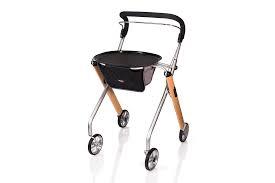
Independence at home is something most people take for granted until the moment it becomes uncertain. For older adults and individuals managing mobility challenges, the home is both the most familiar environment and, often, the most demanding one. Narrow hallways, compact bathrooms, smooth flooring, and the need to carry items between rooms all present real challenges for someone whose balance or stamina has changed. A standard outdoor rollator can feel oversized and cumbersome in these conditions — and that mismatch between device and environment is exactly the problem the Indoor Rollator Let's Go was designed to solve.
This guide offers a thorough look at the Let's Go — what it is, what distinguishes it from conventional rollators, who benefits most from using it, and how to integrate it into daily home life safely and effectively.
What the Indoor Rollator Let's Go Is Designed to Do
The Let's Go is not simply a smaller version of a standard rollator. It is a purpose-built indoor mobility aid created specifically for the demands of home environments — rooms with limited space, interior doorways with standard clearances, and the kind of close-quarters navigation that makes larger devices frustrating to use.
Its defining qualities are a compact frame, a slim profile suited to interior doorways and tight corners, indoor-specific wheels that glide quietly on hard flooring without marking or catching, and a design aesthetic that fits naturally within a home setting rather than appearing clinical or institutional. These features, taken together, make it a device that people are genuinely willing to use every day — which is the most important criterion any mobility aid must meet.
Key Features of the Indoor Rollator Let's Go
Understanding what the Let's Go offers in practical terms helps in assessing whether it suits a particular user's needs and living environment.
Frame and dimensions. The aluminum frame is lightweight without sacrificing structural stability. Its narrow width is designed to pass through standard interior doorways — typically around 28 to 32 inches — without requiring the user to maneuver carefully or compress the walker to fit through. This clearance matters enormously in a home where the user moves between rooms many times each day.
Wheels for indoor surfaces. The Let's Go uses smaller, smooth-rolling wheels optimized for hard floors — wood, tile, laminate, and vinyl. Unlike outdoor rollators with larger treads designed for uneven ground, these wheels roll quietly and evenly on interior surfaces without catching on transitions between flooring types or leaving scuff marks. The quiet operation is a subtle but appreciated quality, particularly in shared living situations.
Integrated tray and storage. One of the most practically significant features of the Let's Go is its built-in tray — a flat surface positioned at approximately waist height that allows the user to carry items such as a cup of tea, a plate, medication, or a phone while walking. For anyone managing mobility with a walker, the inability to carry items from room to room is one of the most frustrating daily limitations. The tray directly addresses this, restoring a degree of domestic independence that a standard rollator without this feature cannot provide.
Seat for rest. Like other rollators, the Let's Go includes a fold-down seat, allowing the user to pause and rest wherever they are in the home without needing to find a chair. For users managing fatigue or reduced stamina, this feature is a meaningful contributor to safe, sustainable mobility throughout the day.
Design and finish. The Let's Go is available in warm, furniture-inspired finishes that suit residential interiors. The Let's Go Indoor Rollator in Beech offers a pale, natural wood-tone finish that complements lighter interiors and Scandinavian-influenced home styles, while the Let's Go Indoor Rollator in Walnut provides a richer, deeper tone that integrates naturally with more traditional or warm-toned living spaces. This attention to appearance is not superficial — a device that feels visually at home in its environment is one that users accept and use consistently, rather than one that becomes a source of self-consciousness or reluctance.
Who Benefits Most from a Lightweight Rollator for Home Mobility Support
The Let's Go is particularly well-suited to several groups of users whose mobility needs are centered primarily on the home environment.
Older adults aging in place who remain largely independent but need reliable walking support for stability and fatigue management will find the Let's Go integrates smoothly into their daily routines without requiring significant changes to how they move through their home. Its lightweight frame reduces the effort of maneuvering, and the tray feature makes daily tasks like preparing a simple meal or carrying a drink significantly more manageable.
Individuals recovering from surgery or illness who are primarily housebound during a recovery period benefit from the compact, indoor-specific design that allows them to move safely between rooms — to the bathroom, the kitchen, the living room — without feeling restricted to one part of the house.
People managing chronic conditions such as Parkinson's disease, multiple sclerosis, or heart failure, whose stamina and balance fluctuate through the day, benefit from the built-in seat that allows rest on demand and the stable frame that provides reliable support during both active movement and stationary tasks.
How to Use an Indoor Rollator Safely: Practical Guidance for Daily Home Use
Even a well-designed indoor rollator for small spaces requires some adjustment in how the user moves through their home, particularly in the first days of use.
Learning the brake system. The Let's Go features hand brakes on both handles, similar to a bicycle brake mechanism. The user squeezes to slow or stop, and in most models, pressing the brakes downward locks the wheels in place when sitting. Before using the rollator for the first time, practice engaging and releasing the brakes while standing still, so the action becomes automatic before it is needed during movement.
Using the tray safely. Items placed on the tray should be stable and not so heavy as to shift the center of gravity of the rollator during walking. Avoid placing uncovered liquids that could spill and create a slip hazard on the floor. The tray is most safely used for light, contained items — a covered cup, a folded cloth, a phone — rather than heavy loads or full dinner plates.
Navigating the home environment. Before using the rollator routinely, walk through the main paths of the home and note any thresholds, rugs, or transitions between flooring types that could interrupt smooth wheel movement. Low rugs in particular can catch wheel edges and should be removed or secured during the period when the rollator is in primary use. Furniture arrangements that allow clear, consistent paths between rooms reduce the need for tight maneuvering and support more confident daily movement.
Best Rollator for Elderly Home Assistance: Why Indoor-Specific Design Matters
A common question families face when supporting an older parent or loved one is whether a standard outdoor rollator will suffice indoors, or whether a dedicated indoor model is worth considering separately. The practical answer depends on how much time the person spends at home versus outdoors and what their primary mobility challenges are.
For users who are primarily homebound, spend most of their active time moving between rooms rather than outdoors, and live in a space with standard interior doorways and hard flooring, an indoor-specific rollator like the Let's Go is almost always the more appropriate and more comfortable choice. It is sized, wheeled, and designed for exactly these conditions in a way that a generalist outdoor rollator is not.
For users who move actively between indoor and outdoor environments each day, a combination approach — using the Let's Go at home and an outdoor rollator for external use — may be the most practical solution, particularly where the two environments present genuinely different demands.
Conclusion
The Indoor Rollator Let's Go brings together the features that matter most for home mobility — compact dimensions, smooth indoor wheels, an integrated carry tray, a built-in rest seat, and a design that belongs in a living space rather than a clinical corridor. For users whose daily independence depends on moving safely and comfortably through their own home, it addresses the specific demands of that environment with thoughtfulness and practicality.
The right mobility aid is the one that gets used — every day, without reluctance, and with genuine benefit. For many people navigating home mobility challenges, the Let's Go is exactly that.

 English
 Arabic
 Français
 Español
 Deutsch
 Türkçe
 Dutch
Dutch
 Italiano
 Russian
 Romaian