


How to Personalize Outreach Using Behavioral Signals from an Oncologist Email List?
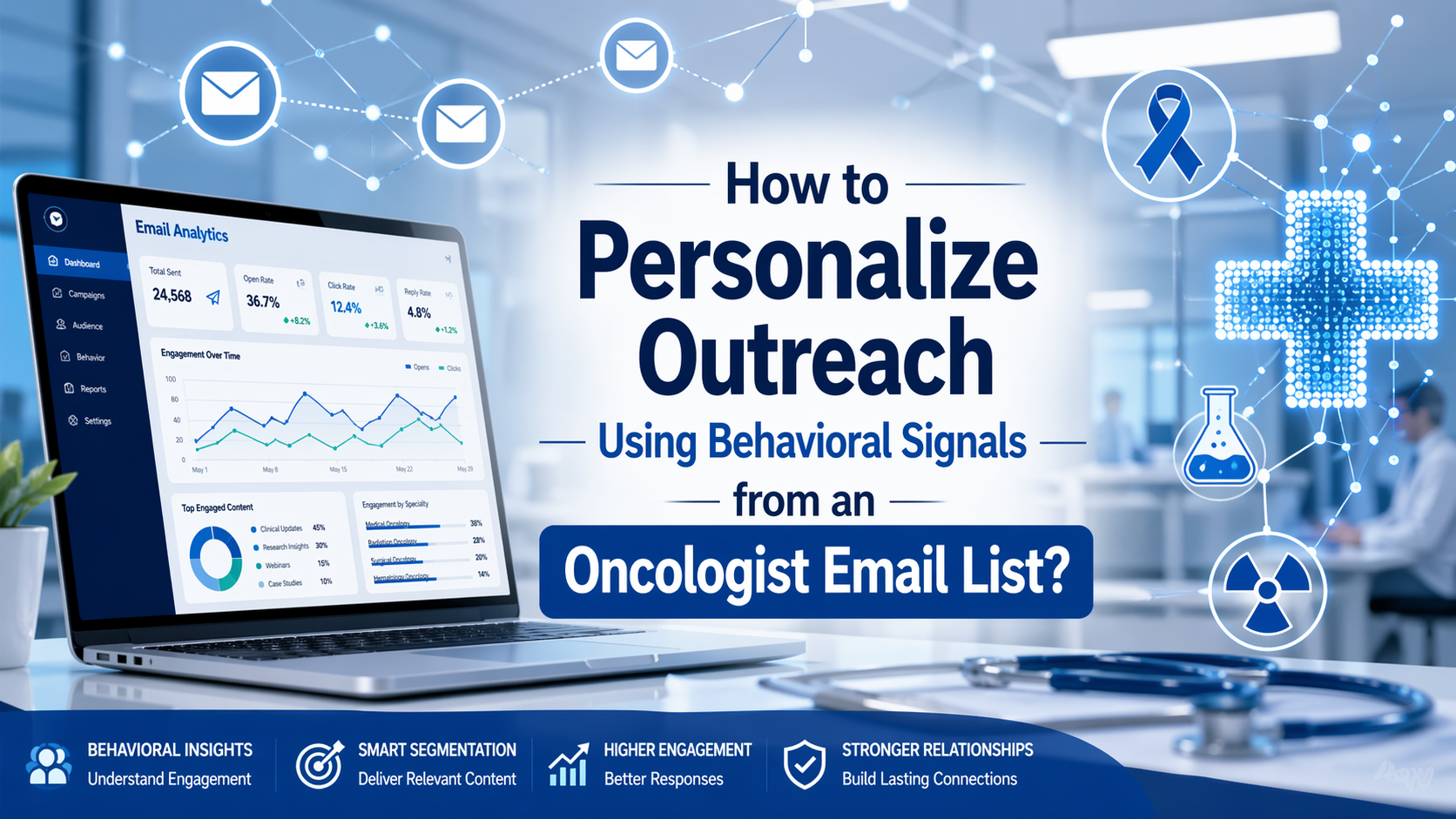
Precision matters in clinician communication. A well-segmented Oncologist Email List gives marketers access to verified cancer specialists—but real impact comes from how you use engagement data to tailor messages over time. Behavioral signals such as opens, clicks, downloads, webinar attendance, and response patterns can transform generic campaigns into highly relevant conversations.
This guide explains how to turn behavioral insights into practical personalization strategies that improve engagement, protect deliverability, and build lasting professional familiarity.
What Are Behavioral Signals in Email Marketing?
Behavioral signals are measurable actions recipients take when interacting with your communication, including:
- Email opens and read time
- Link clicks and content preferences
- Resource downloads
- Webinar registrations and attendance
- Replies and inquiries
- Unsubscribes or inactivity
These signals indicate interest areas, timing preferences, and content relevance.
Why Behavioral Personalization Works with Oncology Specialists
Oncologists are time-constrained and selective about the information they engage with. When messages reflect their demonstrated interests, they are more likely to:
- Open future emails
- Engage with educational content
- Register for events
- View product or research updates
Relevance reduces friction.
Step 1: Start with Clean Segmentation
Before using behavior, ensure the list is segmented by:
- Subspecialty (medical, radiation, surgical, pediatric, hematologic)
- Location and practice type
- Hospital vs. private clinic
- Academic affiliation
This baseline segmentation amplifies behavioral insights.
Step 2: Track Engagement at the Content Level
Go beyond opens. Track which topics attract clicks:
- Clinical education articles
- Device updates
- Research summaries
- Event invitations
Tag contacts based on interests inferred from clicks.
Step 3: Build Interest Profiles Over Time
Create dynamic tags such as:
- “Interested in pediatric oncology content”
- “Engages with surgical device information”
- “Prefers webinar invites”
- “Downloads research materials”
These profiles evolve with each campaign.
Step 4: Personalize Subject Lines and Email Copy
Use insights to adjust:
- Subject line themes
- Opening sentences
- Content blocks shown within the email
Even light personalization increases engagement.
Step 5: Trigger-Based Follow-Ups
Examples:
- Clicked a webinar link → send reminder
- Downloaded a guide → send related resource
- Opened multiple emails but no clicks → send concise summary format
Automation supports timely relevance.
Step 6: Optimize Send Times Based on Behavior
Analyze when specific segments open emails and schedule accordingly.
Step 7: Separate Active, Warm, and Inactive Segments
- Active: frequent opens/clicks → regular communication
- Warm: occasional engagement → curated content
- Inactive: re-engagement or reduced frequency
This protects sender reputation.
Step 8: Use Behavioral Data for Content Planning
If many oncologists engage with radiation therapy content, plan more around that theme.
Step 9: Personalize Event Invitations
Invite only those who previously engaged with similar topics or regions.
Step 10: Align Email with Field Outreach
Share engagement insights with sales teams for informed conversations.
Step 11: Measure Improvement Over Campaigns
Track how personalization changes:
- Open rates
- Click rates
- Conversions
- Unsubscribe rates
Common Mistakes to Avoid
- Over-personalizing with incorrect assumptions
- Ignoring inactive segments
- Sending the same content to all
- Not updating tags regularly
Long-Term Value of Behavioral Personalization
Over time, your database becomes smarter. Each interaction refines future communication, turning outreach into a learning system rather than a broadcast channel.
Conclusion
Behavioral signals turn a static database into a dynamic communication asset. By observing how oncology specialists interact with your messages, you can refine content, timing, and targeting for meaningful engagement. This approach improves performance, protects deliverability, and builds familiarity through relevance.
When applied consistently, these insights elevate the effectiveness of your Oncologist Email Mailing List from simple outreach to intelligent, personalized communication.

 English
 Arabic
 Français
 Español
 Deutsch
 Türkçe
 Dutch
Dutch
 Italiano
 Russian
 Romaian