1. What Is Polycystic Liver Disease?
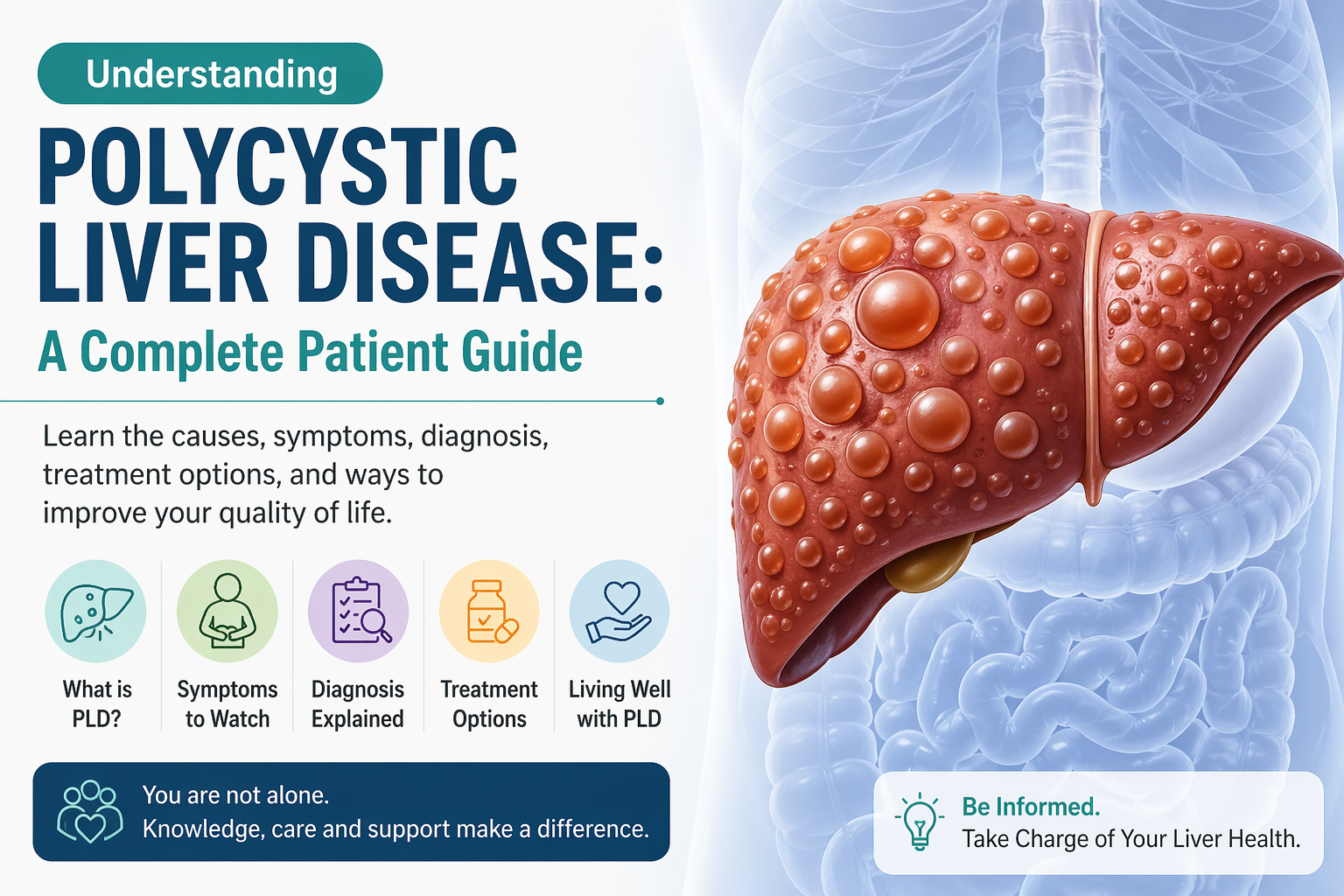
Polycystic Liver Disease is a condition where multiple cysts develop in the liver. These cysts are pockets filled with fluid. Some people have only a few cysts, while others may have many.
In most cases, the cysts are harmless and grow slowly. Many people don’t even know they have PLD until it is found during an ultrasound or CT scan for another reason.
PLD can occur alone or alongside another inherited condition called Autosomal Dominant Polycystic Kidney Disease (ADPKD), where cysts also grow in the kidneys.
2. How Common Is PLD?
PLD is considered uncommon, but it is not extremely rare. It is seen more often in women than men, especially after age 40.
Why women more often? Hormonal factors such as estrogen may play a role in cyst growth. This is why some women notice symptoms worsening after pregnancy or hormone therapy.
3. Causes of Polycystic Liver Disease
The most common cause of PLD is genetics. It often runs in families and is passed from one generation to the next.
Common Causes Include:
- Inherited gene changes
- Family history of PLD or kidney cyst disease
- Hormonal influences
- Natural cyst growth over time
If one parent has the gene, children may inherit the condition. However, severity can vary widely.
4. Types of PLD
Understanding the type of PLD helps doctors plan treatment.
a) Isolated Polycystic Liver Disease
Only the liver is affected.
b) PLD with Polycystic Kidney Disease
Both liver and kidneys develop cysts.
c) Mild vs Severe PLD
Some people have tiny cysts with no symptoms, while others have large cyst-filled livers causing pressure and pain.
5. Symptoms to Watch For
Many people with PLD have no symptoms for years. When symptoms happen, they are usually caused by the liver becoming enlarged.
Common Symptoms:
- Fullness in the abdomen
- Bloating
- Upper abdominal pain
- Shortness of breath
- Feeling full quickly after meals
- Back pain
- Nausea
- Visible abdominal swelling
- Fatigue
Imagine carrying a backpack that slowly gets heavier every month. That pressure is similar to what some patients feel when the liver enlarges.
Emergency Symptoms:
Seek urgent care if you have:
- Sudden severe pain
- Fever
- Jaundice (yellow eyes/skin)
- Vomiting
- Difficulty breathing
These may signal cyst infection, bleeding, or another complication.
6. How Doctors Diagnose PLD
Doctors usually diagnose PLD through imaging tests.
Common Tests Include:
Ultrasound: Often the first and simplest test.
CT Scan: Gives detailed images of cyst size and number.
MRI: Excellent for complex cases.
Blood Tests: Check liver function.
Family History Review: Important for inherited diseases.
Diagnosis is often straightforward once imaging is done.
7. Is PLD Dangerous?
In many cases, PLD is manageable and not life-threatening. The liver often continues to function well even when many cysts are present.
However, severe cases may cause complications such as:
- Pain and poor quality of life
- Infection in cysts
- Bleeding into cysts
- Compression of nearby organs
- Breathing difficulty
- Malnutrition from early fullness
- Rare liver failure
So, is it dangerous? It depends on how large the cyst burden becomes and how symptoms affect daily life.
8. Treatment Options for PLD
Treatment depends on symptoms, cyst size, and how much the condition affects your life.
a) Observation
If you have no symptoms, doctors may simply monitor you with scans.
b) Medicines
Some medicines may slow cyst growth in selected patients.
c) Aspiration and Sclerotherapy
Doctors drain a large cyst and inject a solution to reduce recurrence.
d) Minimally Invasive Procedures
Useful for troublesome cysts causing pressure.
The best treatment is personalized—not everyone needs surgery.
9. Role of Liver Surgery
When cysts are large or numerous, surgery may help.
Common Surgical Options:
Fenestration: Opening cyst walls so fluid drains.
Resection: Removing part of the liver with heavy cyst involvement.
Combined Procedures: Used in advanced cases.
The liver has a remarkable ability to regenerate. That’s one reason surgery can be successful in carefully selected patients.
Always choose an experienced hepatobiliary team or the best liver transplant surgeon in India for advanced decision-making and safe treatment planning.
10. When Is Liver Transplant Needed?
Most people with PLD never need a transplant. But in severe cases, transplant can be life-changing.
Transplant May Be Considered If:
- Massive enlarged liver causing severe symptoms
- Repeated failed surgeries
- Severe malnutrition
- Poor quality of life
- Rare liver failure or serious complications
A liver transplant replaces the diseased liver with a healthy donor liver.
India has advanced transplant centers with world-class care. Choosing the best liver transplant surgeon in India and an experienced transplant hospital can greatly improve outcomes.
11. Daily Life and Self-Care Tips
Living with PLD is not only about scans and hospital visits. Daily habits matter.
Helpful Tips:
- Maintain a healthy weight
- Exercise regularly
- Avoid smoking
- Limit alcohol
- Stay hydrated
- Keep follow-up appointments
- Report new pain or fever early
- Manage stress
Small steps every day can protect your long-term health.
12. Diet for Liver Health
No special “PLD cure diet” exists, but smart food choices support the liver and overall wellness.
Eat More Of:
- Fruits
- Vegetables
- Whole grains
- Lean proteins
- Nuts and seeds
- Plenty of water
Limit:
- Processed foods
- Excess salt
- Sugary drinks
- Fried foods
- Heavy alcohol use
Think of food as fuel for your body’s engine. Better fuel often means smoother performance.
13. Emotional Impact of PLD
Chronic conditions can affect more than the body. Anxiety, frustration, and fear are common—especially after diagnosis.
Ways to Cope:
- Learn about your condition
- Ask questions during appointments
- Join support groups
- Talk with family
- Seek counseling if needed
- Focus on what you can control
Remember, a diagnosis is information—not a sentence.
14. When to See a Specialist
You should consult a liver specialist if you have:
- Ongoing abdominal pain
- Rapid belly enlargement
- Trouble eating
- Fever with liver cysts
- Recurrent symptoms
- Family history of PLD
- Kidney cyst disease
- Questions about surgery or transplant
Early expert advice can prevent bigger problems later.
If symptoms are severe, consult a reputed center or the best liver transplant surgeon in india for a complete evaluation.
15. Final Thoughts
Polycystic Liver Disease can feel overwhelming at first, but many people manage it successfully. Some need only monitoring, others benefit from procedures or surgery, and a small number may require transplant care.
The most important step is staying informed and working with the right medical team. Listen to your body, attend follow-ups, and seek help when symptoms change. With modern treatment and expert guidance, PLD does not have to control your life.
FAQs
1. Can Polycystic Liver Disease turn into cancer?
PLD cysts are usually benign and do not become cancer. However, any unusual symptoms should be checked by a doctor.
2. Is Polycystic Liver Disease hereditary?
Yes, many cases are inherited and can run in families.
3. Can I live a normal life with PLD?
Yes, many people live normal lives, especially with regular monitoring and healthy habits.
4. Does every patient with PLD need surgery?
No. Surgery is only needed when symptoms become significant or complications develop.
5. How do I find the best liver transplant surgeon in india?
Look for experience, transplant success rates, hospital infrastructure, multidisciplinary care, and patient reviews.




 English
 Arabic
 Français
 Português
 Deutsch
 Türkçe
 Dutch
Dutch
 Italiano
 Russian
 Romaian