


What Is Scenario Testing in Software Testing?
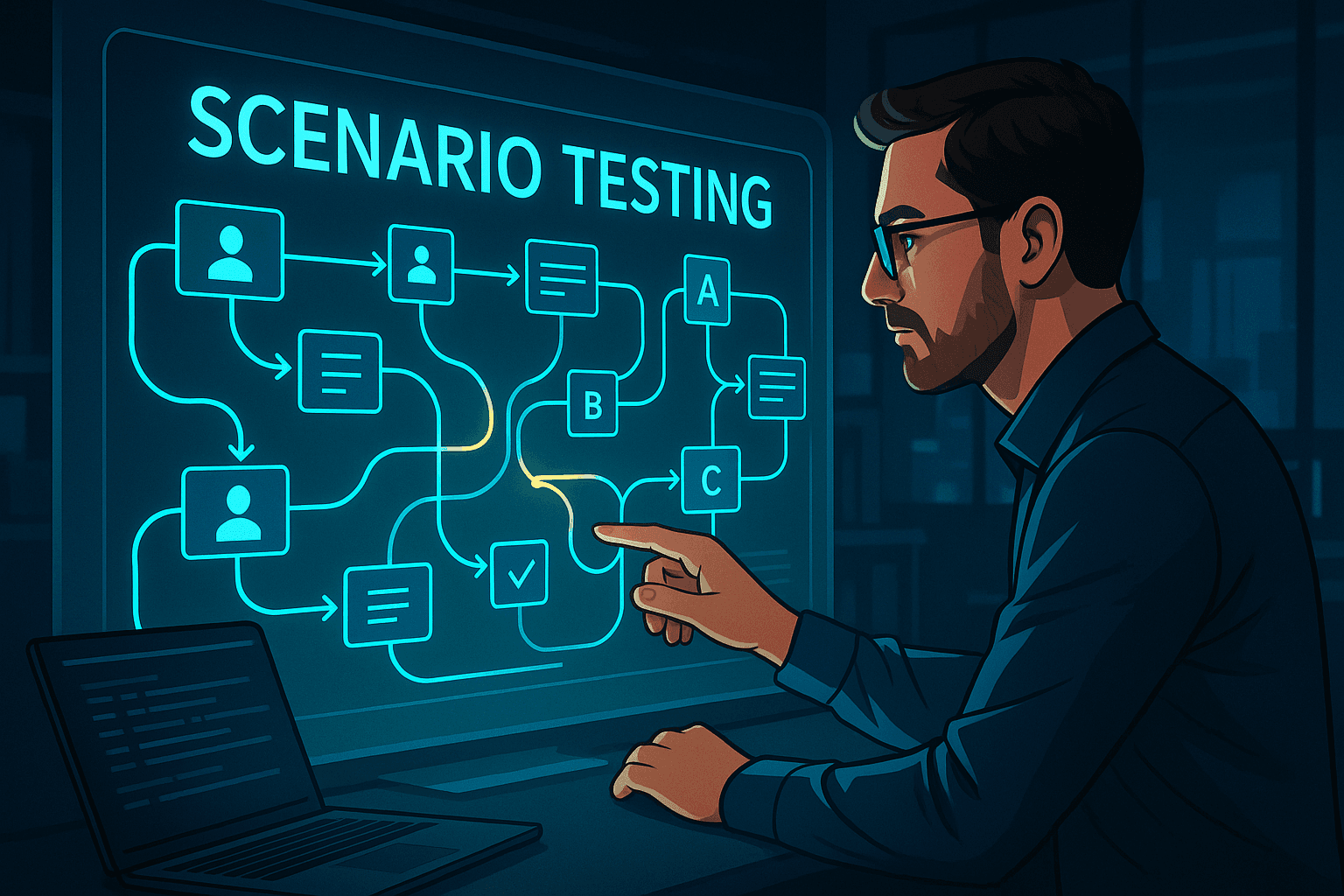
In modern software development, ensuring that applications work feature-by-feature isn’t enough—you also need to validate how they behave in real-world situations. That’s where scenario testing plays a critical role.
If you're exploring what is scenario testing , this guide breaks it down in a simple, practical way while showing how tools like Keploy help streamline the process.
What Is Scenario Testing?
Scenario testing is a software testing technique that evaluates an application using realistic user scenarios or workflows. Instead of testing individual functions, it focuses on end-to-end user journeys to ensure the system behaves correctly in real-world conditions.
In simple terms, testers create stories that mimic how users interact with the software, such as signing up, logging in, making a purchase, or updating a profile. These scenarios help uncover issues that might not appear in isolated test cases.
Why Scenario Testing Matters
Traditional testing methods often validate features in isolation. Scenario testing, however, ensures that complete business workflows function smoothly.
Here’s why it’s important:
- Detects real-world bugs that unit or functional testing might miss
- Validates complete user journeys across multiple components
- Improves user experience by simulating actual usage
- Helps identify integration issues between systems
It essentially bridges the gap between technical correctness and user satisfaction.
Key Characteristics of Scenario Testing
Scenario testing stands out because of its unique approach:
1. Real-World Focus
Test scenarios are based on actual user behavior, not just technical requirements.
2. End-to-End Coverage
It validates entire workflows, not just individual functions.
3. Story-Based Testing
Each scenario is like a user story, making it easier for stakeholders to understand.
4. Multi-Step Execution
Unlike test cases (which are step-by-step), scenarios cover multiple actions in sequence.
Example of Scenario Testing
Instead of testing login functionality alone, a scenario test would look like:
A user signs up → verifies email → logs in → updates profile → logs out
This ensures that the entire journey works seamlessly, not just individual steps.
Scenario Testing vs Test Cases
| Aspect | Scenario Testing | Test Cases |
|---|---|---|
| Scope | High-level workflows | Detailed steps |
| Focus | User journey | Specific functionality |
| Coverage | End-to-end | Individual components |
| Complexity | Broad and realistic | Precise and structured |
Scenario testing answers “What should be tested?”, while test cases answer “How to test it?”.
When to Use Scenario Testing
Scenario testing is most effective when:
- Testing complex workflows
- Validating business processes
- Performing system or acceptance testing
- Ensuring real-world usability
It’s especially useful in Agile and DevOps environments, where user experience is a top priority.
How Keploy Helps in Scenario Testing
Tools like Keploy make scenario testing faster and more efficient by:
- Automatically generating test cases from real user traffic
- Capturing real-world API interactions
- Enabling replay of complete user scenarios
- Reducing manual effort in test creation
This makes it easier for teams to test realistic scenarios without writing everything from scratch.
Best Practices for Scenario Testing
To get the most out of scenario testing:
- Focus on user-centric workflows
- Cover both positive and negative scenarios
- Prioritize high-impact business processes
- Keep scenarios realistic and meaningful
- Combine with automation tools like Keploy
Conclusion
Scenario testing is a powerful approach that ensures your software works not just in theory, but in real-world use. By focusing on complete user journeys, it helps teams deliver reliable, user-friendly applications.
If you're serious about improving software quality and user experience, understanding what is scenario testing is a great place to start—and using tools like Keploy can take your testing strategy to the next level.

 English
 Arabic
 Français
 Español
 Português
 Deutsch
 Türkçe
 Dutch
Dutch
 Russian
 Romaian