


Technologies Stack Used in Telemedicine Software Development
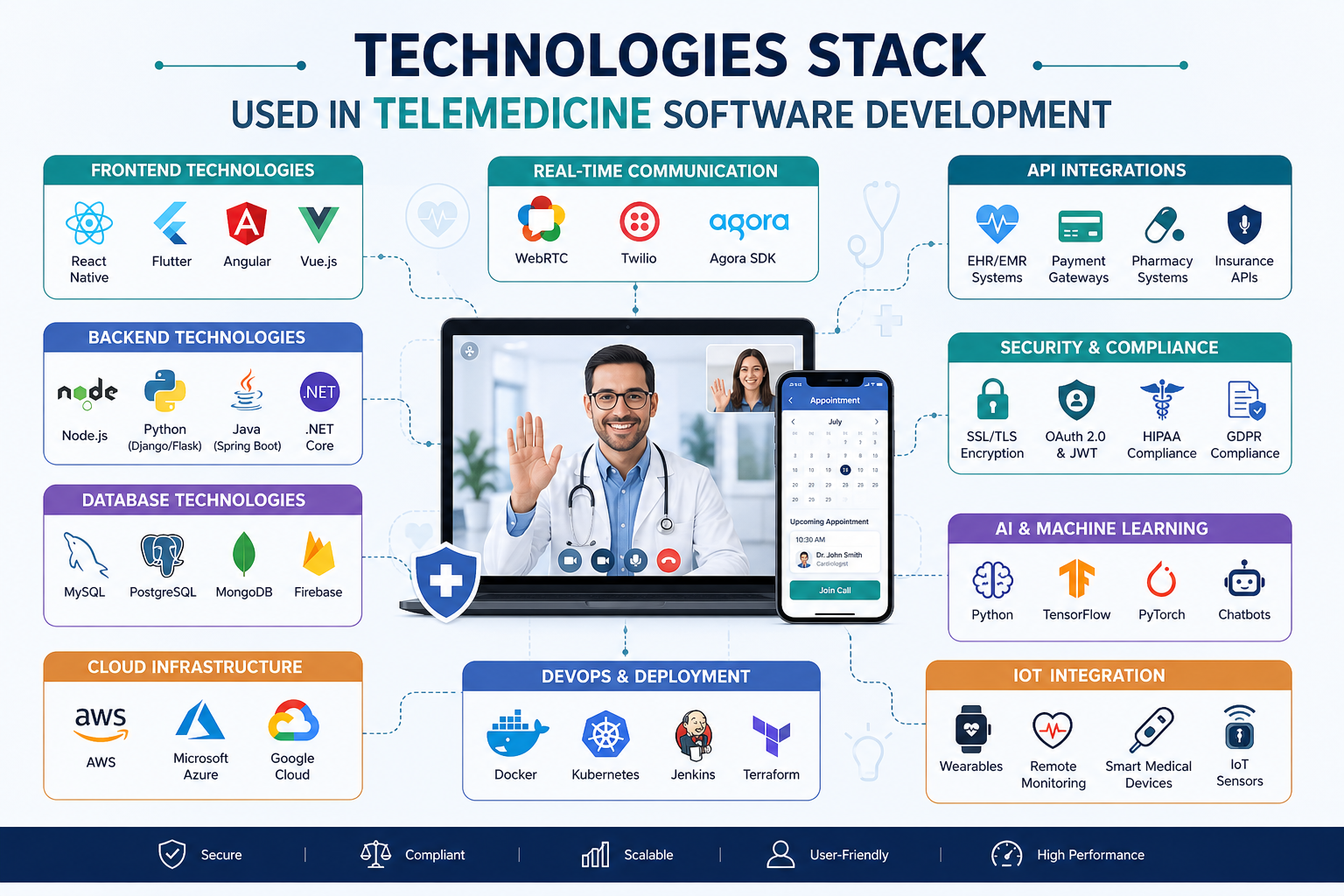
Telemedicine has become a cornerstone of modern healthcare, enabling patients and providers to connect remotely with speed, efficiency, and convenience. But behind every successful telemedicine platform lies a carefully chosen technology stack that ensures performance, security, scalability, and compliance.
If you’re planning to build a telemedicine solution, understanding the right technologies is critical. In this article, we’ll break down the complete technology stack used in telemedicine software development—from front-end to backend, integrations, and emerging innovations.
What is a Technology Stack in Telemedicine?
A technology stack refers to the combination of programming languages, frameworks, tools, and infrastructure used to build and run a software application. In telemedicine, the stack must support:
- Real-time communication
- Secure data handling
- High scalability
- Seamless integrations
- Regulatory compliance
1. Frontend Technologies (User Interface)
The frontend is what patients and healthcare providers interact with. It must be intuitive, responsive, and accessible.
Common Technologies:
- React Native – Cross-platform app development
- Flutter – Fast UI rendering and smooth performance
- Swift (iOS) and Kotlin (Android) – Native app development
- Angular / React.js / Vue.js – Web-based telemedicine platforms
Key Features Supported:
- User dashboards
- Appointment scheduling
- Video consultation interface
- Chat and messaging UI
A well-designed frontend improves patient engagement and usability.
2. Backend Technologies (Server-Side Development)
The backend is the backbone of telemedicine software development services. It handles business logic, data processing, and integrations.
Popular Backend Technologies:
- Node.js – Fast and scalable for real-time apps
- Python (Django / Flask) – Ideal for AI and data-driven apps
- Java (Spring Boot) – Enterprise-grade performance
- .NET Core – Secure and robust backend solutions
Responsibilities:
- User authentication
- Data storage and processing
- API management
- Real-time communication handling
3. Real-Time Communication Technologies
Video and audio consultations are the core of telemedicine platforms.
Technologies Used:
- WebRTC (Web Real-Time Communication) – Enables live video/audio calls
- Twilio API – Pre-built communication solutions
- Agora SDK – High-quality video streaming
Features:
- HD video conferencing
- Screen sharing
- Low latency communication
- Multi-party consultations
4. Cloud Infrastructure
Cloud computing ensures scalability, flexibility, and secure data storage.
Popular Cloud Platforms:
- Amazon Web Services (AWS)
- Microsoft Azure
- Google Cloud Platform (GCP)
Benefits:
- On-demand scalability
- Secure data storage
- High availability
- Disaster recovery
Cloud infrastructure is essential for handling large volumes of patient data.
5. Database Technologies
Telemedicine apps manage sensitive and complex healthcare data.
Common Databases:
- MySQL / PostgreSQL – Structured data
- MongoDB – Flexible and scalable NoSQL database
- Firebase Realtime Database – Real-time data syncing
Data Stored:
- Patient records
- Appointment history
- Medical reports
- Communication logs
6. Security and Compliance Technologies
Security is non-negotiable in healthcare software development.
Key Technologies & Practices:
- SSL/TLS encryption
- OAuth 2.0 & JWT authentication
- HIPAA-compliant cloud services
- End-to-end encryption
Compliance Standards:
- HIPAA (USA)
- GDPR (Europe)
- HL7/FHIR (interoperability)
These ensure patient data privacy and regulatory compliance.
7. API Integrations
APIs allow telemedicine platforms to connect with external systems.
Common Integrations:
- Electronic Health Records (EHR/EMR)
- Payment gateways (Stripe, PayPal)
- Pharmacy systems for e-prescriptions
- Insurance verification systems
APIs enable seamless data exchange and improved functionality.
8. Artificial Intelligence and Machine Learning
AI is transforming telemedicine by adding intelligence and automation.
Use Cases:
- Symptom checkers
- Predictive analytics
- Chatbots for patient support
- Image recognition for diagnostics
Technologies:
- Python
- TensorFlow
- PyTorch
AI enhances decision-making and patient care.
9. Internet of Things (IoT) Integration
IoT devices are increasingly integrated into telemedicine platforms.
Examples:
- Wearable health trackers
- Smart medical devices
- Remote monitoring systems
Benefits:
- Real-time health tracking
- Continuous patient monitoring
- Improved preventive care
10. DevOps and Deployment Tools
Efficient deployment and maintenance are crucial for telemedicine apps.
Tools Used:
- Docker & Kubernetes – Containerization and orchestration
- Jenkins / GitHub Actions – CI/CD pipelines
- Terraform – Infrastructure as code
Benefits:
- Faster deployment
- Continuous updates
- Improved system reliability
11. Analytics and Monitoring Tools
Tracking performance and user behavior helps improve the platform.
Tools:
- Google Analytics
- Mixpanel
- New Relic
Insights:
- User engagement
- App performance
- System health
12. Emerging Technologies in Telemedicine
Telemedicine is evolving rapidly with new technologies.
Innovations:
- Blockchain – Secure data sharing
- AR/VR – Virtual consultations and training
- 5G – Faster and more reliable connectivity
- Edge Computing – Real-time data processing
These technologies are shaping the future of telemedicine software.
How to Choose the Right Technology Stack
When selecting a tech stack for telemedicine software development, consider:
- Project requirements and complexity
- Target audience and platforms
- Budget and timeline
- Scalability needs
- Security and compliance requirements
Choosing the right stack ensures long-term success and sustainability.
Conclusion
The success of a telemedicine platform depends heavily on its technology stack. From frontend frameworks and backend systems to AI, cloud infrastructure, and security technologies, each component plays a vital role in delivering a seamless and secure healthcare experience.
As telemedicine continues to grow, leveraging the right technologies will help businesses stay competitive and provide high-quality care.

 Arabic
 Français
 Español
 Português
 Deutsch
 Türkçe
 Dutch
Dutch
 Italiano
 Russian
 Romaian