


Software Testing Strategies: A Complete Guide
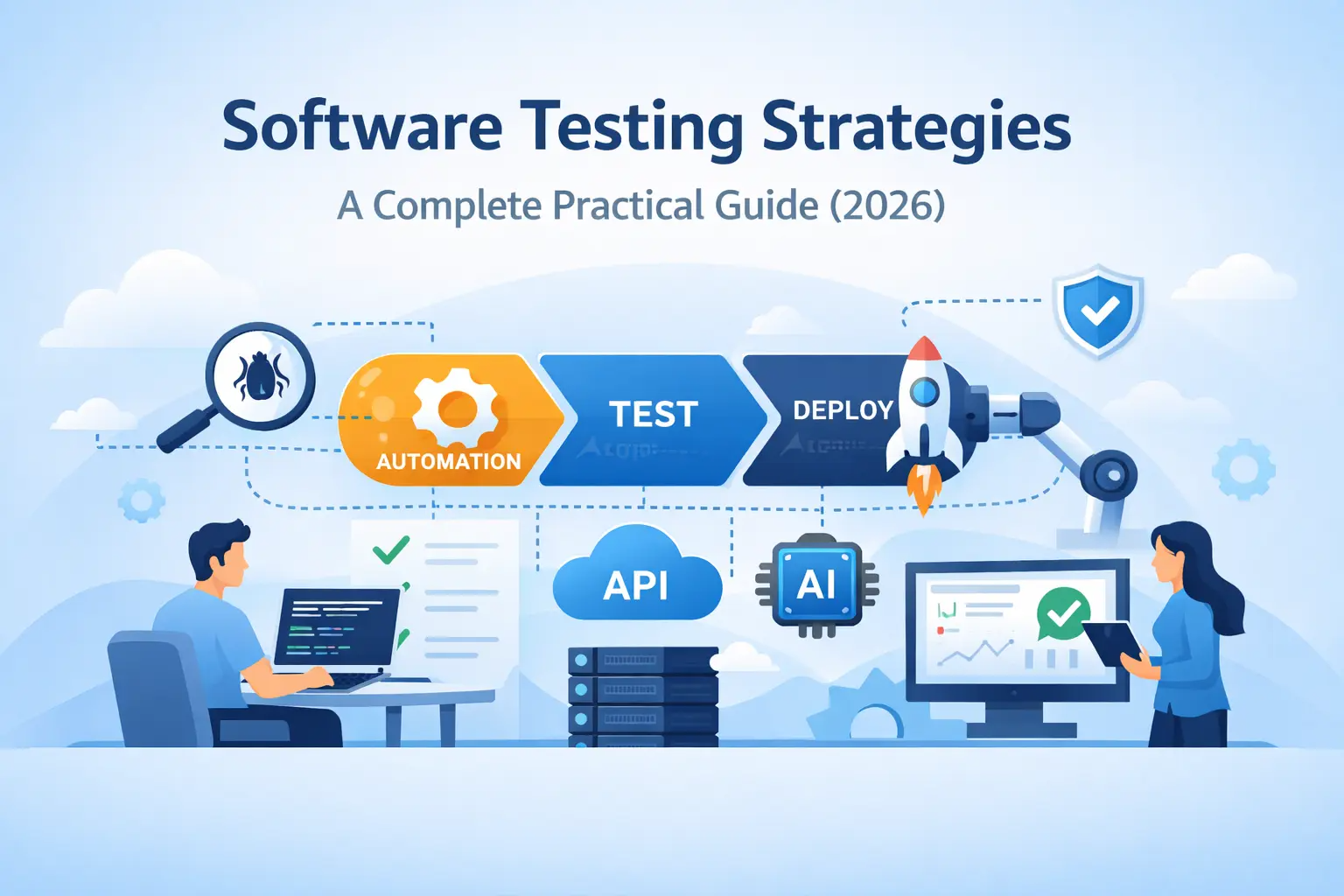
In modern development, having a clear testing approach is essential—not optional. If you’re exploring software testing strategies, this guide explains everything you need to know, from basics to best practices.
What Are Software Testing Strategies?
A software testing strategy is a high-level plan that defines how testing will be performed across a project or organization. It outlines the approach, tools, techniques, and processes used to ensure software quality.
In simple terms, it answers:
- What to test
- How to test
- When to test
- Who is responsible
Unlike a test plan (which is project-specific), a testing strategy provides a consistent framework for quality assurance across multiple projects.
Why Software Testing Strategies Matter
Without a strategy, testing becomes inconsistent and inefficient. A well-defined approach helps teams:
- Detect bugs early when they are cheaper to fix
- Maintain consistent quality across the SDLC
- Prioritize high-risk areas
- Align testing with business goals
Think of it as a roadmap that ensures your testing efforts are focused and effective.
Types of Software Testing Strategies
Different strategies target different aspects of software quality. Most teams combine multiple approaches.
1. Static Testing Strategy
This involves reviewing code, requirements, and design documents without executing the program. It helps detect issues early in development.
2. Structural (White-Box) Testing
Focuses on the internal logic and code structure of the application. Testers need access to source code to validate paths, conditions, and loops.
3. Behavioral (Black-Box) Testing
Tests the system from a user’s perspective, without knowledge of internal code. It ensures the application meets functional requirements.
4. Risk-Based Testing
Prioritizes testing based on risk and impact of failure, ensuring critical features are tested first.
5. Unit Testing Strategy
Validates individual components or functions to ensure they work correctly in isolation.
6. Integration Testing Strategy
Ensures different modules or services work together correctly, identifying interface and communication issues.
7. Automation Testing Strategy
Uses tools to execute repetitive tests efficiently, improving speed and consistency in CI/CD pipelines.
Key Approaches in Modern Testing
Today’s software teams use advanced strategies aligned with development practices:
Agile Testing Strategy
Testing is continuous and iterative, happening alongside development cycles.
DevOps Testing Strategy
Integrates testing into CI/CD pipelines for continuous quality delivery.
Shift-Left Testing
Focuses on testing early in the development lifecycle to reduce costs and defects.
How to Create an Effective Testing Strategy
A strong strategy doesn’t need to be complex—it needs to be clear and actionable.
1. Define Objectives
Understand what success looks like (performance, security, usability).
2. Identify Scope
Decide which features and systems need testing.
3. Choose Testing Types
Select appropriate strategies (unit, integration, etc.).
4. Set Entry & Exit Criteria
Define when testing starts and when it’s considered complete.
5. Select Tools
Use tools like automation frameworks and platforms such as Keploy.
6. Focus on Risk
Prioritize high-impact areas first.
Best Practices for Software Testing Strategies
To maximize effectiveness:
- Start testing early (shift-left approach)
- Balance manual and automated testing
- Focus on real user scenarios
- Continuously improve based on feedback
- Integrate testing into CI/CD pipelines
A well-designed strategy ensures faster releases without compromising quality.
How Keploy Helps
Modern tools like Keploy simplify testing strategies by:
- Automatically generating test cases from real API calls
- Enabling replay-based testing
- Reducing manual test creation
- Supporting continuous testing workflows
This makes it easier to implement scalable and efficient testing strategies.
Conclusion
A strong testing strategy is the backbone of high-quality software. It ensures that testing is not random but structured, efficient, and aligned with business goals.
If you're looking to improve your QA process, understanding software testing strategies is the first step toward building reliable and scalable applications.

 Arabic
 Français
 Español
 Português
 Deutsch
 Türkçe
 Dutch
Dutch
 Italiano
 Russian
 Romaian