


Step-by-Step Guide To Build A Medical Fitness App Like DHA In 2026
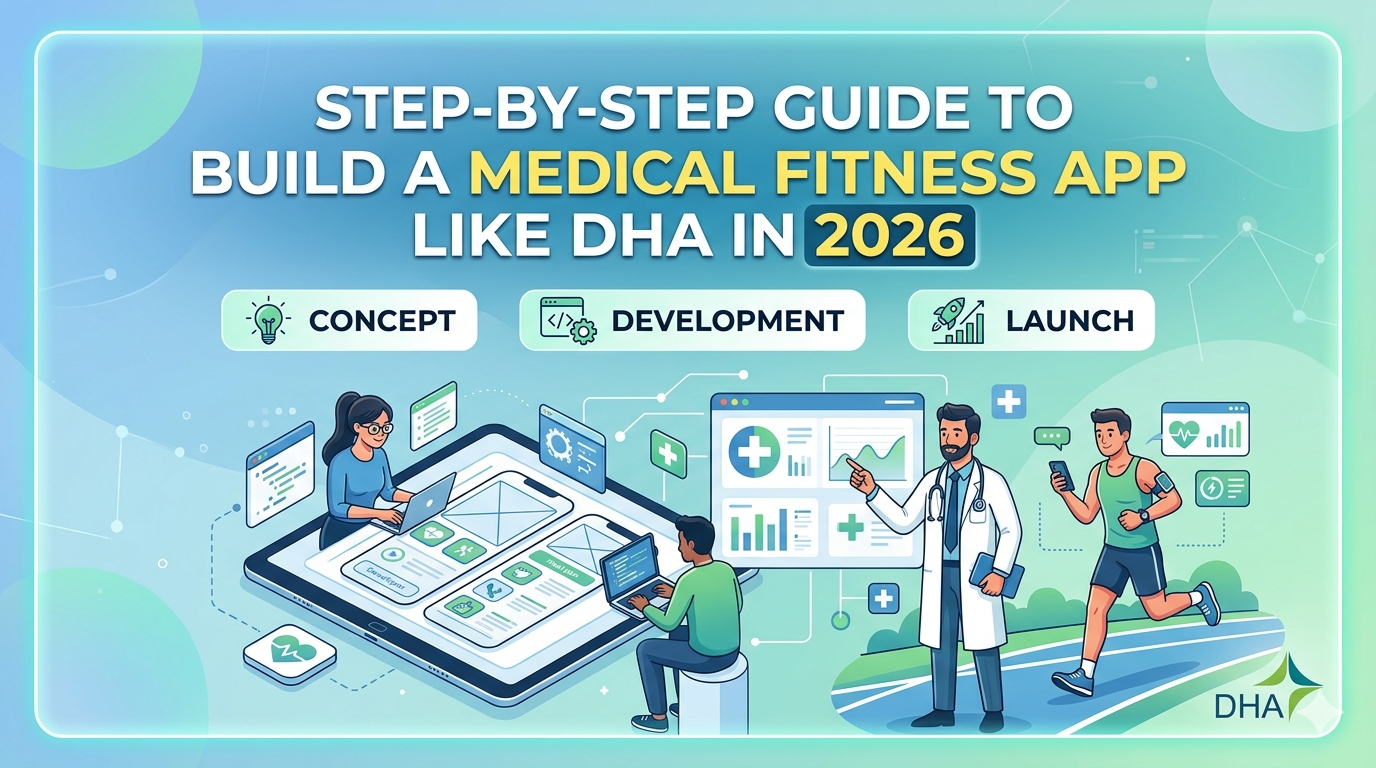
The healthcare industry is undergoing a massive digital transformation, and medical fitness apps are at the heart of this revolution. The Dubai Health Authority (DHA) app stands as a gold standard — seamlessly combining appointment booking, health records, fitness tracking, and telemedicine into a single unified platform. As demand for such solutions skyrockets globally, entrepreneurs and healthcare organizations are rushing to replicate this success.
If you're planning to build a medical fitness app like DHA in 2026, this guide walks you through every critical step — from concept to launch.
Understanding What Makes DHA-Style Apps Unique
Before diving into development, it's important to understand what separates a medical fitness app from a generic wellness application. Apps like DHA integrate regulated healthcare services — including licensed physician consultations, digital prescriptions, insurance claims, and real-time fitness monitoring — into one cohesive ecosystem.
This level of complexity demands more than a basic development team. You need a specialized Custom Healthcare App Development company that understands both the technical and regulatory dimensions of building in the healthcare space. The wrong partner can cost you compliance violations, data breaches, and failed audits — all of which are catastrophic in a medical context.
Step 1: Define Your Core Features and Use Cases
Start by outlining what your app will do. A DHA-like platform typically covers:
Appointment scheduling with licensed healthcare providers. Telemedicine and video consultation capabilities. Digital health records and document storage. Fitness and vitals tracking (steps, heart rate, BMI, sleep). Medicine reminders and prescription management. Insurance integration and claim processing. Emergency SOS and nearby hospital locators.
You don't have to build everything at once. Prioritize features based on your target audience — whether it's individual consumers, corporate wellness programs, or hospital networks.
Step 2: Conduct Regulatory and Compliance Research
Healthcare apps are among the most regulated software products in the world. Depending on your target market, you'll need to comply with frameworks such as HIPAA (USA), GDPR (Europe), DHA regulations (UAE), or ABDM (India).
Compliance isn't just a legal checkbox — it shapes your entire architecture. Data encryption, role-based access control, audit trails, and consent management must be designed into the system from day one, not bolted on afterward. Work with legal advisors and a development partner who has prior experience navigating these regulations.
Step 3: Choose Your Technology Stack
Selecting the right tech stack determines your app's scalability, security, and performance. For a DHA-like app in 2026, a recommended stack includes:
Frontend: React Native or Flutter for cross-platform mobile development. Backend: Node.js or Python (Django/FastAPI) for robust API management. Database: PostgreSQL for structured records, MongoDB for flexible health data. Cloud: AWS or Google Cloud with HIPAA-compliant configurations. AI/ML: TensorFlow or Google Health APIs for fitness analytics and predictions. Security: End-to-end encryption, OAuth 2.0, and multi-factor authentication.
The technology choices should always align with your compliance requirements and anticipated user load.
Step 4: Design a Patient-Centric UI/UX
Medical apps must balance clinical precision with everyday usability. Patients of all ages and tech literacy levels will use your product, so the interface must be intuitive, accessible, and calming — not clinical or overwhelming.
Key UI/UX principles for healthcare apps include clear navigation hierarchies, large touch targets for elderly users, high-contrast color schemes for readability, multilingual support for diverse populations, and minimal friction during emergency use cases like SOS features.
Invest in proper wireframing, prototype testing with real users, and iterative design refinement before committing to full development.
Step 5: Develop Core Modules Incrementally
Avoid the temptation to build everything simultaneously. Instead, adopt an agile development methodology and release in phases.
Phase 1 should cover user registration, health profiles, and appointment booking. Phase 2 can introduce telemedicine, digital records, and lab report uploads. Phase 3 adds fitness tracking, wearable device integration, and AI-based health insights. Phase 4 incorporates medicine delivery app development services, enabling users to order prescribed medications directly from the platform with real-time delivery tracking.
Including medicine delivery app development services in your roadmap is especially strategic in 2026, as patients increasingly expect end-to-end healthcare from a single app — consultation, prescription, and doorstep delivery all in one place.
Step 6: Integrate Wearables and IoT Devices
One of the defining features of modern medical fitness apps is integration with wearables — Apple Watch, Fitbit, Garmin, and smart glucometers or blood pressure monitors. These devices continuously feed real-time health data into the app, allowing physicians to monitor patients remotely and users to track their wellness proactively.
Use standard APIs like Apple HealthKit and Google Health Connect to ensure broad device compatibility without building custom integrations for every hardware variant.
Step 7: Build a Robust Backend for Data Management
Your backend is the nervous system of the entire platform. It must handle thousands of concurrent users, store sensitive health records securely, and deliver data to the front end in milliseconds.
Implement microservices architecture to keep modules independent and scalable. Use message queues like Kafka or RabbitMQ for asynchronous operations such as notification delivery and appointment reminders. Set up automated database backups and disaster recovery protocols. Every component should be designed for 99.9% uptime — in healthcare, downtime can directly impact patient safety.
Step 8: Test Rigorously Before Launch
Healthcare app testing goes beyond standard QA. You need functional testing, security penetration testing, load testing under peak conditions, accessibility compliance testing (WCAG standards), and clinical validation of any AI-driven health recommendations.
Beta testing with a closed group of real users — including patients, doctors, and administrative staff — will surface usability issues that internal teams often miss.
Step 9: Launch, Monitor, and Iterate
Post-launch, deploy real-time analytics to monitor user behavior, error rates, and feature adoption. Collect structured feedback and release updates frequently. Healthcare needs evolve rapidly, and your app must evolve with them.
Partnering with a Custom Healthcare App Development company that offers ongoing support, security audits, and feature development post-launch is critical for long-term success.
Final Thoughts
Building a medical fitness app like DHA in 2026 is a significant undertaking — but the market opportunity is equally significant. With the right technology partner, a compliance-first mindset, and a patient-centered design philosophy, your platform can transform how people access healthcare and manage their wellness. The blueprint above gives you a clear, actionable path from idea to impact.

 English
 Arabic
 Français
 Español
 Português
 Deutsch
 Türkçe
 Dutch
Dutch
 Italiano
 Romaian