


How to Develop a Home Services App Like Mr. Right?
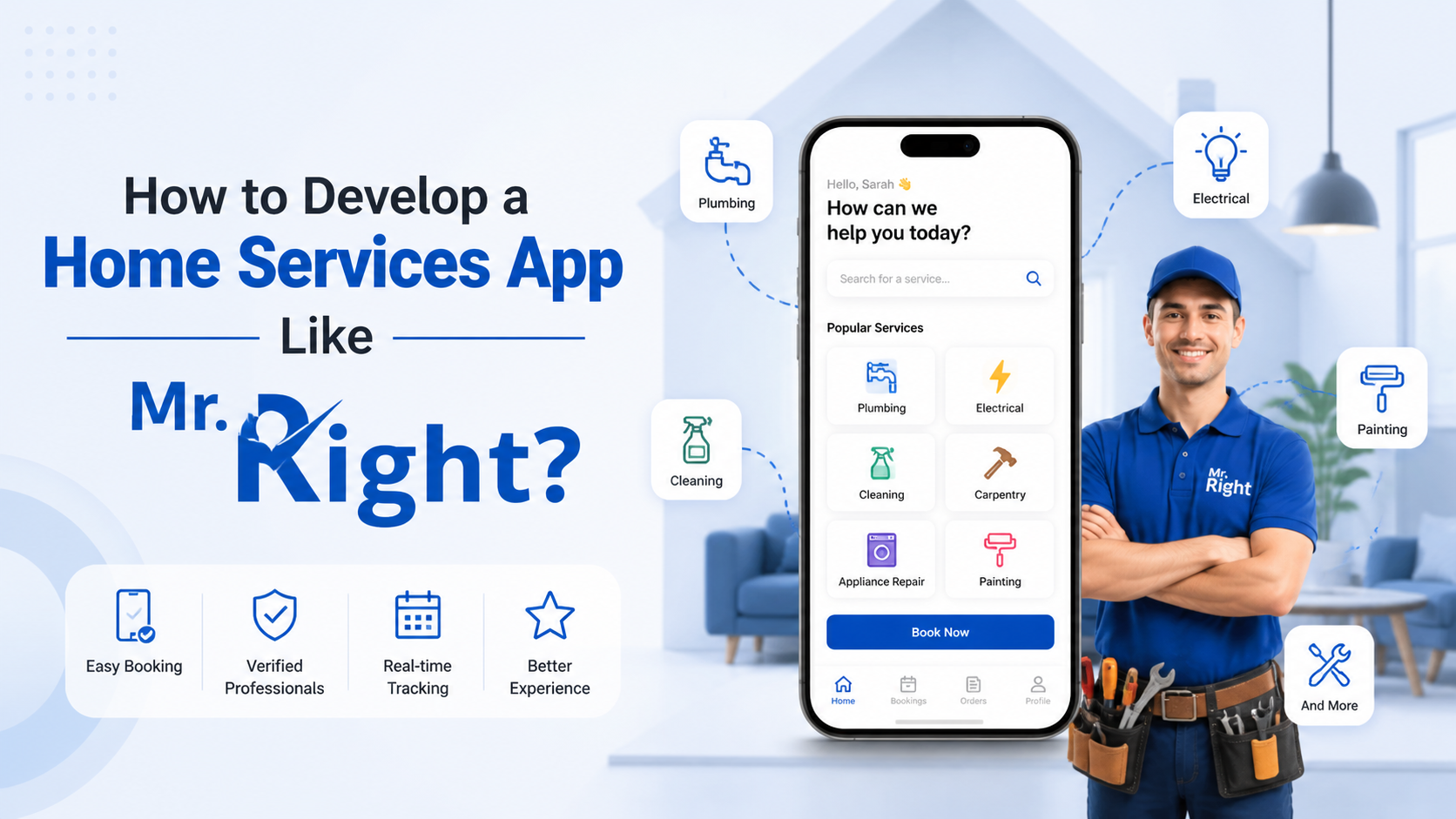
The home services industry has undergone a massive digital transformation over the past decade. Apps like Mr. Right have made it remarkably simple for homeowners to book electricians, plumbers, carpenters, and cleaners with just a few taps on their smartphones. If you are an entrepreneur looking to tap into this booming market, building a home services app could be one of the smartest business moves you make right now. This guide walks you through everything you need to know about the development process, features, and how to get started.
Understanding the Mr. Right Business Model
Before diving into development, it helps to understand why Mr. Right succeeded. The app operates as a marketplace that connects verified service professionals with homeowners who need quick, reliable help. Revenue is generated through service commissions, subscription fees for professionals, and featured listing charges. The model works because it solves a genuine pain point — finding trustworthy home service providers is traditionally frustrating, time-consuming, and unreliable.
Your app needs to replicate this trust-building mechanism while adding your own differentiators to stand out in the market.
Key Features Your Home Services App Must Have
Customer-Facing Features
The customer panel is the face of your product. Users should be able to register quickly using their phone number or social login, browse service categories, and book appointments in under a minute. Real-time tracking lets customers follow their assigned professional en route, similar to how ride-hailing apps work. Integrated in-app chat allows communication without sharing personal contact details. After service completion, a review and rating system keeps quality in check and helps future customers make informed decisions.
A well-designed search and filter function — by service type, location, price range, and availability — improves the booking experience significantly. Push notifications for booking confirmations, reminders, and promotions keep users engaged over time.
Service Provider Features
The professional side of the app needs equal attention. Service providers should have a clean dashboard to manage incoming requests, set their availability calendar, view earnings, and update their profiles. An identity verification flow — including document uploads and background check integration — is essential for building the platform's credibility. Providers also need navigation support, so integrating maps and GPS is a baseline requirement.
Admin Panel Features
The admin panel is the backbone of operations. It should give you full visibility over bookings, users, and service providers. You need tools for managing disputes, approving new professional registrations, running promotional campaigns, and analyzing platform performance through real-time dashboards and reports.
The Technology Stack
Choosing the right technology determines how scalable and maintainable your app will be long-term. A typical home services app requires a mobile frontend built in React Native or Flutter for cross-platform reach, a backend powered by Node.js or Python with Django, and a reliable database such as PostgreSQL or MongoDB. Real-time features like chat and live tracking depend on WebSockets or Firebase. Payment gateway integration through providers like Razorpay, Stripe, or PayU is necessary for seamless transactions.
Cloud infrastructure on AWS or Google Cloud ensures your app can handle traffic spikes without downtime, which is especially important when you run promotions or expand to new cities.
Step-by-Step Development Process
Step 1 — Market Research and Planning
Start by validating your idea. Study the competitive landscape in your target geography. Identify which services are underserved and what pricing models local customers accept. Define your niche — you might launch with just cleaning and appliance repair before expanding to twenty-plus categories the way Mr. Right did.
Step 2 — UI/UX Design
Invest seriously in design. A cluttered or confusing interface will kill retention faster than any technical bug. Create wireframes and interactive prototypes before writing a single line of code. Test these prototypes with real users to catch usability issues early. The design should feel intuitive enough that a first-time user can book a service without any guidance.
Step 3 — Choose Your Development Partner
This is perhaps the most critical decision you will make. Partnering with an experienced on-demand app development company gives you access to a team that has already solved the technical and architectural challenges common to marketplace apps. They bring reusable frameworks, pre-built modules for payments and notifications, and quality assurance processes that save months of development time. Look for a company with a proven portfolio in the on-demand space, transparent communication, and post-launch support capabilities.
Step 4 — Development and Testing
Development typically runs in agile sprints. Build the MVP first — the minimum set of features needed to launch and gather real-world feedback. This usually includes booking flow, provider matching, basic payments, and admin controls. Comprehensive testing covering functionality, security, performance, and device compatibility must happen before any release. Pay particular attention to payment security and data privacy compliance.
Step 5 — Launch and Marketing
A soft launch in one city before a national rollout helps you iron out operational kinks without risking your reputation at scale. Early marketing should focus on acquiring both sides of your marketplace simultaneously — customers without providers and providers without customers both make for a broken experience. Referral programs, local digital advertising, and partnerships with trade associations can help you build supply and demand together.
Step 6 — Post-Launch Iteration
The best home services apps are never truly finished. Use analytics and user feedback to continuously improve the experience. Monitor which service categories drive the most bookings, where drop-offs happen in the booking funnel, and how ratings trend over time. Regular updates keep users engaged and show professionals that the platform is actively managed.
Cost of Building a Home Services App
Development costs vary depending on the complexity of features, the platforms you choose to build for, and the expertise of your development team. Here is a general breakdown to help you plan your budget realistically.
A basic app with core functionality such as user registration, simple booking flow, and basic payment integration typically costs between $5,000 and $8,000 and takes around four to five weeks to develop. This is ideal if you are testing the market with a lean MVP before committing to a larger investment.
A medium-complexity app that includes real-time tracking, in-app chat, provider dashboards, and a more polished admin panel falls in the range of $10,000 to $15,000 with a development timeline of five to eight weeks. This tier is suitable for entrepreneurs who have validated their concept and are ready for a proper market launch.
An advanced feature app with multi-city support, AI-based service provider matching, deep analytics, loyalty programs, and full customization across all panels starts at $15,000 and above, with development typically spanning eight to twelve weeks. This is the level at which you are building a platform designed to scale competitively against established players like Mr. Right.
It is almost always more cost-effective to start with a basic or medium build and scale based on real user feedback rather than over-building before you have validated demand. Partnering with the right app development company can also help you prioritize features smartly so your budget goes further from day one.
Final Thoughts
The home services market is large, growing, and still fragmented in many regions — which means genuine opportunity exists for well-executed entrants. Success comes from combining the right technology with strong operational discipline on the service provider side. Building a trustworthy platform takes time, but the compounding effect of good reviews and word-of-mouth referrals is powerful once momentum builds.
Whether you are a startup founder or an established business looking to digitize your service operations, working with a capable on-demand app development company will dramatically increase your chances of launching a product that customers actually love and return to. The technology is accessible, the market is ready, and the model is proven — what you need now is the right partner and the will to execute.

 English
 Arabic
 Français
 Español
 Português
 Deutsch
 Türkçe
 Dutch
Dutch
 Russian
 Romaian