


Retesting in Software Testing: Ensuring Bugs Are Truly Fixed
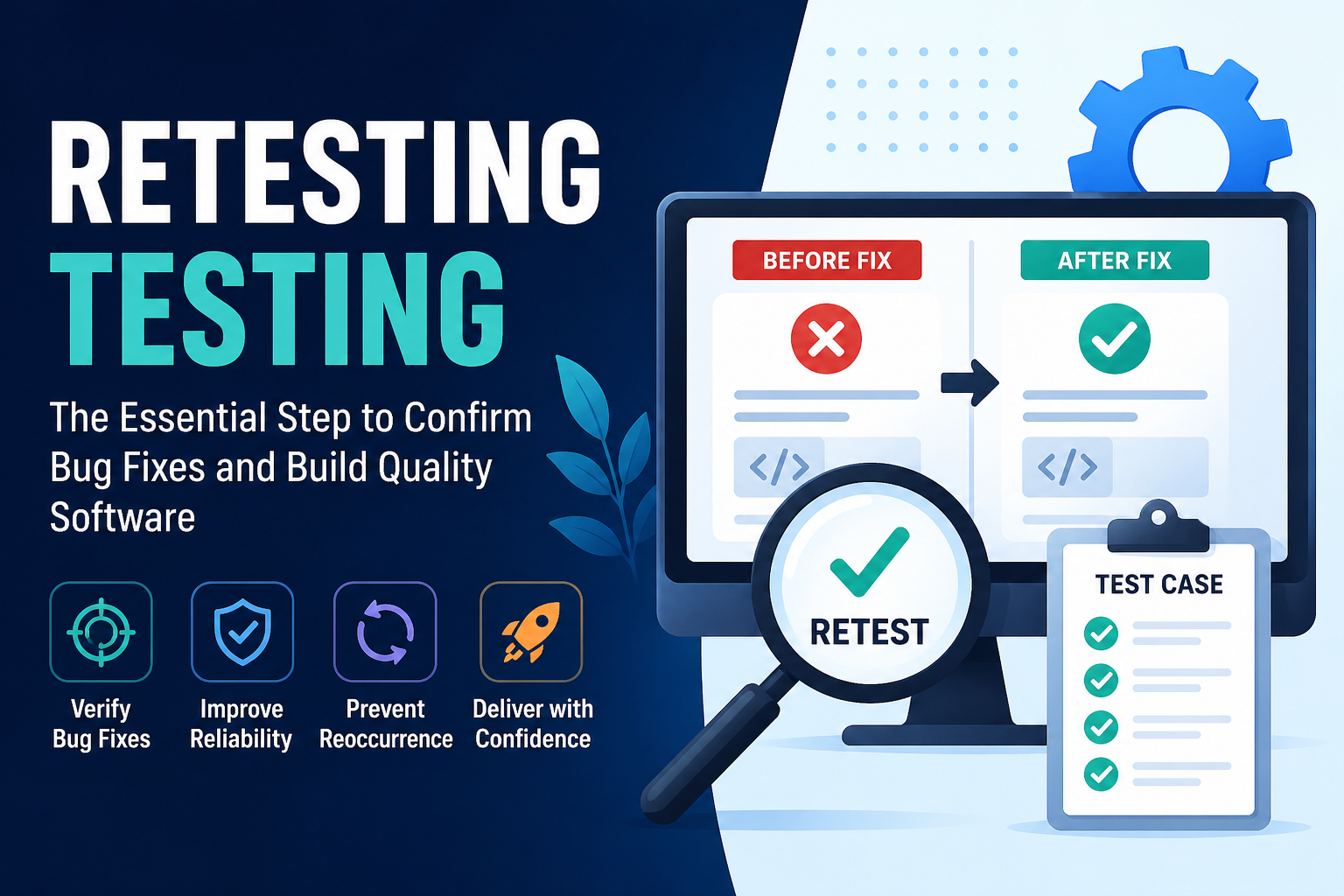
In the software development lifecycle, fixing a bug is only half the job—ensuring that it’s actually resolved is just as important. This is where retesting plays a crucial role. Retesting focuses on verifying that previously identified defects have been successfully fixed and no longer impact the application.
Unlike other testing types, retesting is highly targeted. It involves re-executing the exact test cases that originally failed, using the same data and conditions, to confirm that the issue has been resolved. This helps teams avoid false assumptions about bug fixes and ensures stability before release.
In modern applications, especially those built on APIs and microservices, retesting becomes even more important. A fix in one service can unintentionally affect other components. By applying effective API testing strategies, teams can validate that fixes work correctly across integrated systems and do not introduce new issues.
Manual retesting is often used when validating specific bug fixes, especially when human observation is required. It allows testers to confirm behavior in real-world scenarios and ensure that the issue is fully resolved.
Automation can also support retesting by quickly re-running failed test cases after fixes are implemented. Automated retesting improves speed, consistency, and efficiency, particularly in large systems where frequent updates occur.
Key Principles of Retesting
-
Focus only on previously failed test cases
-
Use the same test data and environment conditions
-
Validate that the exact defect has been fixed
-
Ensure no unintended side effects are introduced
Retesting vs Regression Testing
Retesting is often confused with regression testing, but they serve different purposes:
-
Retesting → Verifies that a specific bug has been fixed
-
Regression Testing → Ensures that existing functionality still works after changes
Both are essential for maintaining software quality.
Conclusion
Retesting is a critical step in delivering reliable software. It ensures that bug fixes are effective and prevents unresolved issues from reaching production. By combining retesting with strong automation and modern testing approaches, teams can improve confidence in their releases and maintain high-quality standards.

 English
 Arabic
 Français
 Español
 Português
 Deutsch
 Türkçe
 Dutch
Dutch
 Russian
 Romaian