


Inside a Modern Waste Engine Oil Refining Plant: A Virtual Tour
Welcome to the control room. You are looking at screens displaying temperatures, pressures, and flow rates. Outside the window, you see a series of towers, tanks, and pipes. This is not a crude oil refinery. This is a modern waste engine oil refining plant, and it is far cleaner and more high-tech than most people imagine.
Step One: Pre-Treatment and Dehydration
Your virtual tour begins at the receiving bay. Trucks deliver used oil, which first goes into large settling tanks. Here, gravity removes large solids and free water. Next, the oil passes through a series of filters and a centrifuge. By the time it leaves pre-treatment, the oil is free of dirt, metal particles, and 99 percent of its water content. What remains is a dark but homogeneous liquid ready for the heart of the process.
Step Two: Vacuum Distillation
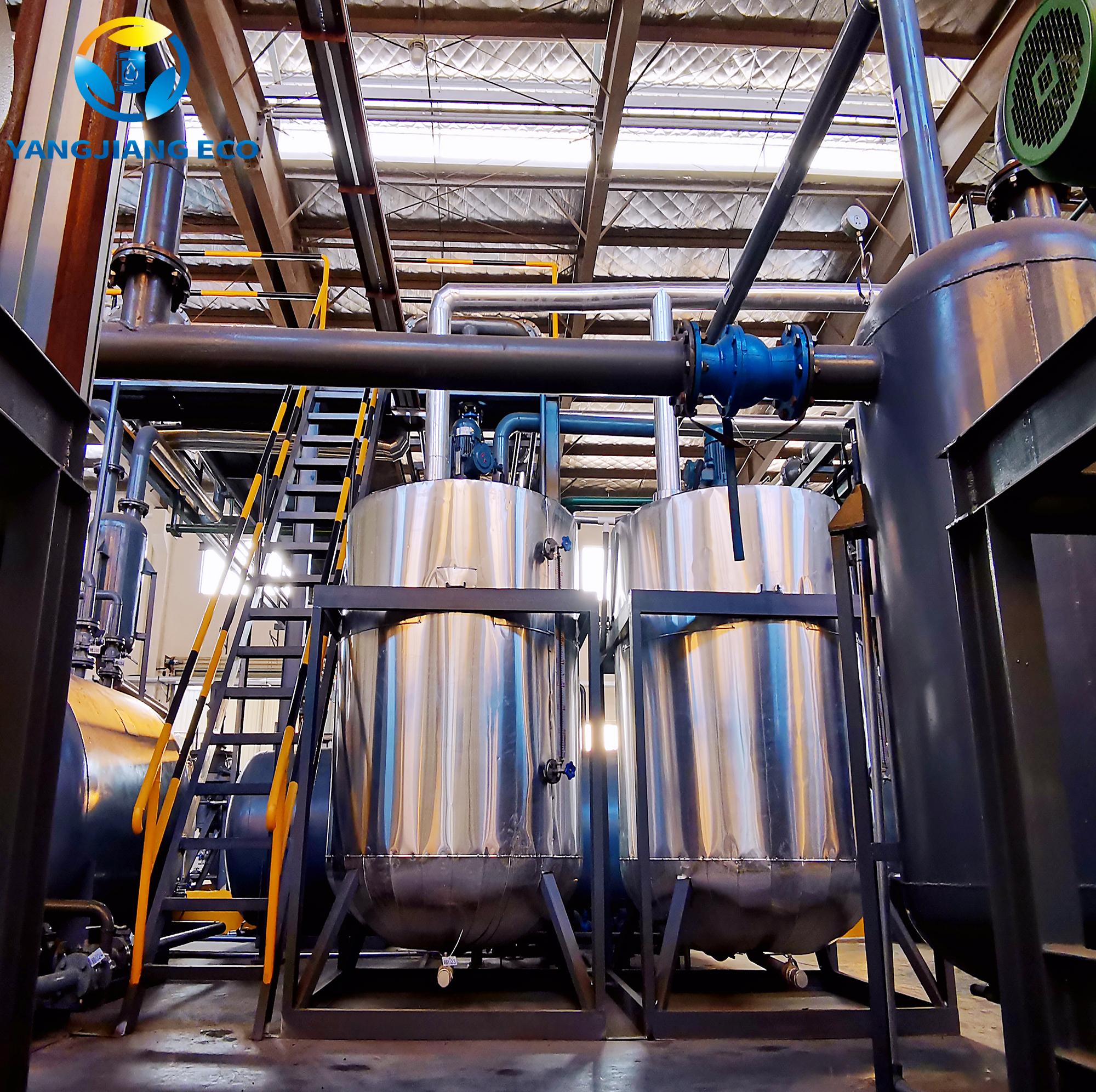
Now we climb the stairs to the main distillation column. Unlike traditional refineries that use atmospheric heat, modern waste oil plants use high-temperature vacuum distillation. The vacuum lowers the boiling point of the oil, allowing it to vaporize at lower temperatures. This prevents thermal cracking and preserves the hydrocarbon chains. As the vapor rises up the column, different fractions condense at different levels. Lighter fractions become diesel-like products, while heavier fractions become base oil.
Step Three: Hydro-Treating
The distilled oil is not finished yet. It still contains sulfur, nitrogen, and chlorine compounds. We now enter the hydro-treating unit. Here, the oil is mixed with hydrogen gas and passed over a catalyst bed at high pressure. The hydrogen attaches to contaminants, forming hydrogen sulfide and ammonia, which are safely removed and treated. What exits the reactor is a clear, amber liquid with properties matching virgin base oil.
Step Four: Final Fractionation and Storage
The final step is a second distillation to achieve precise viscosity grades. The plant produces common grades like SN150, SN500, and bright stock. Automated valves direct each grade to its own storage tank. Quality control labs test every batch. If it passes, the oil is ready for sale back to lubricant blenders.
No Landfills, No Burning
Throughout this virtual tour, you notice something missing: smoke, smell, and waste. Modern plants recycle process water, capture heat for energy efficiency, and turn leftover residue into asphalt flux. Nothing goes to landfill.
The Next Generation of Refining
This is the reality of waste oil refining today. It is clean, automated, and profitable. What was once an environmental problem is now a sustainable source of high-quality base oil.

 Arabic
 Français
 Español
 Português
 Deutsch
 Türkçe
 Dutch
Dutch
 Italiano
 Russian
 Romaian