


AAAC Conductor Explained: High-Strength, Corrosion-Resistant Solution for Modern Power Transmission Networks
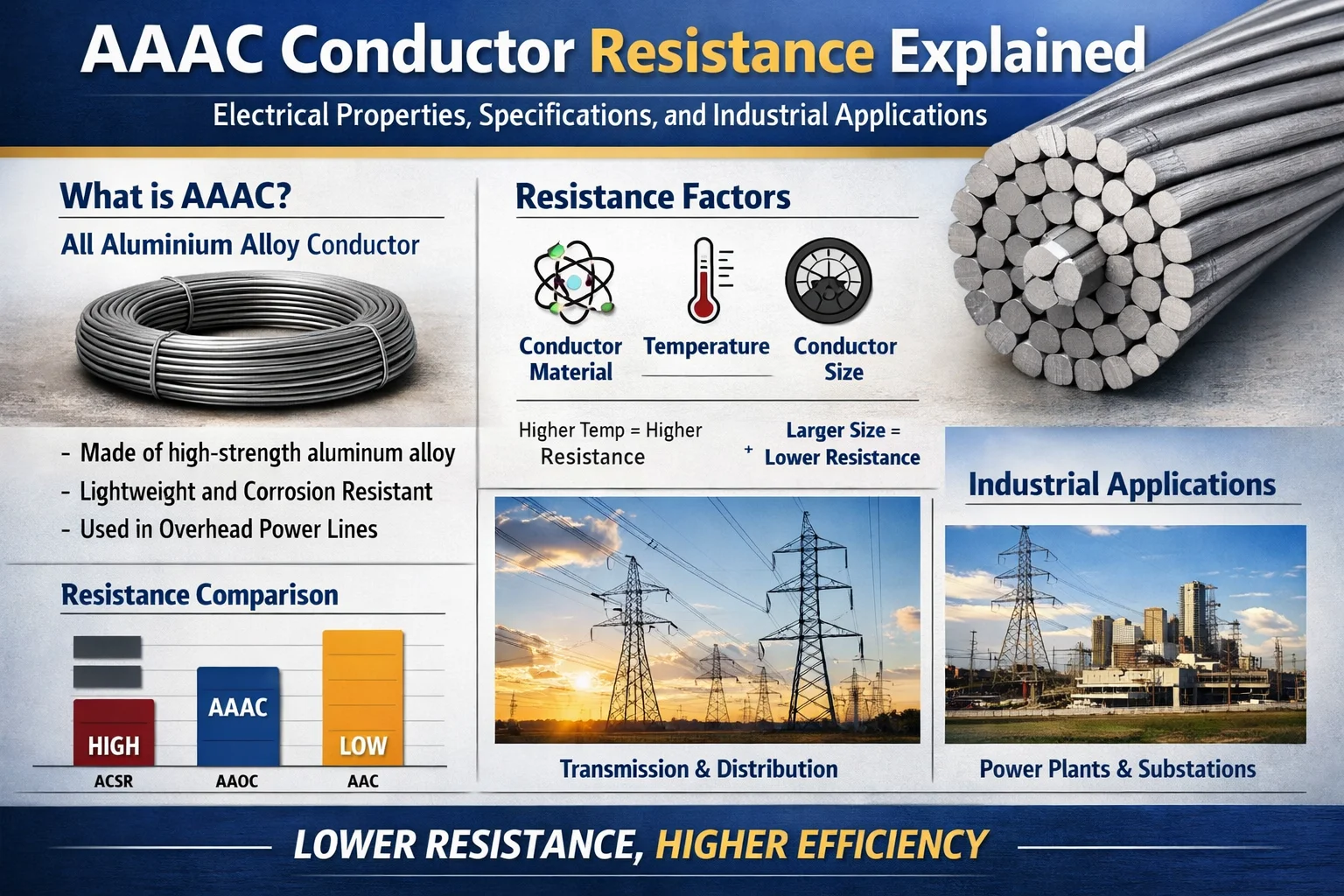
In today’s expanding electrical infrastructure, utilities and EPC contractors require overhead conductor solutions that deliver higher strength, improved corrosion resistance, and long service life with minimal maintenance. The AAAC conductor (All Aluminium Alloy Conductor) has emerged as a reliable alternative to traditional AAC and ACSR conductors, especially in coastal, industrial, and high-corrosion environments.
For global projects focused on efficiency and durability, manufacturers like HNBF Power provide engineered AAAC conductor solutions designed to meet international transmission and distribution standards.
What is an AAAC Conductor?
An AAAC conductor is a type of overhead power transmission conductor made entirely from aluminium alloy wires. Unlike ACSR (which uses a steel core) or AAC (pure aluminium), AAAC uses high-strength aluminium-magnesium-silicon alloy strands to achieve both conductivity and mechanical strength.
This structure eliminates the need for steel reinforcement while still maintaining strong tensile performance, making it suitable for medium and long-span overhead lines.
In simple terms, AAAC conductor combines:
- Good electrical conductivity
- High mechanical strength
- Excellent corrosion resistance
Construction and Material Composition
AAAC conductors are manufactured using stranded aluminium alloy wires arranged in concentric layers. The alloy typically includes magnesium and silicon, which significantly enhance strength without compromising conductivity.
Key construction features include:
- Stranded design: Multiple aluminium alloy wires twisted together for flexibility and durability
- Uniform cross-section: Ensures balanced current distribution
- No steel core: Reduces weight and eliminates rust-related issues
- Thermal stability: Performs efficiently under varying load conditions
This simplified yet robust construction makes AAAC conductors easier to install and maintain compared to composite-core conductors.
Key Features of AAAC Conductors
AAAC conductors are widely preferred in modern transmission systems due to their balanced performance characteristics.
1. High Strength-to-Weight Ratio
AAAC provides superior mechanical strength while remaining lightweight, reducing tower loading and structural stress.
2. Excellent Corrosion Resistance
Since it contains no steel, AAAC performs exceptionally well in coastal, humid, and polluted industrial environments.
3. Improved Sag Performance
Lower thermal expansion helps maintain better ground clearance under high load conditions.
4. Low Maintenance Requirements
The corrosion-resistant nature reduces long-term maintenance costs for utilities.
5. Stable Electrical Performance
AAAC ensures consistent conductivity over long service life, supporting stable grid performance.
Advantages of AAAC over AAC and ACSR
For procurement engineers and utility planners, selecting the right conductor type is critical for long-term project efficiency.
AAAC vs AAC
- AAC offers high conductivity but lower strength
- AAAC provides significantly higher tensile strength while maintaining similar conductivity levels
- AAAC is better suited for long-span and high-stress applications
AAAC vs ACSR
- ACSR uses a steel core, which can corrode over time
- AAAC eliminates steel, improving corrosion resistance
- AAAC is lighter, reducing mechanical load on towers
- ACSR may still be preferred for extremely long spans, but AAAC is more cost-efficient in corrosive environments
Overall, AAAC strikes a balance between performance, durability, and lifecycle cost efficiency.
Applications of AAAC Conductor
AAAC conductors are widely used across transmission and distribution systems where environmental conditions demand durability and reliability.
Common applications include:
- Medium-voltage and high-voltage overhead transmission lines
- Coastal and marine power distribution networks
- Industrial zones with high pollution levels
- Urban grid reinforcement projects
- Rural electrification and utility expansion programs
Its versatility makes it suitable for both new installations and line upgrades.
Why Choose HNBF Power for AAAC Conductors?
HNBF Power is a global manufacturer specializing in overhead conductors, including AAAC, AAC, ACSR, and ABC cable systems. With a strong focus on quality engineering and utility-grade performance, HNBF Power delivers conductor solutions designed for demanding grid environments.
What sets HNBF Power apart:
- Precision-engineered aluminium alloy conductor manufacturing
- Strict quality control aligned with international standards
- Customizable conductor sizes and specifications
- Strong mechanical and electrical testing processes
- Reliable supply capability for global EPC projects
HNBF Power focuses on providing utility operators and procurement teams with conductor solutions that reduce lifecycle cost while improving system reliability.
Technical Performance Considerations
When selecting AAAC conductors, engineers typically evaluate:
- Current carrying capacity
- Span length requirements
- Environmental exposure conditions
- Mechanical loading on towers
- Voltage level of the transmission system
HNBF Power supports clients with technical guidance to ensure the selected AAAC specification matches project requirements efficiently.
FAQs About AAAC Conductor
1. What does AAAC stand for in electrical cables?
AAAC stands for All Aluminium Alloy Conductor, made entirely from aluminium alloy wires for improved strength and corrosion resistance.
2. Where is AAAC conductor commonly used?
It is widely used in overhead transmission and distribution lines, especially in coastal and industrial environments.
3. How is AAAC different from ACSR?
AAAC uses only aluminium alloy, while ACSR contains a steel core. AAAC offers better corrosion resistance and lower weight.
4. Is AAAC suitable for long-distance transmission?
Yes, AAAC is suitable for medium to long spans, especially where corrosion resistance is a priority.
5. Why is AAAC preferred in coastal areas?
Because it does not contain steel, it resists rust and performs better in humid and saline conditions.
Conclusion
The AAAC conductor is a modern, efficient solution for power transmission systems that demand reliability, durability, and reduced maintenance. With its balanced combination of mechanical strength and electrical performance, it has become a preferred choice for utilities worldwide.
HNBF Power continues to support global infrastructure development by delivering high-quality AAAC conductor solutions tailored to diverse project needs.
Looking for reliable AAAC conductor supply for your next project? Contact HNBF Power today for customized engineering support and competitive manufacturing solutions designed for long-term grid performance.

 English
 Arabic
 Français
 Español
 Português
 Deutsch
 Türkçe
 Dutch
Dutch
 Italiano
 Russian