


Choosing Health Insurance in 2026? Know These 7 Plans First
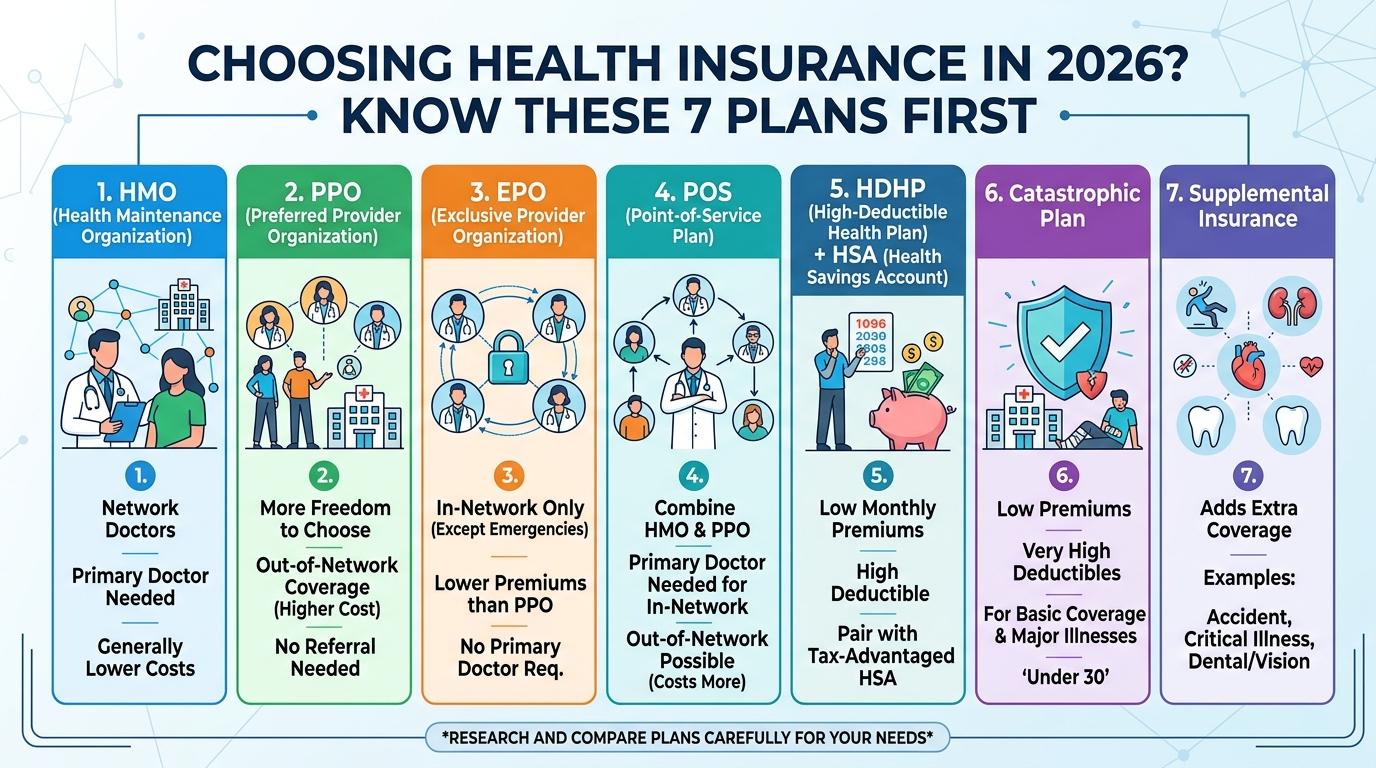
Health insurance has become one of the most important financial decisions families and individuals make in 2026. Rising medical costs, changing healthcare regulations, and increased demand for personalized coverage have made choosing the right plan more complicated than ever. Whether you are self-employed, working for a company, managing a family, or preparing for retirement, selecting the right health insurance plan can protect both your health and your finances.
The challenge is that many people buy coverage without fully understanding how different plans work. Deductibles, provider networks, out-of-pocket limits, and referral systems can significantly impact the actual value of a policy. Before choosing coverage, it’s important to understand the major types of health insurance plans available today.
Learning about the 7 types of health insurance plans can help you compare options more effectively and avoid costly mistakes.
Why Choosing the Right Health Insurance Matters
Healthcare expenses continue to rise across the United States, making insurance coverage essential for financial stability. A single medical emergency can create overwhelming costs without proper protection.
The right health insurance plan can help cover:
- Hospital stays
- Emergency care
- Prescription medications
- Specialist visits
- Preventive care
- Surgical procedures
However, not every plan works the same way. Some offer lower monthly premiums but higher deductibles, while others provide broader provider access with higher monthly costs. Understanding the structure of each plan is critical before making a decision.
1. Health Maintenance Organization (HMO) Plans
HMO plans remain one of the most affordable health insurance options in 2026. These plans require members to use a network of approved healthcare providers and usually require referrals before seeing specialists.
Advantages of HMO Plans
- Lower monthly premiums
- Lower out-of-pocket costs
- Coordinated healthcare management
- Preventive care coverage
Drawbacks of HMO Plans
- Limited provider flexibility
- Referral requirements
- Restricted out-of-network coverage
HMO plans are often ideal for individuals and families looking for affordable coverage with predictable healthcare costs.
2. Preferred Provider Organization (PPO) Plans
PPO plans continue to be popular because they offer greater flexibility when choosing doctors and specialists. Members can visit out-of-network providers without referrals, although costs are typically higher outside the network.
Benefits of PPO Plans
- Flexible provider access
- No specialist referrals required
- Broader healthcare networks
- Suitable for frequent travelers
Disadvantages of PPO Plans
- Higher premiums
- Higher deductibles
- Increased out-of-pocket costs
People who value provider flexibility often choose PPO plans despite the higher monthly costs.
3. Exclusive Provider Organization (EPO) Plans
EPO plans combine features of HMOs and PPOs. These plans generally do not require referrals for specialists but still require members to stay within the provider network.
Why EPO Plans Are Growing
EPO plans are becoming more common in 2026 because they balance affordability with provider flexibility.
Key benefits include:
- Lower costs than PPO plans
- No referral requirements
- Streamlined provider networks
However, out-of-network coverage is usually very limited except during emergencies.
4. Point of Service (POS) Plans
POS plans offer a mix of HMO and PPO features. Members choose a primary care physician but may still access out-of-network providers at higher costs.
POS plans are attractive for people who want more flexibility while maintaining coordinated healthcare management.
Features of POS Plans
- Primary care physician coordination
- Referral-based specialist care
- Some out-of-network coverage
- Balanced premium structures
Many families choose POS plans because they provide moderate flexibility without the high costs often associated with PPO coverage.
5. High Deductible Health Plans (HDHPs)
High Deductible Health Plans continue gaining popularity due to their lower monthly premiums and compatibility with Health Savings Accounts (HSAs).
These plans require policyholders to pay more upfront medical expenses before insurance coverage begins.
Benefits of HDHPs
- Lower monthly premiums
- HSA eligibility
- Tax advantages
- Long-term savings potential
Drawbacks of HDHPs
- Higher out-of-pocket risk
- Expensive initial healthcare costs
- Less suitable for chronic medical conditions
HDHPs often work best for healthy individuals who rarely require medical treatment and want to reduce monthly insurance costs.
6. Catastrophic Health Insurance Plans
Catastrophic plans are designed primarily for emergencies and major medical events. These plans usually have very low monthly premiums but extremely high deductibles.
They are commonly used by:
- Young adults
- Healthy individuals
- People seeking emergency-only protection
While these plans provide limited routine coverage, they can help protect against financially devastating medical emergencies.
7. Short-Term Health Insurance Plans
Short-term plans provide temporary coverage for individuals between jobs, waiting for employer benefits, or experiencing transitional life situations.
Common Uses for Short-Term Coverage
- Temporary unemployment
- Career transitions
- Recent graduates
- Early retirees
Although these plans are often more affordable, they may provide limited benefits and exclude certain pre-existing conditions.
How Life Insurance Fits Into Financial Planning
Health insurance is only one part of a complete financial protection strategy. Many families also explore life insurance options to secure long-term financial stability for loved ones.
Some consumers join a life insurance saving group to improve access to affordable coverage while building long-term financial protection.
Others use tools like a life insurance build chart to better understand coverage growth, premium structures, and policy benefits over time.
Combining health insurance and life insurance planning can help families create a stronger financial safety net in 2026.
Factors to Consider Before Choosing a Plan
Selecting the right health insurance plan depends on several personal factors.
Your Monthly Budget
Some plans offer low premiums but higher deductibles, while others provide comprehensive coverage with higher monthly costs.
Your Healthcare Needs
People with chronic conditions or regular specialist visits may benefit from plans with broader provider access and lower deductibles.
Provider Preferences
If keeping your current doctor is important, checking provider network availability is essential before selecting coverage.
Family Size
Families often require broader coverage options that include pediatric care, prescription coverage, and specialist access.
Emergency Preparedness
Understanding out-of-pocket maximums and emergency coverage can help avoid financial surprises during major medical situations.
Common Mistakes to Avoid
Many consumers make costly mistakes when selecting health insurance.
Common errors include:
- Choosing plans based only on premiums
- Ignoring deductibles and copays
- Failing to check provider networks
- Overlooking prescription coverage
- Ignoring out-of-pocket limits
Carefully reviewing plan details before enrollment can prevent financial stress later.
The Future of Health Insurance in 2026
The health insurance industry continues evolving with digital healthcare services, telemedicine integration, AI-driven claims processing, and personalized healthcare management. Consumers now have more plan choices than ever before, but that also makes decision-making more complicated.

 English
 Arabic
 Français
 Español
 Português
 Deutsch
 Türkçe
 Italiano
 Russian
 Romaian