


Efficient Industrial Heat Transfer Solution
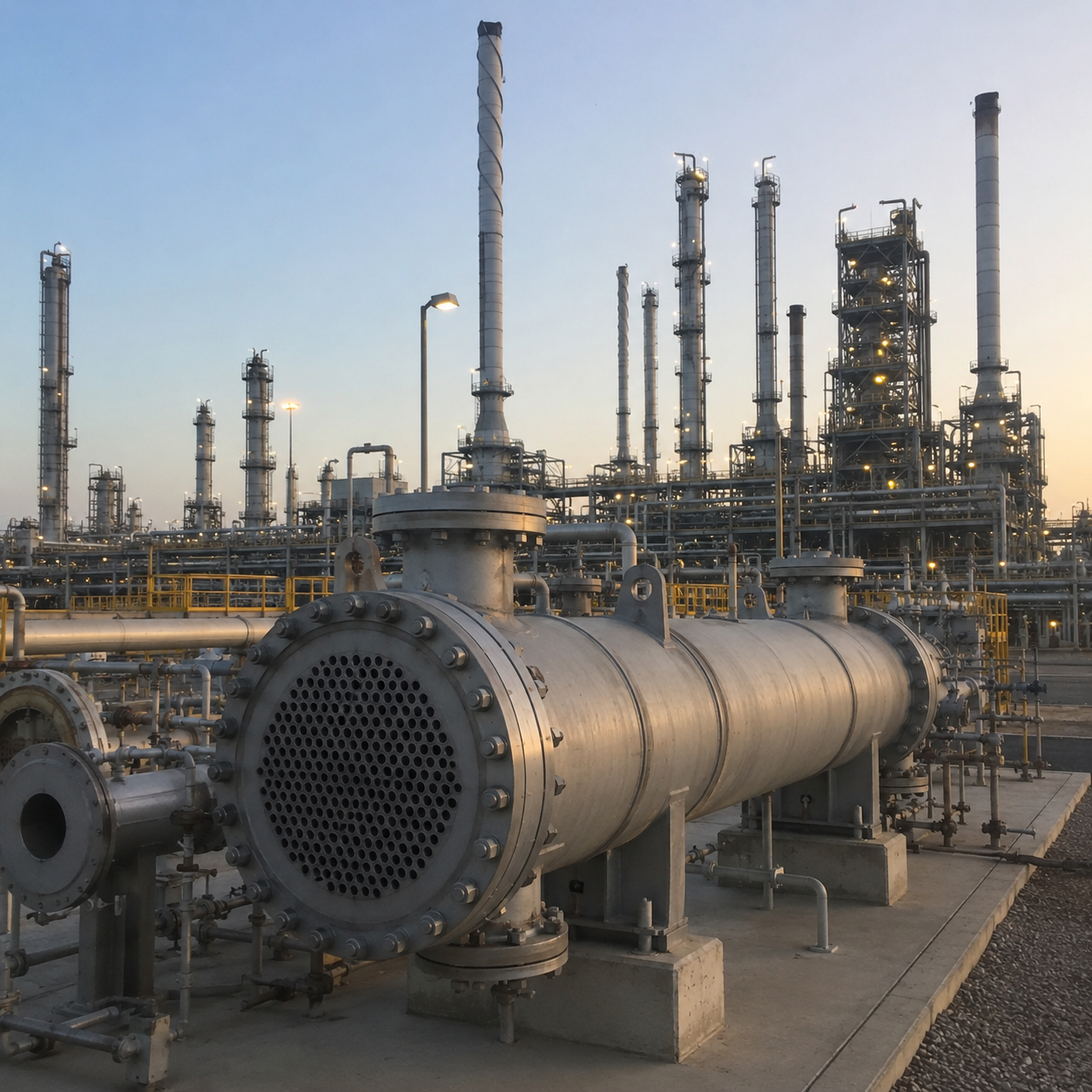
Heat is one of the biggest challenges in industrial operations. Machines, chemicals, steam systems, and manufacturing processes generate enormous amounts of thermal energy that must be controlled for safe and efficient operation. This is where shell and tube heat exchangers play a major role. They are considered one of the most reliable and widely used heat transfer systems in industries around the world.
A shell and tube heat exchanger is designed to transfer heat between two fluids without allowing them to mix together. The equipment contains a bundle of tubes enclosed inside a cylindrical shell. One fluid flows through the tubes while another flows around the outside of the tubes within the shell. Heat passes through the tube walls from the hotter fluid to the cooler one, creating an efficient thermal transfer process.
The simple but powerful design of shell and tube heat exchangers makes them suitable for high-pressure and high-temperature applications. Unlike many other cooling systems, they can operate continuously in demanding industrial environments with excellent durability and thermal efficiency. This is one of the main reasons they are heavily used in industries such as oil and gas, petrochemical plants, power generation, marine engineering, HVAC systems, pharmaceutical manufacturing, food processing, and chemical production.
One of the biggest advantages of shell and tube heat exchangers is their design flexibility. Different configurations are available depending on process requirements. Fixed tube sheet heat exchangers are compact and economical, U-tube heat exchangers are excellent for handling thermal expansion, and floating head heat exchangers allow easy cleaning and maintenance for heavy fouling applications.
Material selection also plays a critical role in heat exchanger performance. Manufacturers use materials such as carbon steel, stainless steel, duplex steel, titanium, copper alloys, and nickel alloys depending on operating pressure, temperature, and corrosion resistance requirements. Proper material selection increases equipment life and reduces maintenance costs.
Efficiency is another major reason industries prefer shell and tube heat exchangers. These systems help recover heat energy from industrial processes, reducing energy consumption and lowering operating costs. In large-scale manufacturing facilities, efficient heat recovery can significantly improve overall plant performance and sustainability.
Maintenance and serviceability are also important advantages. Depending on the exchanger design, tube bundles can be cleaned mechanically or chemically to maintain thermal efficiency over long operating periods. Regular inspection and maintenance help prevent fouling, corrosion, and pressure losses that could affect process performance.
Modern shell and tube heat exchangers are designed according to international standards such as ASME, TEMA, and API guidelines to ensure safety, reliability, and long-term operational stability. Advanced thermal design software and manufacturing technologies now allow engineers to optimize performance for highly specialized industrial applications.
As industries continue demanding higher efficiency, stronger reliability, and better energy management, shell and tube heat exchangers remain one of the most trusted thermal engineering solutions available today. Their ability to handle extreme industrial conditions while delivering efficient heat transfer makes them an essential part of modern industrial infrastructure.
References


 English
 Arabic
 Français
 Español
 Português
 Deutsch
 Dutch
Dutch
 Italiano
 Russian
 Romaian