


How AI Is Reshaping Automotive and Transportation Systems
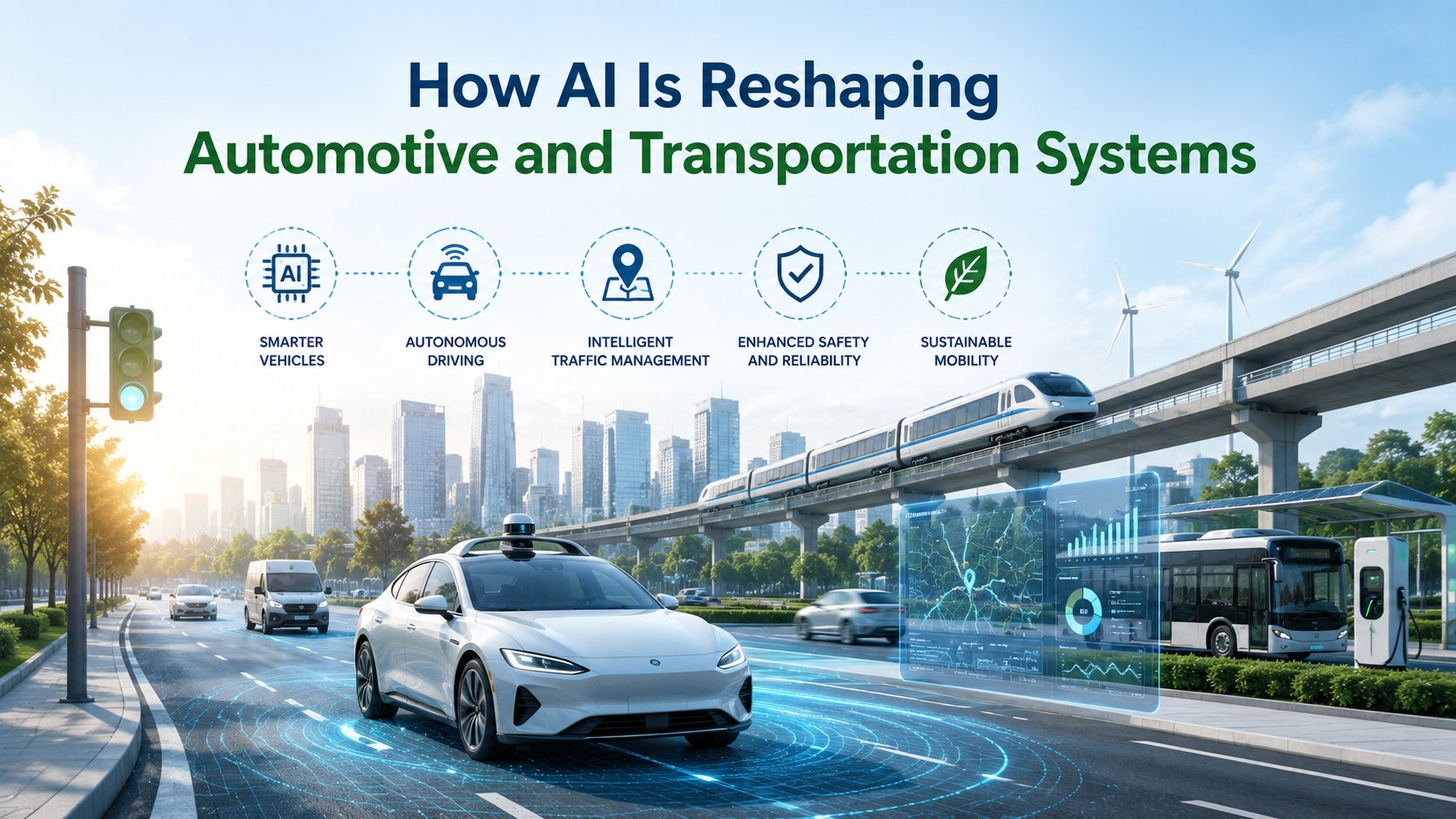
Artificial intelligence is increasingly becoming a foundational technology across the automotive and transportation ecosystem. From connected vehicles and predictive maintenance to intelligent traffic management and autonomous driving capabilities, AI is helping organizations improve operational efficiency while enhancing safety and user experiences. The growing integration of machine learning, computer vision, and real-time analytics is transforming how mobility systems operate across both public and private transportation networks.
Automotive manufacturers, logistics providers, and mobility platforms are accelerating investments in intelligent technologies to meet evolving consumer expectations and improve transportation infrastructure. According to a global artificial intelligence in automotive and transportation industry report, the sector is projected to witness notable growth during the forecast period, driven by increasing demand for autonomous systems, connected mobility solutions, and AI-powered fleet optimization technologies.
Rising Demand for Autonomous and Connected Vehicles
The development of autonomous and semi-autonomous vehicles remains one of the strongest growth drivers for AI adoption in transportation. Advanced driver-assistance systems (ADAS), lane-keeping technologies, adaptive cruise control, and automated parking functions are increasingly dependent on AI algorithms capable of processing large volumes of sensor and camera data in real time.
Organizations such as the National Highway Traffic Safety Administration (NHTSA) continue to evaluate and support emerging vehicle automation technologies to improve road safety and reduce traffic-related incidents. AI-powered systems can rapidly analyze driving conditions, detect obstacles, and assist drivers in making safer decisions under dynamic road environments.
Connected vehicle ecosystems are also gaining momentum as automotive manufacturers integrate cloud connectivity and intelligent communication systems into modern vehicles. Vehicle-to-vehicle (V2V) and vehicle-to-infrastructure (V2I) communication technologies rely heavily on AI to enable real-time navigation updates, traffic coordination, and predictive route optimization.
AI Enhancing Fleet Management and Logistics Operations
Transportation and logistics companies are increasingly utilizing AI-based platforms to streamline fleet operations and reduce operational costs. Intelligent routing systems can evaluate weather conditions, fuel consumption, delivery schedules, and traffic congestion simultaneously to identify efficient transportation routes.
The International Energy Agency (IEA) has highlighted the importance of improving transportation efficiency to support sustainability goals and reduce emissions from commercial mobility systems. AI-powered predictive maintenance systems also help fleet operators identify mechanical issues before failures occur, minimizing downtime and improving vehicle utilization rates.
Warehousing and freight management operations are similarly benefiting from automation technologies. AI-enabled analytics platforms support inventory forecasting, shipment tracking, and demand planning, helping logistics providers respond more effectively to supply chain disruptions and changing market conditions.
Smart Transportation Infrastructure Supporting Urban Mobility
Urban transportation authorities are increasingly deploying AI-driven intelligent transportation systems to address traffic congestion and improve public transit efficiency. Smart traffic lights, adaptive signaling systems, and AI-based traffic monitoring platforms help cities manage transportation networks more dynamically.
According to the World Bank Transport Overview, smarter transportation infrastructure plays a critical role in supporting sustainable urban development and improving mobility access across growing metropolitan populations. AI technologies enable city planners to analyze transportation patterns, monitor congestion hotspots, and optimize public transit operations using data-driven insights.
Public transportation systems are also integrating AI to enhance commuter experiences. Intelligent ticketing systems, predictive scheduling tools, and real-time passenger information platforms are helping transit agencies improve service reliability and operational coordination.
Growing Role of Computer Vision and Machine Learning
Computer vision technologies are becoming central to the future of intelligent mobility systems. AI-powered cameras and sensors can identify road signs, pedestrians, lane markings, and nearby vehicles with increasing accuracy. These capabilities are essential for autonomous navigation systems and advanced safety applications.
Machine learning models are continuously improving through large-scale data collection and real-world driving simulations. Automotive companies are training AI systems using millions of driving scenarios to enhance decision-making capabilities under diverse environmental conditions.
The expansion of edge computing is also supporting faster AI processing within vehicles. Instead of relying solely on cloud infrastructure, many modern automotive systems now process critical driving data locally, reducing latency and enabling quicker responses during complex driving situations.
Cybersecurity and Regulatory Challenges Remain Important
Despite rapid technological progress, AI integration in automotive and transportation systems also introduces several operational and regulatory challenges. Connected vehicles and cloud-based mobility systems require strong cybersecurity frameworks to protect sensitive vehicle and user data from cyber threats.
Governments and regulatory authorities across multiple regions are working to establish safety standards and compliance frameworks for autonomous vehicle deployment. Regulatory consistency remains essential for ensuring safe adoption while encouraging innovation across transportation ecosystems.
Data privacy concerns are also influencing AI implementation strategies. Transportation companies must balance intelligent data utilization with transparent privacy policies and secure information management practices.
Future Outlook for Intelligent Mobility Solutions
The future of automotive and transportation systems is expected to become increasingly data-driven, automated, and interconnected. AI technologies are likely to continue influencing vehicle manufacturing, urban mobility planning, logistics management, and public transportation infrastructure over the coming years.
Advancements in generative AI, edge analytics, and real-time sensor technologies may further improve intelligent mobility systems by enabling faster decision-making and enhanced operational coordination. As industries continue prioritizing efficiency, safety, and sustainability, AI adoption across transportation networks is expected to remain a major area of technological development globally.

 English
 Arabic
 Français
 Español
 Deutsch
 Türkçe
 Dutch
Dutch
 Italiano
 Russian
 Romaian