


Gemini Managed Agent: A Complete Developer Guide for 2026
Artificial intelligence development has moved well beyond basic chatbots. Organizations are now exploring systems that can plan tasks, interact with tools, gather information, and execute multi-step workflows with limited human intervention. This shift has accelerated interest in AI agents that can perform work rather than simply respond to prompts.
Developers are increasingly building agent-based systems to automate research, customer support, operational processes, and knowledge management. As businesses seek greater reliability and reduced infrastructure complexity, managed agent platforms have become an attractive option.
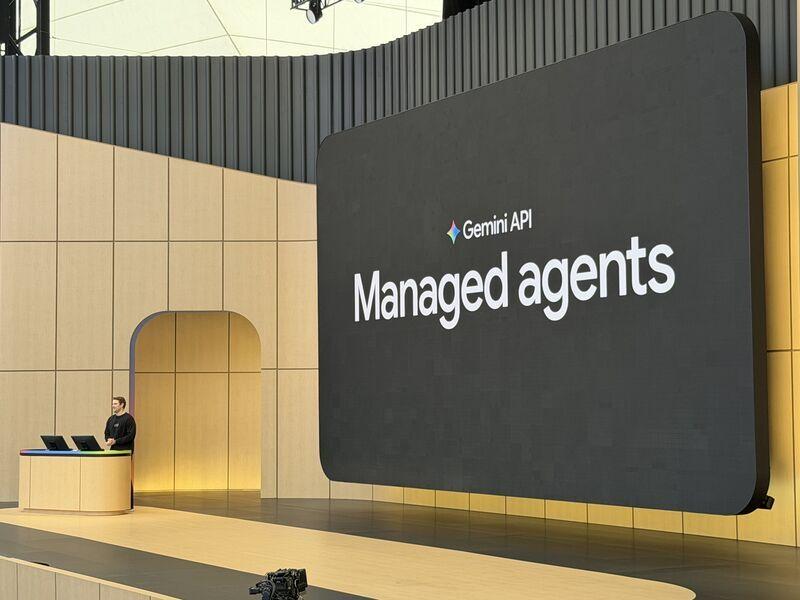
A Gemini Managed Agent represents Google's approach to agentic AI development. Instead of requiring developers to build and maintain complex orchestration layers from scratch, managed agents provide built-in capabilities for reasoning, tool usage, workflow execution, and context management.
This guide explains how Gemini Managed Agent systems work, their core architecture, practical development approaches, common use cases, and the challenges developers should prepare for in 2026.
What Is a Gemini Managed Agent?
Definition and Core Concepts
A Gemini Managed Agent is an AI-powered system that can understand goals, plan actions, use available tools, and complete tasks through multiple steps. Unlike traditional language model applications that operate on a prompt-response pattern, managed agents are designed to pursue objectives and execute workflows.
The key distinction lies in autonomy. A language model generates text based on input, while an agent evaluates what actions are required, determines the next step, and interacts with systems or APIs when necessary.
Agent Lifecycle Overview
Most agent workflows follow a predictable lifecycle:
-
Receive an objective
-
Analyze the request
-
Create an execution plan
-
Access required tools or information
-
Perform actions
-
Evaluate results
-
Complete the task or continue execution
This lifecycle allows agents to handle tasks that may require multiple decisions rather than a single response.
Planning, Reasoning, and Action Execution
Modern agents combine three major capabilities:
-
Planning: Determining the sequence of actions needed.
-
Reasoning: Evaluating available information and making decisions.
-
Execution: Performing actions through tools, APIs, or connected systems.
Together, these capabilities allow agents to function as workflow participants rather than simple conversational interfaces.
Managed vs Traditional Agent Architectures
Traditional agent architectures often require developers to manage orchestration frameworks, memory systems, monitoring tools, and infrastructure components independently.
Managed agent environments reduce operational overhead by providing many of these capabilities as built-in services. This allows development teams to focus more on business logic and user outcomes.
Core Components of a Gemini Managed Agent
Instruction Framework
Instructions serve as the operational rules that guide agent behavior. They define objectives, constraints, response styles, and task boundaries.
Clear instructions are critical because agents frequently encounter situations where multiple actions are possible. Well-structured guidance improves consistency and reliability.
Tool Calling Mechanisms
Agents become useful when they can interact with external systems.
Common tools include:
-
Search systems
-
Internal databases
-
CRM platforms
-
Knowledge repositories
-
Business applications
-
Analytics services
Tool calling enables agents to move beyond static responses and interact with live data sources.
Memory and Context Management
Context management helps agents maintain awareness throughout a workflow.
Short-term memory allows an agent to track ongoing tasks, while long-term memory can preserve important information across sessions. Effective memory handling improves continuity and reduces repetitive interactions.
Task Execution Workflows
Execution workflows coordinate the steps required to complete an objective.
For example, a research agent may:
-
Gather information
-
Validate sources
-
Summarize findings
-
Generate a report
-
Deliver results
Workflow orchestration ensures these actions occur in the correct sequence.
How Developers Build Agent-Based Systems
Defining Agent Objectives
Successful projects begin with clear objectives.
Instead of instructing an agent to "help users," define specific outcomes such as:
-
Resolve customer support requests
-
Generate weekly reports
-
Analyze competitor activity
-
Process incoming documents
Specific goals produce more predictable behavior.
Configuring Available Tools
Tool selection determines what an agent can accomplish.
Developers should carefully choose which systems the agent can access. Excessive permissions increase risk, while insufficient access limits usefulness.
A practical approach is to start with a small set of essential tools and expand gradually as requirements mature.
Managing Context and Memory
Context design has a significant impact on performance.
Developers must determine:
-
What information should persist
-
How long should information be retained
-
Which data sources are relevant
-
When memory should be refreshed
Poor memory management often results in inconsistent outputs or unnecessary repetition.
Testing Agent Behavior
Testing agents differ from traditional software testing.
Instead of verifying fixed outputs, developers evaluate:
-
Task completion rates
-
Decision quality
-
Error handling
-
Tool usage accuracy
-
Reliability under different conditions
Continuous testing remains necessary as workflows become more complex.
Common Development Use Cases
AI Research Agents
Research agents can gather information from multiple sources, summarize findings, compare viewpoints, and prepare reports.
These systems reduce the time spent on repetitive information collection tasks while helping teams process larger volumes of data.
Workflow Automation Agents
Many organizations deploy agents to automate operational processes.
Examples include:
-
Ticket routing
-
Document processing
-
Report generation
-
Data synchronization
-
Approval workflows
These applications support broader AI workflow management initiatives.
Customer Service Agents
Customer service remains one of the most active areas of AI agent development.
Agents can answer questions, retrieve account information, escalate issues, and support service teams around the clock.
When combined with human oversight, they help organizations manage larger support volumes.
Internal Knowledge Assistants
Knowledge assistants help employees locate information scattered across documents, databases, and internal systems.
These agents reduce search time and improve access to organizational knowledge.
Security and Governance Considerations
Access Control Mechanisms
Agents should only access systems necessary for their responsibilities.
Role-based permissions help reduce exposure and limit the impact of incorrect actions.
Organizations should regularly review and update access policies.
Data Privacy Requirements
Many industries operate under strict privacy regulations.
Developers must establish clear rules for:
-
Data storage
-
Data retention
-
Information sharing
-
User consent
-
Sensitive data handling
These requirements become especially important when enterprise AI agents interact with confidential information.
Auditability and Monitoring
Organizations need visibility into agent decisions and actions.
Monitoring systems should record:
-
Tool usage
-
Workflow execution
-
Decision paths
-
Error events
-
Security incidents
Detailed logs support troubleshooting and compliance efforts.
Responsible AI Practices
Responsible development includes fairness, transparency, accountability, and human oversight.
Organizations should establish governance policies before deploying autonomous agent systems into production environments.
Challenges Developers Should Prepare For
Hallucinations and Reliability Issues
Even advanced agents can generate incorrect conclusions or inaccurate outputs.
Validation layers, confidence scoring, and human review processes help reduce these risks.
Tool Integration Complexity
Connecting agents to multiple systems often introduces technical challenges.
Different APIs, authentication methods, and data formats can complicate implementation efforts.
Careful planning helps reduce integration-related delays.
Cost Management
Agent workloads can consume significant computational resources.
Factors affecting cost include:
-
Model usage
-
Tool calls
-
Workflow length
-
Data processing volume
-
Memory requirements
Monitoring usage patterns helps organizations maintain predictable spending.
Scaling Agent Workloads
As adoption grows, agents must support increasing workloads.
Scalability challenges often involve:
-
Concurrent requests
-
Resource allocation
-
Response latency
-
System reliability
Architectures should be designed with future growth in mind.
Future of Gemini Managed Agent Development
Persistent Agent Memory
Future agents will maintain richer historical context across longer periods.
Persistent memory can improve personalization, workflow continuity, and decision quality.
Multi-Agent Collaboration
Organizations are beginning to explore systems where multiple agents work together toward shared objectives.
One agent may perform research while another handles planning and a third manages execution.
Autonomous Decision Systems
Agents are gradually moving toward greater operational independence.
While human oversight will remain important, future systems may handle larger portions of routine business processes automatically.
Agent Operating Platforms
The next phase of development may involve comprehensive agent platforms that coordinate hundreds of specialized agents across departments and business functions.
Such environments could become a foundational layer of enterprise software infrastructure.
Conclusion
The rise of the Gemini Managed Agent reflects a broader shift from conversational AI toward systems capable of planning, reasoning, and executing complex workflows. For developers, understanding instruction frameworks, tool integrations, memory management, and workflow orchestration has become increasingly important.
Successful agent development depends on more than model selection. Security controls, governance policies, testing practices, and monitoring systems all play critical roles in long-term reliability. Organizations that invest in these foundations will be better positioned to build trustworthy and scalable agent-based applications.
As AI agent development continues to mature, future systems will likely feature stronger memory capabilities, multi-agent collaboration, and greater operational autonomy. These advancements will shape the next generation of intelligent software across industries.

 English
 Arabic
 Français
 Español
 Português
 Deutsch
 Türkçe
 Dutch
Dutch
 Russian
 Romaian