


How to Balance Full-Time Work While Preparing for a Security Management Exam?
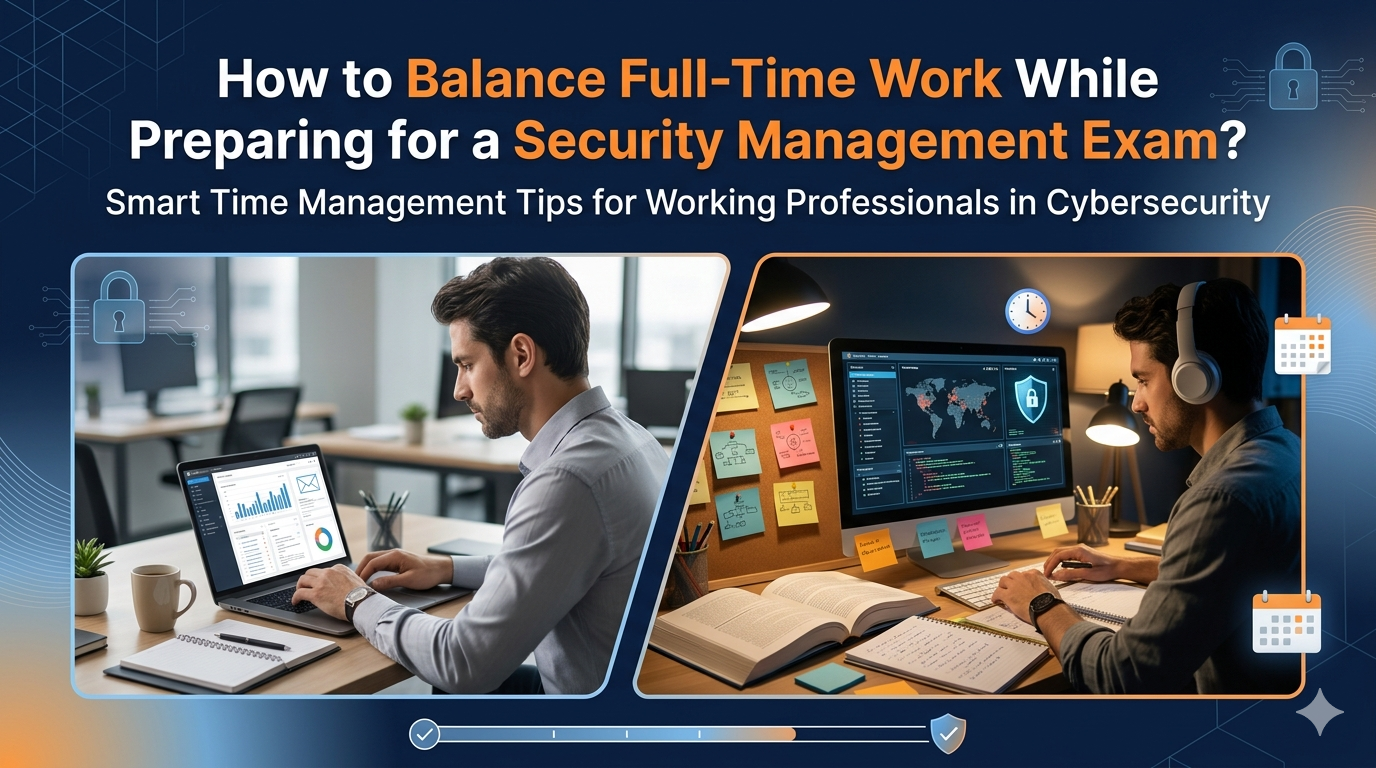
Preparing for a security management exam while working full-time can feel overwhelming. Between office responsibilities, deadlines, meetings, and personal commitments, finding enough time to study consistently becomes a major challenge for many professionals. However, with proper planning, smart study techniques, and disciplined time management, balancing work and exam preparation is completely achievable.
Many cybersecurity and IT professionals pursue advanced certifications to improve their careers while continuing their current jobs. The key is creating a realistic study strategy that fits your daily schedule without causing burnout.
If you want to understand the complete certification process, eligibility, renewal requirements, and career benefits, read more in our guide on What is CISM Certification? Full Guide for IT Managers.
Why Balancing Work and Exam Preparation Is Challenging
Security management certifications require deep understanding of governance, risk management, incident response, compliance, and security program development. These topics demand focused study and regular practice.
At the same time, full-time professionals often deal with:
-
Long working hours
-
Tight project deadlines
-
Family responsibilities
-
Mental fatigue after work
-
Unexpected office priorities
Without proper planning, candidates may lose motivation or struggle to maintain consistency during exam preparation.
Create a Realistic Study Schedule
One of the most effective ways to balance work and certification preparation is by building a realistic study plan.
Instead of studying for long hours occasionally, focus on consistent daily learning. Even 1–2 hours of focused study each day can produce excellent results over time.
Tips for Building a Study Schedule
-
Study early in the morning before work if possible
-
Use weekends for longer revision sessions
-
Divide topics into weekly goals
-
Set small daily targets
-
Reserve time for mock tests and revision
Avoid creating overly aggressive schedules that become difficult to follow after a few weeks.
Prioritize High-Value Topics
Security management exams cover multiple domains, so understanding topic weightage is important.
Start with the areas that carry the highest importance in the exam syllabus. Focus on concepts such as:
-
Information security governance
-
Risk management
-
Incident management
-
Security program management
-
Compliance and auditing
Prioritizing important domains helps improve efficiency and increases confidence during preparation.
Use Short Study Sessions Effectively
Many working professionals believe they need long uninterrupted study hours to prepare effectively. In reality, shorter focused sessions can be highly productive.
You can study during:
-
Lunch breaks
-
Commute time
-
Early mornings
-
Late evenings
-
Weekends
Micro-learning techniques such as flashcards, short videos, and quick quizzes can help reinforce concepts without requiring extended study hours.
Avoid Burnout During Preparation
Managing work and certification studies simultaneously can become mentally exhausting if not handled carefully.
To maintain productivity:
-
Take regular short breaks
-
Get proper sleep
-
Exercise regularly
-
Avoid excessive overtime when possible
-
Maintain a healthy work-life balance
Burnout can reduce concentration and negatively impact both job performance and exam preparation.
Use Practice Exams and Mock Tests
Mock exams play a critical role in helping candidates balance preparation efficiently.
Practice tests help you:
-
Identify weak areas
-
Improve time management
-
Understand question patterns
-
Build exam confidence
-
Reduce exam anxiety
Instead of repeatedly reading theory, use mock tests to measure your actual readiness.
Communicate With Family and Workplace
Support from family and colleagues can make a major difference during certification preparation.
Inform your family about your study schedule so they can support your routine. Similarly, if possible, discuss your certification goals with your manager or team lead.
Many organizations encourage professional development and may offer:
-
Flexible schedules
-
Study leave
-
Certification reimbursement
-
Training support
Professional certifications ultimately benefit both employees and organizations.
Stay Consistent Instead of Studying Intensively
Consistency is more important than studying for extremely long hours occasionally.
For example:
-
Studying 90 minutes daily for 4 months is often more effective than studying 10 hours only on weekends.
Regular revision helps improve long-term retention and reduces stress closer to the exam date.
Join Online Study Groups and Communities
Online communities can help working professionals stay motivated during exam preparation.
Joining study groups provides benefits such as:
-
Peer discussions
-
Shared study materials
-
Preparation tips
-
Doubt-solving sessions
-
Accountability and motivation
Learning with others can make preparation more engaging and less stressful.
How CISM Certification Enhances Your Career
Earning a globally recognized certification like CISM can significantly strengthen your cybersecurity career. It validates your expertise in information security governance, risk management, and security leadership.
Professionals with CISM certification are often preferred for leadership and management-level cybersecurity roles such as:
-
Information Security Manager
-
Cybersecurity Consultant
-
Risk and Compliance Manager
-
Security Governance Specialist
-
IT Audit Manager
-
Chief Information Security Officer (CISO)
Organizations value certified professionals because they demonstrate both technical understanding and strategic management capabilities.
In addition, CISM-certified professionals often benefit from:
-
Higher salary opportunities
-
Better career growth
-
Increased professional credibility
-
Global industry recognition
-
Stronger leadership opportunities
As businesses continue investing heavily in cybersecurity, demand for qualified security management professionals continues to grow worldwide.
Best Time Management Tips for Working Professionals
Here are some practical strategies to balance work and exam preparation successfully:
Eliminate Distractions
Limit social media usage and avoid multitasking while studying.
Use Productivity Techniques
Methods like the Pomodoro Technique can improve focus and efficiency.
Track Your Progress
Maintain a checklist or study tracker to monitor completed topics.
Focus on Quality Over Quantity
Deep understanding matters more than studying for long hours without concentration.
Revise Regularly
Weekly revision helps improve memory retention and prevents last-minute stress.
Final Thoughts
Balancing a full-time job while preparing for a security management exam is challenging but completely manageable with the right strategy. The key is maintaining consistency, managing time effectively, and avoiding burnout during the preparation journey.
By creating a structured study schedule, prioritizing important topics, and staying disciplined, working professionals can successfully prepare for certification exams without sacrificing job performance.
Professional certifications not only strengthen your cybersecurity knowledge but also open doors to better career opportunities, leadership roles, and long-term professional growth.

 English
 Arabic
 Español
 Português
 Deutsch
 Türkçe
 Dutch
Dutch
 Italiano
 Russian
 Romaian