


Key Features Every Enterprise AI Agent Should Have
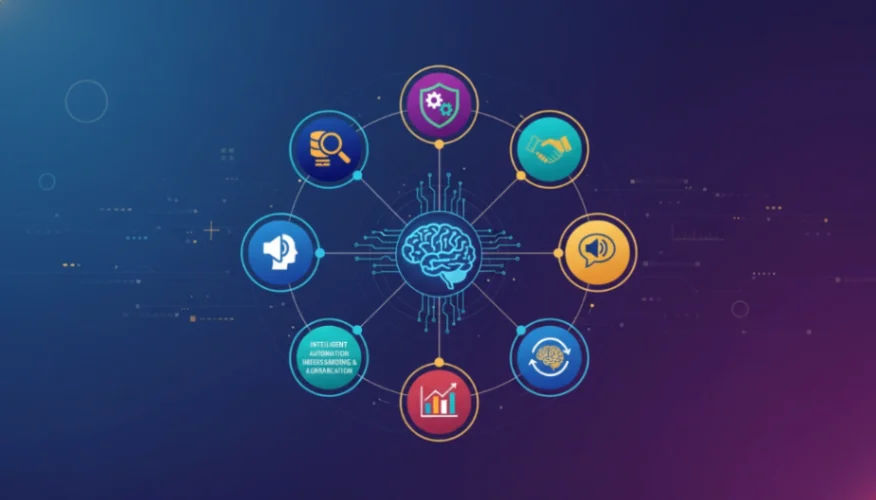
Enterprise artificial intelligence has evolved far beyond simple chatbots and automation tools. Today, organizations are deploying intelligent AI agents capable of understanding business context, making decisions, interacting with enterprise applications, and executing tasks with minimal human involvement. These AI-powered systems are helping businesses improve productivity, reduce operational costs, streamline workflows, and enhance customer experiences.
As enterprises continue investing in digital transformation initiatives, AI agents are becoming a core component of modern business operations. Whether supporting customer service teams, automating procurement processes, assisting HR departments, managing IT operations, or providing business intelligence insights, AI agents are increasingly acting as digital employees that augment human capabilities.
Companies exploring enterprise AI often begin by understanding artificial intelligence and how intelligent systems can create measurable business value. However, implementing AI agents successfully requires more than selecting a technology platform. The effectiveness of an enterprise AI agent depends heavily on the features and capabilities it offers.
Organizations that understand the essential characteristics of enterprise-grade AI agents are better positioned to choose solutions that deliver long-term value, support business growth, and adapt to evolving operational requirements.
What is an Enterprise AI Agent?
An enterprise AI agent is an intelligent software system designed to perform tasks, analyze information, interact with users, and execute business processes autonomously or semi-autonomously within an organizational environment. Unlike consumer-facing virtual assistants, enterprise AI agents are built specifically for business operations where security, compliance, scalability, governance, and integration capabilities are critical.
These systems leverage technologies such as artificial intelligence, machine learning, large language models, predictive analytics, and workflow orchestration to support operational processes across departments.
Enterprise AI agents can perform a wide range of functions, including customer support automation, employee assistance, knowledge retrieval, document processing, workflow management, compliance monitoring, data analysis, and decision support.
Organizations evaluating enterprise AI solutions frequently compare leading AI Agent development companies to identify providers capable of delivering scalable and secure AI implementations.
Why Features Matter in Enterprise AI Solutions
The success of an enterprise AI initiative depends heavily on the capabilities built into the solution. While many AI tools offer conversational interfaces, enterprise environments require much deeper functionality.
Missing features can limit adoption, reduce operational effectiveness, create security vulnerabilities, and increase maintenance costs. Conversely, a feature-rich AI agent can become a strategic business asset that improves productivity, accelerates decision-making, and drives operational efficiency.
Organizations should evaluate AI agents based on their ability to understand business context, integrate with enterprise systems, support governance requirements, automate workflows, and scale across departments.
The right feature set ensures that AI agents can support both current operational needs and future business growth.
Natural Language Understanding and Communication
Natural language understanding is one of the most fundamental capabilities of an enterprise AI agent. Employees and customers expect AI systems to communicate naturally, understand intent, recognize context, and respond accurately regardless of how requests are phrased.
Advanced AI agents leverage natural language processing to interpret user inputs, identify relevant information, and generate meaningful responses. This capability enables users to interact with AI agents using everyday language rather than predefined commands.
For example, a finance employee may ask an AI agent to generate a quarterly expense report, while a customer support representative may request account history information. The AI system must understand the intent behind each request and deliver relevant results quickly.
Strong communication capabilities improve user adoption, reduce training requirements, and create more intuitive enterprise experiences.
Businesses interested in understanding how AI is transforming industries can explore real-world applications of artificial intelligence across various sectors.
Autonomous Decision-Making Capabilities
Enterprise AI agents must go beyond answering questions. They should possess the ability to evaluate information, analyze situations, and make informed decisions based on business rules, historical data, and contextual information.
Autonomous decision-making enables AI agents to manage routine tasks without requiring constant human oversight. Examples include assigning support tickets, prioritizing customer inquiries, approving low-risk requests, routing workflows, and recommending operational actions.
Modern AI systems combine predictive analytics with business intelligence to evaluate multiple variables before selecting the most appropriate action. This capability allows organizations to automate repetitive decision-making processes while maintaining consistency and accuracy.
As AI technologies continue evolving, autonomous decision-making is becoming a key differentiator between basic automation tools and truly intelligent enterprise systems.
Context Awareness and Memory Management
One of the most valuable features of enterprise AI agents is the ability to maintain context and remember previous interactions. Context awareness allows AI systems to provide more personalized, relevant, and accurate responses over time.
Without memory management, users would need to repeatedly provide the same information during every interaction. This creates frustration and limits the effectiveness of AI-powered experiences.
Context-aware agents can retain information about user preferences, project status, workflow history, customer interactions, and organizational knowledge. This enables more intelligent conversations and supports advanced automation scenarios.
For example, an AI sales assistant can remember previous customer conversations, identify unresolved issues, and recommend next steps based on historical interactions.
Organizations implementing customized AI solutions often apply principles discussed in custom software development best practices to ensure AI systems align with specific business requirements.
Workflow Automation and Task Execution
The true power of enterprise AI emerges when agents move beyond conversation and begin executing actions. Workflow automation enables AI systems to perform business tasks across applications, departments, and processes.
Examples include creating support tickets, scheduling meetings, generating reports, processing invoices, updating CRM records, approving requests, sending notifications, and initiating operational workflows.
Rather than simply providing recommendations, advanced AI agents can complete entire workflows autonomously while maintaining governance and visibility.
This capability significantly reduces manual effort, minimizes human error, and improves operational efficiency across the organization.
Many enterprises combine AI-driven automation with broader digital transformation initiatives supported by modern software development methodologies and enterprise systems.
Integration with Enterprise Systems (ERP, CRM, APIs)
Enterprise AI agents cannot operate in isolation. To deliver meaningful business value, they must integrate seamlessly with the systems employees use every day. These integrations allow AI agents to access data, trigger actions, update records, and automate processes across the organization's technology ecosystem.
Modern enterprises rely on ERP platforms, CRM systems, HR applications, accounting software, collaboration tools, document repositories, and business intelligence platforms. AI agents that can interact with these systems become significantly more useful than standalone conversational tools.
For example, a sales AI agent connected to a CRM platform can retrieve customer history, update opportunity records, schedule follow-ups, and generate sales forecasts without requiring employees to switch between multiple applications.
Organizations evaluating enterprise technology architecture often benefit from understanding software architecture best practices that support scalable integrations.
Strong API integration capabilities ensure that AI agents become embedded within business workflows rather than functioning as disconnected systems.
Multi-Agent Collaboration and Orchestration
As enterprise AI adoption grows, organizations are increasingly deploying multiple AI agents across departments and business functions. These agents must work together efficiently to solve complex problems and automate end-to-end processes.
Multi-agent collaboration allows specialized AI systems to communicate, share information, and coordinate actions. Instead of relying on a single AI model to perform every task, organizations can deploy dedicated agents for customer service, finance, HR, procurement, compliance, and operations.
For example, a customer onboarding workflow may involve one agent collecting information, another verifying compliance requirements, a third creating accounts, and a fourth notifying stakeholders. Together, these agents create a streamlined and highly automated process.
Effective orchestration ensures that multiple agents work cohesively while maintaining visibility, governance, and accountability throughout the workflow.
Real-Time Data Processing and Analytics
Enterprise decisions often depend on rapidly changing information. AI agents must be capable of accessing, processing, and analyzing data in real time to provide relevant recommendations and take appropriate actions.
Real-time analytics enables AI systems to monitor operational metrics, identify anomalies, track performance indicators, and respond to changing business conditions as they occur.
For instance, a supply chain AI agent can monitor inventory levels, predict shortages, and automatically trigger replenishment processes before disruptions occur. Similarly, a customer service AI agent can identify emerging support trends and recommend proactive interventions.
Many modern AI solutions leverage large language models alongside real-time analytics platforms to improve decision-making and operational responsiveness.
The ability to process information instantly provides organizations with greater agility and supports faster business outcomes.
Security, Compliance, and Access Controls
Security is one of the most critical requirements for enterprise AI deployments. AI agents often access sensitive business information, customer records, financial data, intellectual property, and confidential communications.
Enterprise AI systems must implement robust security frameworks that protect data while supporting organizational governance requirements.
Essential security capabilities include role-based access control, data encryption, identity management, audit logging, authentication protocols, and threat monitoring.
Organizations must also address regulatory obligations related to data privacy, cybersecurity, and industry-specific compliance standards.
For example, healthcare organizations must protect patient information, while financial institutions require detailed audit trails and risk management controls.
Security should never be treated as an afterthought. It must be embedded into every stage of AI development, deployment, and operations.
Scalability and Performance Optimization
Enterprise AI agents must be designed to scale alongside business growth. What works for a single department may eventually need to support thousands of employees, millions of transactions, or global operations.
Scalability ensures that AI agents maintain performance, reliability, and responsiveness as workloads increase. Organizations should evaluate how AI systems handle growing user volumes, expanding datasets, additional workflows, and increasing integration requirements.
Cloud-native architectures and distributed computing environments often play an important role in supporting enterprise-scale deployments. Technologies associated with cloud computing enable organizations to scale resources dynamically based on demand.
Performance optimization also includes reducing response times, improving model efficiency, minimizing infrastructure costs, and ensuring consistent user experiences across the organization.
Customizability and Fine-Tuning Options
No two organizations operate in exactly the same way. Enterprise AI agents must be flexible enough to accommodate unique business processes, terminology, workflows, and operational requirements.
Customizability allows businesses to tailor AI behavior according to their objectives, policies, and industry requirements. This may involve training agents on proprietary knowledge, configuring workflows, creating custom prompts, and defining business-specific rules.
Fine-tuning capabilities further enhance AI performance by adapting models to specialized use cases and improving accuracy within specific domains.
Organizations pursuing highly tailored implementations often begin by understanding custom software development and how customized solutions support long-term business goals.
The ability to customize AI systems ensures greater alignment with organizational needs and improves overall effectiveness.
Monitoring, Reporting, and Audit Trails
Enterprise AI deployments require ongoing visibility into system performance, user activity, decision-making processes, and operational outcomes.
Monitoring tools help organizations track usage patterns, identify performance issues, measure business impact, and ensure that AI systems operate as expected.
Comprehensive reporting capabilities provide insights into productivity improvements, workflow completion rates, customer interactions, and operational efficiency metrics.
Audit trails are equally important because they create accountability and transparency. Organizations need visibility into how AI agents arrived at decisions, what actions were taken, and which users were involved.
Strong governance frameworks supported by reporting and auditing capabilities help organizations manage risk while maintaining regulatory compliance.
Human-in-the-Loop Functionality
Despite significant advances in AI technology, human oversight remains essential for many enterprise processes. Human-in-the-loop functionality ensures that employees can review, validate, approve, or override AI-generated decisions when necessary.
This capability is particularly important for high-risk activities involving legal, financial, compliance, healthcare, or strategic business decisions.
For example, an AI agent may analyze contract terms and recommend approval, but final authorization may still require legal review. Similarly, an AI-powered financial system may identify unusual transactions while allowing compliance officers to make final determinations.
Human oversight helps organizations balance automation with accountability while increasing trust in AI-driven systems.
Businesses exploring practical enterprise implementations often review how AI tools support custom software development to understand the relationship between automation and human expertise.
Benefits of Feature-Rich Enterprise AI Agents
Organizations that invest in enterprise AI agents with advanced capabilities gain far more than operational automation. Feature-rich AI systems become strategic assets that improve productivity, accelerate decision-making, enhance customer experiences, and support business growth.
One of the biggest advantages is increased efficiency. AI agents can automate repetitive tasks, reduce manual workloads, and allow employees to focus on higher-value initiatives. This not only improves productivity but also helps organizations allocate resources more effectively.
Another significant benefit is improved decision-making. By combining real-time analytics, historical data, and predictive insights, AI agents can provide recommendations that help leaders make informed business decisions.
Customer experience also improves considerably. AI-powered support agents can provide 24/7 assistance, deliver personalized responses, and reduce response times. This creates a more seamless experience while reducing support costs.
Organizations exploring advanced AI adoption strategies often evaluate leading software development companies to identify technology partners capable of building enterprise-grade solutions.
Feature-rich AI agents also support innovation by enabling organizations to experiment with new business models, optimize operations, and uncover opportunities hidden within large datasets.
Common Challenges and Limitations
Despite their advantages, enterprise AI agents are not without challenges. Organizations must understand these limitations to develop realistic implementation strategies and governance frameworks.
One common challenge is data quality. AI agents rely heavily on accurate, complete, and up-to-date information. Poor-quality data can result in inaccurate outputs, unreliable recommendations, and reduced trust among users.
Integration complexity is another concern. Large enterprises often operate dozens of systems across departments, making seamless connectivity a significant technical challenge.
Organizations may also face difficulties related to change management. Employees may be hesitant to trust AI systems or alter established workflows. Effective training and communication strategies are essential for successful adoption.
Another challenge involves explainability. While modern AI systems can generate sophisticated outputs, understanding how certain decisions are made can sometimes be difficult. This becomes especially important in regulated industries where transparency is required.
Businesses implementing enterprise AI solutions must also address concerns related to data governance, model bias, operational risk, and compliance management.
Recognizing these challenges early allows organizations to implement appropriate controls and maximize the value of their AI investments.
Future Features Shaping Next-Generation AI Agents
The capabilities of enterprise AI agents continue to evolve rapidly. Emerging technologies are enabling agents to become more autonomous, collaborative, and capable of handling increasingly complex business processes.
One major trend is the rise of multi-modal AI systems capable of processing text, images, audio, video, and structured data simultaneously. This allows AI agents to understand and interact with information in ways that more closely resemble human reasoning.
Advances in deep learning and transformer models are enabling more sophisticated reasoning, planning, and problem-solving capabilities.
Another important development is the emergence of autonomous multi-agent ecosystems. Rather than relying on a single AI assistant, organizations will deploy networks of specialized agents capable of collaborating across departments and business functions.
Future AI agents will also leverage advanced knowledge management systems, allowing them to retain organizational expertise and continuously improve their performance. Technologies related to knowledge management will play a central role in these advancements.
Improved integration capabilities will enable AI agents to connect seamlessly with enterprise applications through application programming interfaces, creating highly automated business environments.
Organizations interested in future AI innovation can also explore different types of artificial intelligence and how emerging technologies are shaping enterprise adoption.
As these capabilities mature, AI agents will increasingly function as intelligent digital coworkers that support strategic decision-making, operational execution, and business innovation.
Conclusion
Enterprise AI agents are rapidly becoming a foundational technology for modern organizations. However, successful implementation depends on selecting solutions that offer the right combination of intelligence, automation, scalability, security, and business integration capabilities.
The most effective enterprise AI agents combine natural language understanding, autonomous decision-making, contextual awareness, workflow automation, enterprise integrations, multi-agent collaboration, real-time analytics, security controls, scalability, customization, monitoring, and human oversight.
Organizations that prioritize these features can create AI-powered ecosystems that improve efficiency, enhance employee productivity, strengthen customer experiences, and support long-term business growth.
As AI technologies continue evolving, enterprises that invest in robust and feature-rich AI agents today will be better positioned to capitalize on future innovations and maintain a competitive advantage in an increasingly digital economy.
Looking for expert guidance on AI implementation? Contact us and work with a trusted AI development partner to build intelligent AI agents that automate workflows, enhance productivity, and accelerate digital transformation across your organization.

 English
 Arabic
 Español
 Português
 Deutsch
 Türkçe
 Dutch
Dutch
 Italiano
 Russian
 Romaian