


What Are AI Agent Frameworks? Complete Beginner Guide (2026)
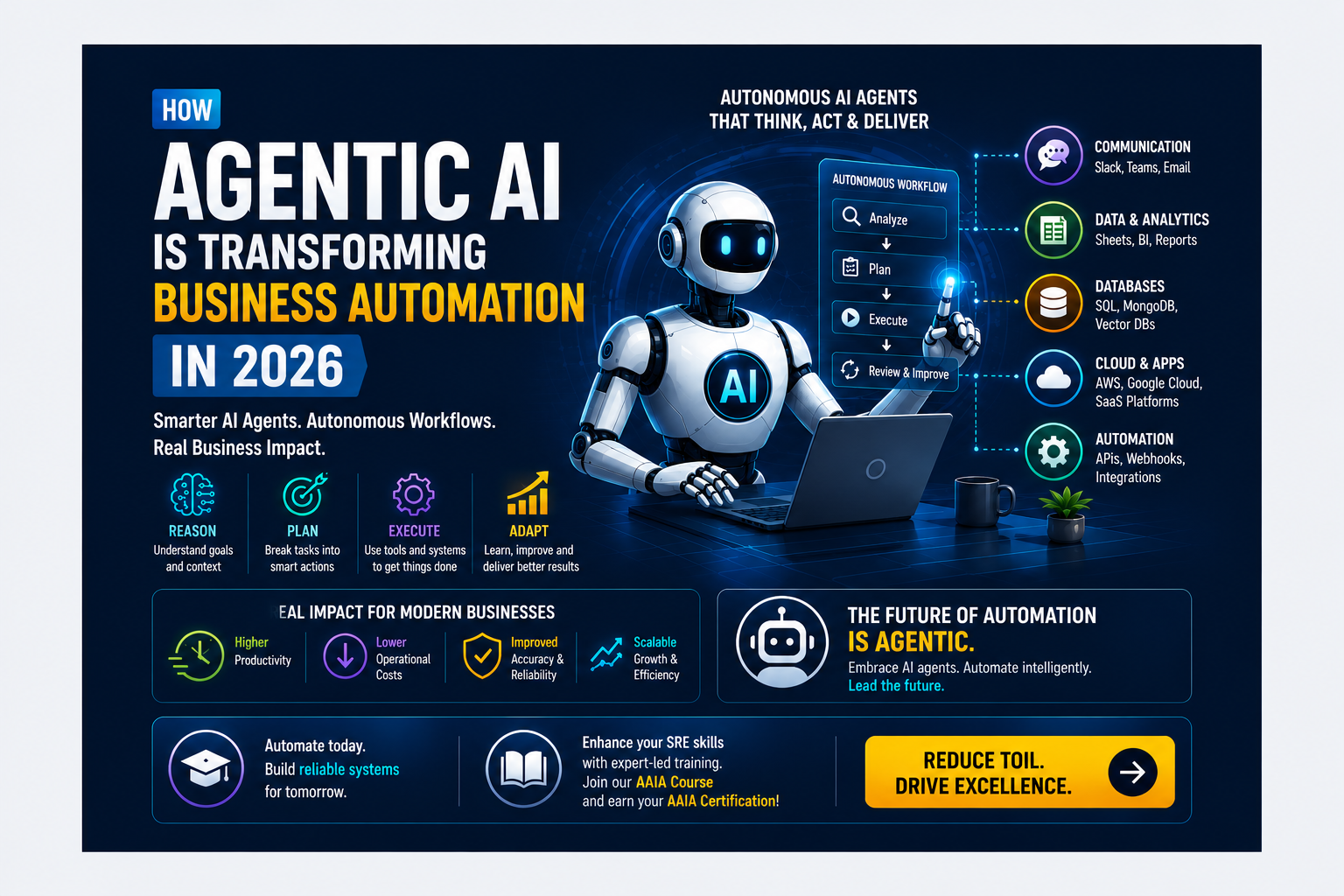
What Are AI Agent Frameworks? Complete Beginner Guide (2026)
Artificial intelligence is rapidly evolving from simple chatbots into autonomous systems capable of reasoning, planning, and executing tasks independently. Businesses across IT, customer support, software development, and enterprise operations are increasingly adopting AI agent frameworks to automate complex workflows with minimal human supervision.
This shift has created massive interest in modern agentic ai tools that help organizations build intelligent workflows capable of decision-making, tool usage, and multi-step execution. Instead of responding to one prompt at a time, these systems can pursue goals autonomously while interacting with APIs, databases, and enterprise software.
AI agent frameworks are becoming the foundation of next-generation AI automation because they simplify how developers and businesses create autonomous AI agents. Whether you are a developer exploring orchestration systems or a business leader planning enterprise automation, understanding AI agent frameworks is now an essential skill in 2026.
What Are AI Agent Frameworks?
AI agent frameworks are software platforms or orchestration systems that help developers create autonomous AI agents capable of reasoning, planning, memory management, and workflow execution.
Traditional AI systems typically generate outputs from prompts. Agent frameworks go much further by enabling agents to:
· Break down goals into tasks
· Use external tools and APIs
· Access memory systems
· Coordinate workflows
· Collaborate with other AI agents
· Execute tasks autonomously
For example, instead of manually asking an AI chatbot to analyze support tickets one-by-one, an AI agent framework can automatically:
1. Collect incoming tickets
2. Categorize priority levels
3. Retrieve customer information
4. Draft responses
5. Escalate critical issues
6. Learn from previous outcomes
This is why autonomous AI systems are becoming central to enterprise automation.
Why AI Agent Frameworks Matter in 2026
Modern enterprises generate massive amounts of operational data and repetitive workflows. Traditional automation tools struggle when workflows become dynamic or require contextual reasoning.
AI agent frameworks solve this problem by combining:
· Large language models (LLMs)
· Tool integrations
· Workflow orchestration
· Persistent memory
· Multi-agent collaboration
According to Gartner projections, more than half of enterprise knowledge work will involve autonomous AI systems by 2027. Organizations are already deploying AI agents for customer service, IT operations, content management, software engineering, and business process automation.
The rise of autonomous systems is also increasing demand for professionals skilled in AI orchestration and workflow automation.
Core Components of AI Agent Frameworks
1. Reasoning Engine
Most frameworks use large language models such as GPT-4, Claude, or Gemini as their reasoning layer.
These models interpret goals, evaluate options, and generate decisions dynamically.
2. Tool Integration
AI agents become operationally useful when connected to external systems.
Frameworks can integrate with:
· Slack
· Salesforce
· Jira
· Google Drive
· APIs
· Databases
· Cloud platforms
This allows AI systems to move beyond conversation into execution.
3. Memory Systems
Persistent memory enables agents to remember previous interactions, workflows, and operational context.
Modern frameworks use vector databases and embeddings to support:
· Long-term memory
· Context retrieval
· Personalized workflows
· Knowledge grounding
4. Workflow Orchestration
Agent orchestration allows systems to coordinate multiple steps and decision paths.
This capability becomes critical for enterprise workflows involving approvals, retries, escalation logic, and multi-stage execution.
Popular AI Agent Frameworks in 2026
LangChain
LangChain remains one of the most popular frameworks for building flexible AI workflows.
It supports:
· Retrieval-Augmented Generation (RAG)
· Tool calling
· Memory systems
· Agent orchestration
· API integrations
Many enterprise teams use LangChain to create AI assistants, research agents, and workflow automation systems.
LangGraph
LangGraph extends LangChain with graph-based orchestration.
It supports:
· Stateful workflows
· Branching logic
· Human approvals
· Long-running agents
· Multi-step execution
This makes it ideal for enterprise-grade automation.
In the middle of evaluating different agentic ai tools, many organizations choose LangGraph when workflows require persistent state management and advanced orchestration.
CrewAI
CrewAI focuses on collaborative multi-agent systems.
Different agents can specialize in tasks such as:
· Research
· Writing
· Validation
· SEO optimization
· Planning
This structure closely resembles human teamwork.
AutoGen
Microsoft’s AutoGen framework focuses on conversational collaboration between AI agents.
It is especially useful for:
· Coding assistants
· Planning systems
· AI simulations
· Research workflows
Open-Source vs Enterprise Frameworks
Open-source AI frameworks are growing rapidly because organizations want flexibility, customization, and control.
Open-source frameworks:
· LangChain
· CrewAI
· LangGraph
· Flowise
Enterprise-focused platforms:
· Microsoft Copilot Studio
· Salesforce Agentforce
· ServiceNow AI Agents
Businesses often start with open-source experimentation before moving into enterprise-scale deployment.
Real-World Applications of AI Agent Frameworks
AI agent frameworks are already transforming multiple industries.
IT Operations
AI agents monitor systems, detect anomalies, and automate incident resolution.
Marketing Automation
Autonomous agents can optimize content, analyze SEO performance, and schedule campaigns.
Customer Support
AI systems handle ticket routing, customer communication, and workflow escalation.
Software Development
AI coding agents assist with testing, debugging, and deployment workflows.
Finance
Autonomous systems help with fraud detection, reconciliation, and compliance monitoring.
These enterprise applications continue expanding as AI infrastructure becomes more advanced.
Skills Needed to Work with AI Agent Frameworks
As organizations adopt autonomous AI systems, professionals need new technical and operational skills.
Important skills include:
· Python programming
· API integrations
· Vector databases
· Prompt engineering
· Workflow orchestration
· AI governance
· Retrieval-Augmented Generation (RAG)
Businesses are increasingly hiring professionals who understand autonomous AI workflows and enterprise AI architecture.
Many learners are now exploring structured training through an Agentic AI Course to gain practical experience with orchestration systems, memory pipelines, and autonomous workflow design.
Future of AI Agent Frameworks
The future of AI automation will likely revolve around collaborative multi-agent ecosystems.
Instead of isolated assistants, enterprises will deploy specialized agents working together across departments and operational systems.
Emerging trends include:
· AI agent marketplaces
· Autonomous enterprise operations
· Agent-to-agent communication
· AI governance platforms
· Real-time workflow orchestration
· Persistent memory systems
As AI infrastructure matures, organizations that understand orchestration frameworks early will gain significant operational advantages.
Conclusion
AI agent frameworks are rapidly becoming the backbone of intelligent enterprise automation. They allow organizations to build autonomous systems capable of planning, reasoning, memory management, and workflow execution across real-world business environments.
From LangChain and LangGraph to CrewAI and AutoGen, the ecosystem of modern AI orchestration platforms continues expanding quickly in 2026. Businesses adopting these systems today are improving operational efficiency while preparing for a future driven by autonomous AI agents.
Professionals interested in mastering enterprise AI workflows should explore leading agentic ai tools and hands-on orchestration systems to stay competitive in the evolving AI landscape.
For learners looking to build practical expertise, pursuing an Agentic AI Certification can help develop real-world skills in AI agent orchestration, RAG systems, workflow automation, and enterprise AI deployment.

 English
 Arabic
 Français
 Español
 Português
 Deutsch
 Türkçe
 Italiano
 Russian
 Romaian