


Accounts Payable Management: Best Practices for Business Success
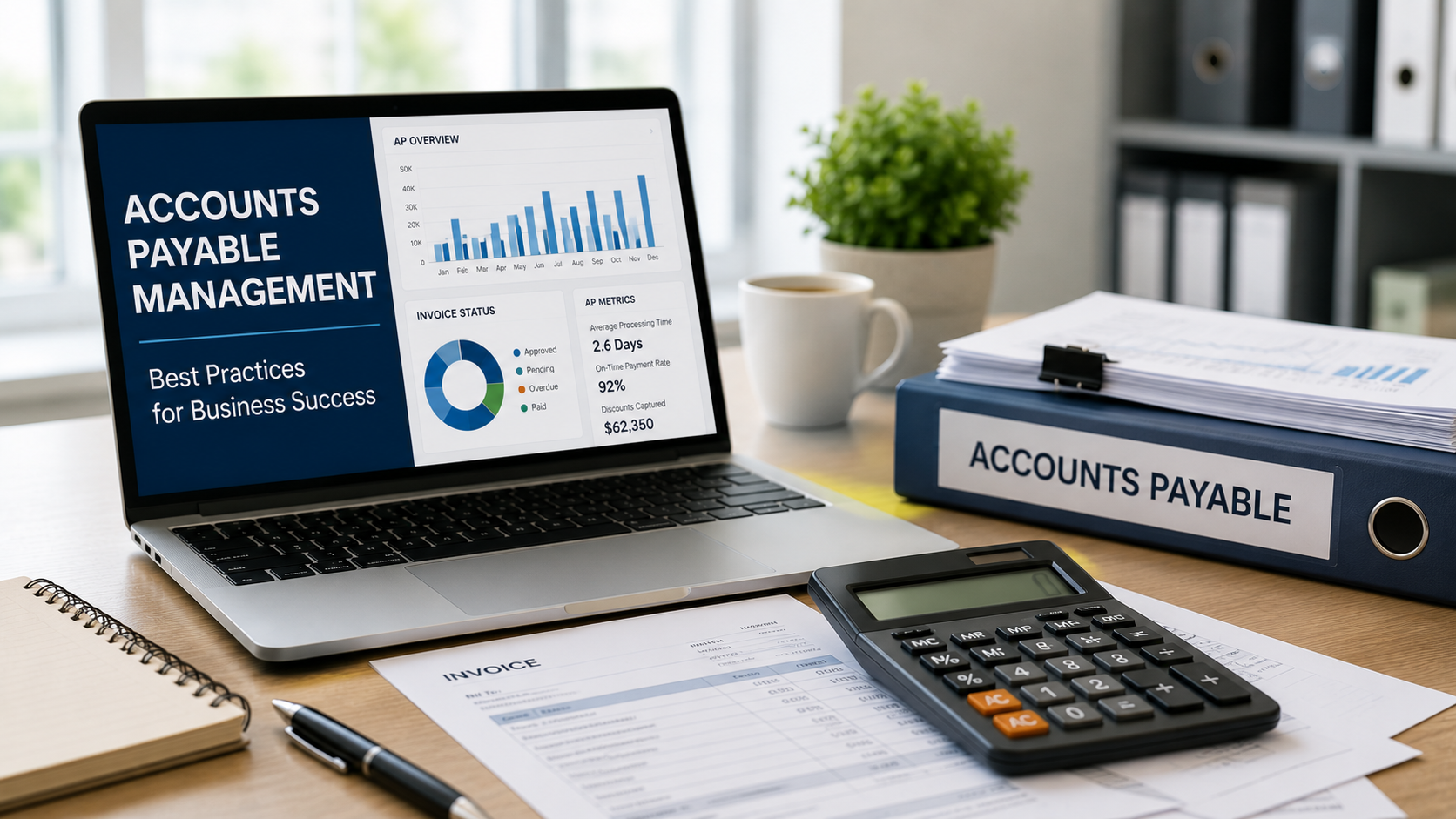
Effective financial management is essential for every successful business, and one of the most critical components of financial operations is accounts payable management. Accounts payable (AP) refers to the money a business owes to vendors, suppliers, and service providers for goods and services received on credit. Properly managing these obligations helps organizations maintain healthy cash flow, strengthen vendor relationships, and ensure financial accuracy.
As businesses grow, managing accounts payable becomes increasingly complex. Manual processes, delayed payments, and data entry errors can lead to financial inefficiencies and compliance risks. Implementing best practices for accounts payable management can help businesses streamline operations, reduce costs, and support long-term growth.
In this article, we'll explore the importance of accounts payable management and the best practices organizations should follow to achieve business success.
What Is Accounts Payable Management?
Accounts payable management involves tracking, processing, approving, and paying invoices while maintaining accurate financial records. It ensures that suppliers are paid on time and that business expenses are properly recorded.
A well-managed accounts payable process typically includes:
-
Invoice receipt and verification
-
Approval workflows
-
Payment scheduling
-
Vendor management
-
Financial recordkeeping
-
Reporting and reconciliation
Efficient AP management not only supports daily operations but also contributes to overall financial stability.
Why Accounts Payable Management Matters
Many business owners focus heavily on revenue generation but overlook the importance of managing outgoing payments. Poor accounts payable practices can create serious financial challenges, including:
-
Cash flow problems
-
Late payment penalties
-
Duplicate payments
-
Fraud risks
-
Damaged supplier relationships
-
Inaccurate financial reporting
Strong accounts payable management helps organizations maintain control over expenses while improving financial visibility and operational efficiency.
Best Practice #1: Standardize Invoice Processing
One of the most common causes of AP inefficiency is inconsistent invoice handling.
Invoices often arrive through multiple channels such as email, mail, vendor portals, and paper documents. Without a standardized process, invoices can be misplaced, delayed, or processed incorrectly.
How to Improve
Create a centralized system for receiving and managing invoices. Establish clear procedures for:
-
Invoice submission
-
Data entry
-
Verification
-
Approval routing
-
Payment processing
Standardization reduces errors and ensures invoices move through the system efficiently.
Best Practice #2: Automate Routine Tasks
Manual AP processes consume significant time and increase the risk of human error.
Automation technology can streamline repetitive tasks such as:
-
Invoice capture
-
Data extraction
-
Approval workflows
-
Payment scheduling
-
Reporting
Automated systems improve accuracy and allow finance teams to focus on strategic activities rather than administrative work.
Businesses that embrace automation often experience faster processing times and lower operating costs.
Best Practice #3: Maintain Accurate Vendor Records
Vendor information plays a crucial role in AP operations.
Outdated supplier records can lead to payment delays, duplicate vendors, and compliance issues.
Key Vendor Information to Maintain
-
Contact details
-
Banking information
-
Tax documentation
-
Payment terms
-
Contract agreements
Regularly reviewing vendor data helps ensure payments are processed accurately and efficiently.
Best Practice #4: Establish Strong Approval Controls
Weak approval processes can result in unauthorized payments, fraud, and financial losses.
Organizations should implement clearly defined approval workflows based on invoice amounts and spending categories.
For example:
-
Small invoices may require one approval.
-
Larger expenditures may require multiple levels of authorization.
Strong internal controls improve accountability and reduce financial risks.
Best Practice #5: Monitor Cash Flow Carefully
Accounts payable directly impacts cash flow management.
Paying invoices too early can reduce available working capital, while paying too late may result in penalties and strained vendor relationships.
Effective accounts payable management requires balancing payment timing with cash flow needs.
Cash Flow Strategies
-
Prioritize critical vendor payments.
-
Take advantage of early payment discounts.
-
Monitor payment due dates.
-
Forecast future cash requirements.
These practices help businesses maintain liquidity while meeting financial obligations.
Best Practice #6: Conduct Regular Reconciliations
Reconciling accounts payable records helps identify discrepancies before they become significant issues.
Regular reconciliation ensures:
-
Invoices are properly recorded.
-
Payments are accurately processed.
-
Outstanding balances are correct.
-
Duplicate entries are identified.
Monthly reconciliation should be a standard part of every AP process.
Accurate reconciliations improve financial reporting and support audit readiness.
Best Practice #7: Strengthen Fraud Prevention Measures
Fraud remains a major concern for finance departments.
Common AP fraud risks include:
-
Fake vendor accounts
-
Duplicate invoices
-
Unauthorized payments
-
Altered banking information
Fraud Prevention Techniques
-
Segregate duties among staff members.
-
Verify vendor information regularly.
-
Implement approval controls.
-
Use automated fraud detection tools.
-
Conduct periodic audits.
Strong fraud prevention measures protect both financial assets and business reputation.
The Growing Demand for Outsourced Accounts Payable Services
Many businesses are finding it difficult to manage growing invoice volumes internally.
As a result, organizations are increasingly turning to outsourced accounts payable services to improve efficiency and reduce administrative burdens.
Outsourcing providers handle tasks such as:
-
Invoice processing
-
Vendor management
-
Payment scheduling
-
Reporting
-
Compliance monitoring
This approach allows internal finance teams to focus on higher-value activities while ensuring AP operations run smoothly.
Benefits of Outsourced Accounts Payable Services
-
Lower operational costs
-
Faster invoice processing
-
Improved accuracy
-
Access to specialized expertise
-
Enhanced scalability
-
Reduced staffing requirements
For many organizations, outsourcing has become a strategic solution rather than simply a cost-saving measure.
Why Businesses Are Choosing Accounts Payable Outsourcing to India
Global businesses are increasingly adopting accounts payable outsourcing to India due to the country's strong reputation for finance and accounting services.
India offers several advantages, including:
Access to Skilled Professionals
Indian outsourcing firms employ experienced accounting and finance professionals who understand international accounting standards and AP processes.
Cost Efficiency
Businesses can significantly reduce operational expenses compared to maintaining large in-house AP teams.
Advanced Technology
Many providers use modern automation platforms and cloud-based systems to streamline invoice processing and reporting.
Scalability
Organizations can quickly expand or reduce services based on changing business needs.
As a result, accounts payable outsourcing to India has become a popular option for businesses seeking efficient and cost-effective AP management solutions.
Measuring Accounts Payable Performance
To continuously improve AP operations, businesses should track key performance indicators (KPIs).
Important metrics include:
-
Invoice processing time
-
Cost per invoice
-
On-time payment rate
-
Early payment discount utilization
-
Vendor satisfaction levels
-
Exception rates
Monitoring these KPIs helps identify areas for improvement and supports ongoing process optimization.
Conclusion
Effective accounts payable management is essential for maintaining strong financial health, supporting vendor relationships, and improving operational efficiency. Businesses that implement standardized processes, automation, strong internal controls, and regular monitoring are better positioned to reduce errors and optimize cash flow.
For organizations seeking greater efficiency, outsourced accounts payable services offer access to specialized expertise and scalable solutions. Additionally, many companies are leveraging accounts payable outsourcing to India to reduce costs while maintaining high levels of accuracy and compliance.
As financial operations continue to evolve, businesses that prioritize accounts payable best practices will gain a competitive advantage and build a stronger foundation for long-term success.

 English
 Arabic
 Français
 Español
 Português
 Deutsch
 Türkçe
 Dutch
Dutch
 Russian
 Romaian