


A Complete Analysis Of Stainless Steel Processing: Equipment, Technology, Processes And Optimization Guide
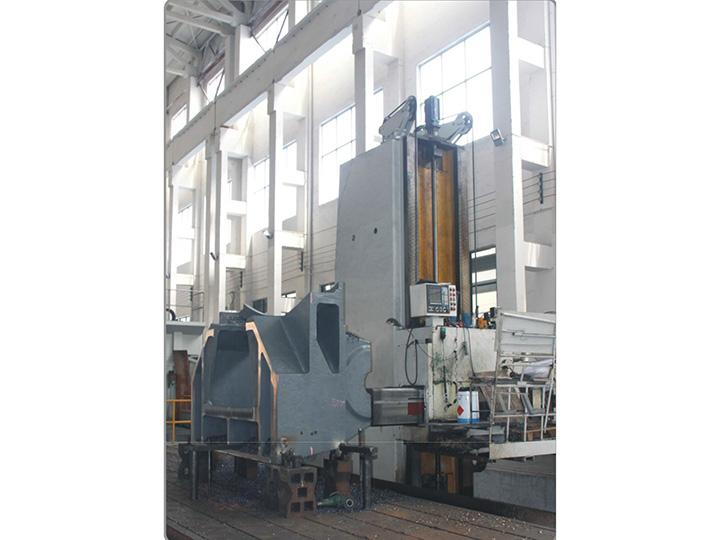
Stainless steel is widely used in various fields such as kitchenware, construction, medical treatment, and transportation due to its corrosion resistance and high strength. High-quality stainless steel products rely on scientific and standardized processing links—every step from raw materials to finished products requires precise control of equipment, technology, and details. This article will comprehensively disassemble the key logic of stainless steel processing from basic equipment, core technologies, standard processes to common problem solutions, helping you quickly understand how to efficiently complete stainless steel processing.
I. What Basic Equipment is Needed for Stainless Steel Processing?
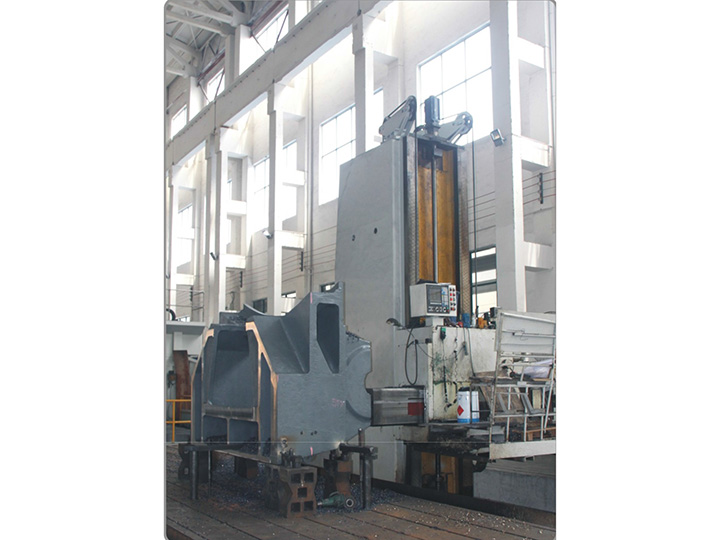
The core of stainless steel processing is to realize raw material shaping and component assembly through equipment. Common equipment can be divided into three categories: cutting, forming, and joining:
- Cutting category: Used to cut stainless steel plates/tubes into basic sizes, such as CNC shears (suitable for batch cutting of regular shapes), laser cutting machines (processing complex patterns), and water jet cutting machines (handling thick plates or heat-sensitive materials);
- Forming category: Shaping the cut materials into target shapes, such as CNC bending machines (creating corner radii), CNC punching machines (punching holes or depressions), and CNC grooving machines (processing deep grooves or special textures);
- Joining category: Combining scattered components into a whole, such as spot welding machines (for thin plate splicing).
These devices have their own focuses and jointly support the transformation from raw materials to semi-finished products, which is the basic guarantee for stainless steel processing.
II. What are the Core Technologies of Stainless Steel Processing?
The quality of stainless steel processing depends on the application of three core technologies: cutting, welding, and surface treatment:
1. Cutting Technology: Precise Separation is the Foundation
The key to cutting is not damaging material performance—mechanical cutting is suitable for simple shapes such as regular rectangles and circles with high efficiency; laser cutting can achieve precision within 0.1mm, suitable for complex patterns (such as special-shaped logos, thin-walled parts); water jet cutting uses high-pressure water flow plus abrasives to avoid thermal effects, suitable for thick plates or sensitive materials (such as medical equipment components).
2. Welding Technology: Firm Connection is the Key
Welding needs to balance strength and appearance: TIG welding (argon arc welding) is suitable for thin-walled parts (such as kitchenware handles) with delicate welds; MIG welding (gas metal arc welding) is efficient and suitable for mass production (such as box frames); plasma welding is for thick plates (such as industrial pipelines) to achieve deep fusion.
3. Surface Treatment: Enhancing Texture and Durability
Surface treatment is the key to product value-added: wire drawing treatment gives a matte texture (common in kitchenware panels); mirror treatment makes the surface as bright as a mirror (suitable for high-end equipment); coloring treatment (such as titanium gold, black) meets personalized needs while enhancing corrosion resistance.
III. What is the Standard Process for Stainless Steel Processing?
High-quality stainless steel products need to follow the progressive process of precision blanking → detail processing → forming → joining → correction → surface treatment:
1. Blanking: Cutting raw materials according to design drawings, with errors controlled within 0.5mm to ensure the accuracy of subsequent steps;
2. Mechanical processing: Processing details (such as holes, notches) through milling, drilling, etc., avoiding excessive cutting force that causes material deformation;
3. Forming processing: Shaping with bending and stamping equipment (such as the curvature of kitchenware, the corners of boxes), controlling pressure to avoid cracking;
4. Joining: Combining components through riveting or welding, and checking whether the welds are firm and free of pores after welding;
5. Straightening: Adjusting bending and warping generated during processing with correction equipment to ensure workpiece dimensions meet standards;
6. Surface treatment: Finally, improving appearance and corrosion resistance through wire drawing, mirroring, or coloring.
The detailed control of each step—such as the dimensional error of blanking and the temperature control of welding—directly determines the quality of the final product.
IV. How to Choose the Right Stainless Steel Processing Method?
The core of choosing a processing method is to match needs with efficiency, depending on three dimensions:
- Shape complexity: For complex special-shaped parts (such as custom logos), choose laser cutting; for regular rectangles, mechanical cutting is more efficient;
- Material thickness: For thick plates (>10mm), choose water jet cutting or plasma welding; for thin plates (<3mm), use TIG welding or laser cutting;
- Batch size: For mass production (such as kitchenware panels), choose mechanical cutting + stamping; for small batch customization (such as medical accessories), choose laser cutting + TIG welding.
The right method can balance cost and quality—for example, mechanical cutting + MIG welding is a cost-effective choice for mass-produced stainless steel boxes; while for custom special-shaped ornaments, laser cutting + manual forming can better ensure the effect.
V. Common Challenges and Solutions in Stainless Steel Processing
The high hardness and easy deformation characteristics of stainless steel often bring the following problems, which can be solved by targeted adjustments:
1. Tool wear: Stainless steel has high hardness, so tools wear quickly during cutting. Solution: Choose tools with good toughness, reduce cutting speed, increase feed rate, and reduce friction time;
2. Deformation after processing: Materials are prone to deformation due to heat or force during cutting or welding. Solution: Optimize the cutting path (from inside to outside) and perform segmented welding with fixtures fixed;
3. Rough surface: Burrs or scratches are likely to occur during cutting. Solution: Keep tools sharp, control cutting depth, and avoid cutting too deep at once;
4. Unstable welds: Porosity or cracks are likely to occur during welding. Solution: Clean oil stains on the material surface before welding, control welding current and speed, and ensure uniform welds.
Conclusion
Stainless steel processing is a combination of technology + details—from equipment selection to technology application, from process control to problem solving, every step needs to focus on precision and stability. Whether it is mass production or custom processing, mastering these core points can efficiently produce stainless steel products that meet the requirements.
If you want to further optimize the efficiency of stainless steel processing, you might as well start with equipment adaptation and technical details—choosing the right equipment and using the right technology can make stainless steel processing smoother and more worry-free.

 English
 Arabic
 Français
 Español
 Português
 Deutsch
 Türkçe
 Dutch
Dutch
 Italiano
 Russian