


Prism: The Optical Component That Helps Control Light
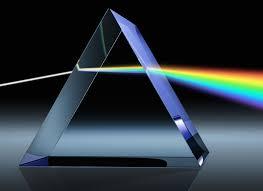
Light plays an important role in many technologies we use every day. From cameras and binoculars to medical devices and scientific instruments, controlling light accurately is essential. One optical component that makes this possible is the prism.
A prism may look like a simple piece of glass, but it performs important tasks such as bending, reflecting, splitting, and redirecting light. Because of these abilities, prisms are widely used in optical systems across many industries.
In this article, we will explain what a prism is, how it works, different types of prisms, their applications, benefits, and why they remain important in modern optics.
What Is a Prism?
A prism is a transparent optical component made from glass, plastic, or other optical materials. It has flat polished surfaces arranged at specific angles.
The primary purpose of a prism is to manipulate light. Depending on its design, a prism can:
- Bend light
- Reflect light
- Split light into colors
- Rotate images
- Redirect light paths
These functions make prisms essential components in many optical devices.
How Does a Prism Work?
A prism works by changing the direction of light as it passes through different surfaces.
When light enters a prism:
- Light enters the first surface.
- The light bends due to refraction.
- It travels through the prism material.
- It exits through another surface and changes direction again.
Some prisms also use total internal reflection, allowing light to bounce inside the prism without needing mirrors.
This ability helps create efficient and compact optical systems.
Why Are Prisms Important in Optics?
Prisms help optical systems perform tasks that would otherwise require multiple mirrors or lenses.
Their importance includes:
- Improving image quality
- Redirecting light efficiently
- Increasing optical accuracy
- Reducing system complexity
- Enhancing durability
Because prisms have no moving parts, they are often reliable and long-lasting.
Types of Prisms
Right-Angle Prism
The right-angle prism is one of the most common prism types.
It is used to:
- Bend light by 90 degrees
- Reverse images
- Redirect optical paths
These prisms are widely found in optical instruments.
Equilateral Prism
An equilateral prism is often used to separate white light into different colors.
Applications include:
- Spectroscopy
- Educational demonstrations
- Scientific research
Dove Prism
A Dove prism is designed to rotate images.
It is commonly used in:
- Imaging systems
- Optical inspection equipment
- Research instruments
Roof Prism
Roof prisms are often found in binoculars.
Benefits include:
- Compact design
- Image correction
- Lightweight optical systems
Penta Prism
A penta prism redirects light while maintaining image orientation.
These prisms are commonly used in:
- Cameras
- Surveying equipment
- Precision optical devices
Key Benefits of Using Prisms
Excellent Light Control
Prisms provide precise control over light direction and behavior.
High Optical Efficiency
Many prisms use total internal reflection, reducing light loss.
Durable Construction
Prisms are typically made from strong optical materials with long service lives.
Compact Optical Design
A prism can often replace multiple optical components, helping reduce system size.
Reliable Performance
Since prisms have no moving parts, they require minimal maintenance.
Common Applications of Prisms
Cameras
Prisms help direct light within camera systems and viewfinders.
Binoculars
Many binocular designs use prisms to create upright images and compact structures.
Microscopes
Prisms improve light paths and image quality in scientific instruments.
Medical Equipment
Medical imaging systems often rely on precision optical components, including prisms.
Scientific Instruments
Researchers use prisms to analyze light, wavelengths, and optical properties.
Laser Systems
Many laser devices use prisms to guide and control light beams.
Prism vs Lens
People often confuse prisms with lenses, but they perform different functions.
| Feature | Prism | Lens |
|---|---|---|
| Main Function | Redirect Light | Focus Light |
| Image Formation | Limited | Primary Purpose |
| Light Bending | Yes | Yes |
| Light Splitting | Yes | Rarely |
| Optical Control | Directional | Focusing |
Both components are important and often work together in optical systems.
Materials Used to Make Prisms
Prisms are manufactured using various optical materials depending on the application.
Common materials include:
Optical Glass
The most widely used prism material because of its clarity and stability.
Fused Silica
Suitable for high-performance optical applications.
Optical Plastic
Used in lightweight and cost-sensitive products.
Crystal Materials
Specialized optical systems sometimes use crystal-based prisms for unique optical properties.
How to Choose the Right Prism
When selecting a prism, consider:
Optical Function
Determine whether the prism needs to reflect, split, or redirect light.
Material Quality
Higher-quality materials often provide better optical performance.
Size Requirements
Choose a prism that fits the optical system design.
Wavelength Compatibility
Different applications require prisms that perform well at specific wavelengths.
Environmental Conditions
Consider temperature, humidity, and operating conditions.
Future of Prism Technology
As optical technology advances, prisms continue to play an important role.
Future developments may include:
- Higher precision manufacturing
- Advanced optical coatings
- Improved light transmission
- Better integration with AR and VR devices
- Enhanced performance in laser systems
These improvements will support next-generation optical technologies across many industries.
Conclusion
A prism is one of the most important components in optical engineering. Although it appears simple, it performs powerful functions such as redirecting, reflecting, rotating, and splitting light. These capabilities make prisms essential in cameras, binoculars, microscopes, medical devices, and scientific instruments.
As optical technologies continue to evolve, prisms will remain a key part of modern imaging and light-control systems. Their efficiency, reliability, and versatility ensure that they will continue supporting innovations in optics for many years to come.

 English
 Arabic
 Français
 Español
 Português
 Deutsch
 Türkçe
 Dutch
Dutch
 Russian
 Romaian