


Salt Spray Testing Chamber Pricing Guide: Factors that Affect Price and Purchase
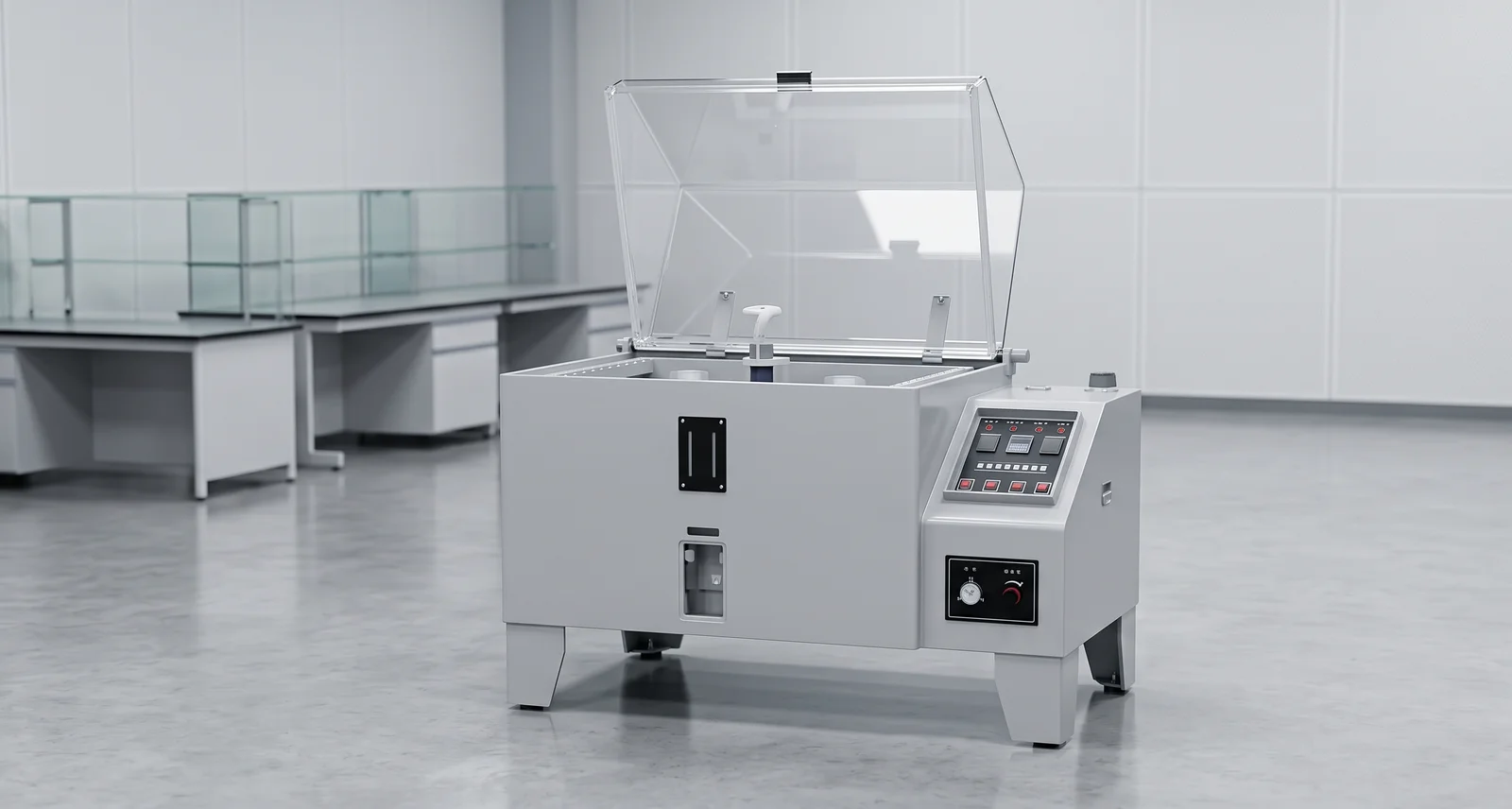
In situations where it is necessary to test how durable or resistant certain substances are against corrosion, there are specific pieces of equipment that companies require for this purpose. In the manufacturing industries like the automotive, aerospace, metal processing, electronics, and coatings industry, there are various testing procedures that determine how well their materials perform.
Among the first things that manufacturers have to consider when purchasing this kind of equipment is how much it will cost them to get this done. Prices vary depending on numerous factors, including features, size, degree of automation, build quality, and other testing parameters. However, while many focus only on the initial cost, this is not the only thing that matters in making a purchase.
The following is a discussion of the key factors.
Importance of Corrosion Testing Instruments
Any product that is exposed to moisture, humidity, and salt air conditions may corrode. When products are exposed to such conditions for an extended period, they may experience degradation due to corrosion. Manufacturers, therefore, perform accelerated corrosion testing on their products through special instruments in order to avoid such problems.
Corrosion testing allows manufacturers to:
Test the effectiveness of coatings
Assess the durability of materials used in production
Meet industry requirements and certifications
Increase product quality
Avoid costly warranty claims
Thus, proper testing can prevent many losses for businesses.
Main Issues Which Influence Costing
1. Testing Chamber Size and Volume
A crucial factor which influences the cost of a testing chamber is its size.
Generally speaking, smaller-sized testing devices that are made for laboratories or small sample tests are cheaper compared to those which are larger and can accommodate several components or large industrial parts.
Prior to making purchases, companies should evaluate their needs and determine the required size of the chamber.
2. Material Used for Manufacturing
Materials utilized to manufacture a testing chamber play an important role in determining its price.
High-quality materials ensure the durability of a device and prevent damage due to the presence of corrosive substances. Although the price of premium-quality construction may be high at first, long-term benefits are more pronounced.
Alternatively, cheap construction results in higher maintenance costs.
3. Automation Functions
Testing systems may have various automation functions.
Functions like:
Screen interface
Cycle programming capability
Automatic water supply
Electronic control systems
Control from remote locations
Automated data recording,
are some of the functions that can add greatly to the cost of equipment.
Such features, however, will enhance efficiency, minimize the operator's involvement in testing, and provide more reliable testing outcomes.
Firms that carry out testing activities on a regular basis should consider automated testing equipment.
4. Adherence To International Testing Standards
Depending on the industry, testing is done to the set international standard criteria.
Testing equipment that adheres to internationally acceptable standards has several functions incorporated into it that make its price relatively high but necessary for firms operating in that particular industry.
The standards ensure that the firm is capable of complying with the demands of its customers.
5. Reputation and Manufacturer Competence
Most established manufacturers will always charge higher prices than their less known counterparts.
A reputable manufacturer usually offers:
Improved engineering standards
Technical support
Product warranty
Instrument calibration
Spare parts
Training help
Even though the upfront costs might be higher, these can greatly help reduce any problems experienced.
The choice of an established manufacturer could actually prove to be cheaper than going for the cheapest option.
Typical Price Range Information
Salt Spray Chamber Price Guide may change depending upon various factors like specifications and requirements.
Laboratory grade Salt Spray chambers come at lower prices compared to others as these are designed for learning institutions, laboratories, and small scale manufacturing.
Middle grade Salt Sprayers have better automation, bigger size, and control features, which makes them perfect for QC departments of medium scale industries.
Advanced industrial grade salt spray chambers come at higher prices due to programming features, bigger sample size, superior build, and compatibility with automatic testing.
Different industries have different needs, hence it would be better to get custom quotes from the manufacturers.
More Costs That Buyers Have to Consider
While many buyers concentrate only on the purchase price, they overlook other important costs.
Cost of Installation
In some cases, installation may be required, and it will vary according to the site and the level of sophistication.
Calibration Costs
Calibration keeps the testing precise and up to standard, and annual calibration cost has to be included in the total budget.
Maintenance and Repair Costs
Maintenance extends the useful life of the equipment and prevents breakdowns.
Maintenance cost includes:
Replacement parts
Sensors cleaning and repairs
Inspection fees
Utility Usage Costs
Cost of operating tests using energy and water sources is another expense that should not be overlooked.
Training Cost
Training operators improves testing and helps reduce misuse of equipment. Some companies cover training costs in their purchase packages.
Selecting the Correct Equipment without Breaking the Bank
Identify Your Testing Requirements
Know the kind of materials and products to test.
Knowledge of the volume of testing and sample size ensures you do not buy an oversized system.
Make Feature Comparisons Cautiously
It is not always necessary for a laboratory to have all the latest technological developments.
Look for equipment features that benefit you directly and not those you are unlikely to use.
Assessing Technical Support Services
Good technical support services can outweigh the difference in cost that you will pay for a product.
Some of the considerations are:
Time taken to respond
Availability of spare parts
Warranties
Networks
Seek Demonstration
Wherever possible, ask to see a demo of the product.
Live demonstrations help you understand the performance of the product and its build quality.
Long-Term Perspective
What seems cheaper may not necessarily be the best choice in terms of economics.
A good product with quality support will prove to be more economical over the years.
Typical Errors Made by Consumers
Organizations often base their purchase decision entirely on price.
Typical errors that are made include:
Neglecting future maintenance costs
Selecting inadequate chamber volume
Neglecting compliance standards
Buying products from unsupportive vendors
Limiting decision to initial price
Avoiding these errors will enable an organization to maximize its value and obtain better results from its testing procedures.
Conclusion
The decision-making process when it comes to selecting corrosion testing equipment involves considerations beyond the simple question of cost. The size of the chamber, quality of manufacturing, automation, compliance needs, and even customer service all impact the total cost of your investment.
A well-considered purchase will include all of these elements so as to ensure that you maximize both cost and efficiency. By looking beyond the sticker price, companies can optimize their purchases and get reliable results year after year.
The Salt Spray Chamber Price Guide is an important first step, but it does not replace the need to gather more information and quotes.
Frequently Asked Questions (FAQs)
1. What determines the cost of a corrosion testing chamber the most?
The main considerations include size of chamber, level of automation, material used, standards of compliance, and reputation of manufacturer.
2. Do bigger chambers always cost more?
In general, yes, as they require more material, higher capacity systems, and sturdier construction.
3. Does automation justify the extra expense?
Certainly, automation is justified if one conducts regular tests, as it enhances efficiency, accuracy, and consistency.
4. How frequently does testing equipment need to be calibrated?
Most manufacturers suggest once a year, although calibration frequency might differ from case to case.
5. Should maintenance costs be taken into account?
Definitely, because utilities, calibration, maintenance, and replacement costs should all be accounted for.
6. What is the way for businesses to maximize benefit from an investment?
Compare different suppliers, assess long-term service packages, take into account compliance requirements, and avoid buying based on price alone.

 English
 Arabic
 Français
 Português
 Deutsch
 Türkçe
 Dutch
Dutch
 Italiano
 Russian
 Romaian