


Safety First: Essential Protocols for Running a Waste Oil Refinery
The recycling of waste oil into valuable base oils or fuel is a triumph of modern circular economy engineering. However, dealing with high temperatures, volatile hydrocarbons, and heavy machinery means safety can never be a secondary thought. For any refinery operator, creating a "safety-first" culture requires rigorous adherence to a few non-negotiable protocols.
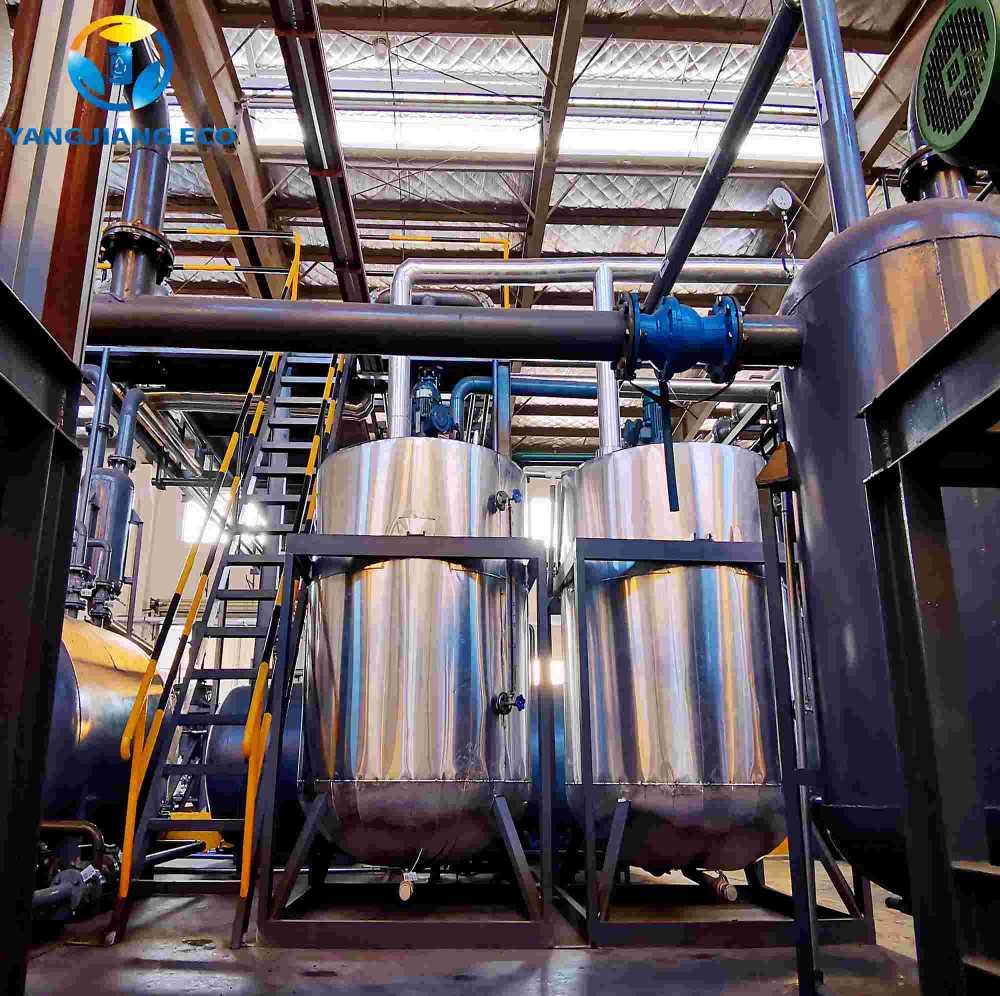
1. Robust Thermal and Pressure Management
At the heart of waste oil refining is distillation, a process that cooks the oil at extreme temperatures—often exceeding 300°C—sometimes under a deep vacuum.
Continuous Monitoring: Real-time digital sensors must track temperature and pressure gradients across every stage.
Redundant Backups: Automated emergency shutdown (ESD) systems are vital. If pressure spikes beyond a critical threshold, mechanical relief valves must fail-safe immediately to prevent catastrophic equipment failure.
2. Comprehensive Hazard Zone Classification
Refineries must be strictly mapped using hazardous area classifications (such as the ATEX or NEC zones).
Spark Mitigation: Any area where flammable vapors might exist must exclusively use explosion-proof lighting, non-sparking tools, and intrinsically safe electrical equipment.
Static Control: Static electricity is a silent threat. All storage tanks, pipelines, and processing units must be thoroughly bonded and grounded to dissipate static charges during oil transfer.
3. Personal Protective Equipment (PPE) & Air Quality
The human element requires the highest level of defense. Standard industrial wear won't suffice here.
Operators must be equipped with specialized fire-resistant clothing (FRC), chemical-resistant gloves, and full-face shields during sampling or maintenance.
Because waste oil can contain heavy metals, sulfur compounds, and volatile organic compounds (VOCs), continuous ambient air monitoring is essential. Workers should have access to appropriate respiratory protection, such as organic vapor cartridges, whenever dealing with open systems.
4. Continuous Training and "Near-Miss" Reporting
The best safety hardware is useless without an alert mind. Regular, scenario-based emergency drills—simulating a thermal runaway or a chemical spill—keep the team sharp. Crucially, fostering a culture where operators actively report "near-misses" without fear of blame allows management to fix hidden vulnerabilities before they turn into real-world accidents.
In the refining business, production targets matter, but sending every worker home safely at the end of the shift is the ultimate metric of success.

 English
 Arabic
 Français
 Português
 Deutsch
 Türkçe
 Dutch
Dutch
 Italiano
 Russian
 Romaian