


Polymarket Clone Development Cost Breakdown for Startups
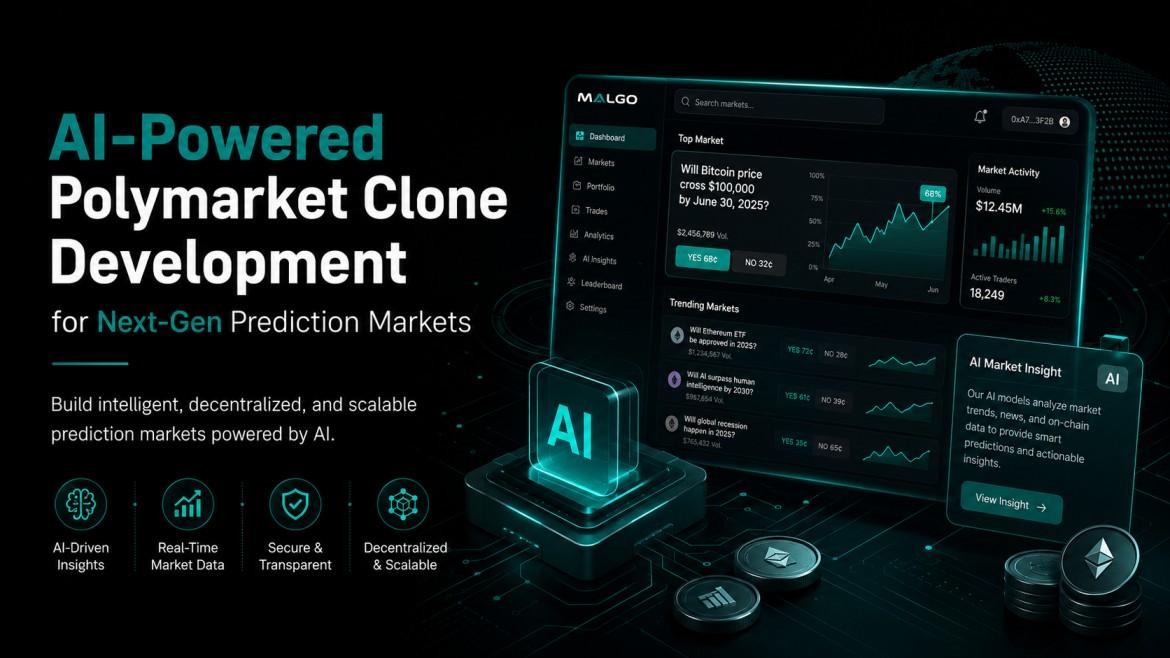
Prediction markets are no longer niche experiments—they are evolving into powerful financial intelligence platforms. As platforms like Polymarket redefine how people forecast real-world events, startups are increasingly exploring opportunities to build similar ecosystems.
However, building a Polymarket-style platform is not a simple app development task. It is closer to launching a hybrid between a financial exchange, a blockchain protocol, and a real-time data marketplace. Understanding the development cost structure is essential before entering this space.
This guide breaks down the real cost drivers, development layers, and strategic decisions that shape a Polymarket clone.
Understanding What You’re Building
A Polymarket-style platform operates differently from traditional betting systems. It functions as a probability-driven trading marketplace, where users buy and sell outcome-based shares tied to real-world events.
This means your product must support:
- Real-time price discovery
- Liquidity management
- Secure settlement mechanisms
- Transparent event resolution
Each of these elements directly impacts development complexity—and ultimately, the investment required.
Key Factors That Influence Development Cost
1. Platform Architecture (Centralized vs Decentralized)
Your architectural choice is the single biggest cost determinant.
- Centralized platforms are faster to build but require trust-based systems.
- Decentralized platforms demand smart contracts, on-chain settlement, and advanced security layers.
Decentralization increases development scope due to blockchain integration, gas optimization, and audit requirements.
2. Core Feature Set
A basic clone may only replicate essential trading functionality, while an advanced platform includes:
- Binary and multi-outcome markets
- Automated Market Makers (AMM) or order book engines
- Wallet integrations (Web3 login)
- Real-time analytics dashboards
- Liquidity incentives and staking
Each added feature layer increases engineering effort and testing cycles.
3. Smart Contracts & Blockchain Layer
The backbone of a prediction market lies in its smart contracts.
Development typically includes:
- Outcome token logic
- Escrow and settlement systems
- Oracle integrations for real-world data
Smart contract development and testing form a significant portion of total investment due to their complexity and risk exposure.
4. Security & Audits
Security is not optional—it is foundational.
Prediction markets handle real funds, making them prime targets for exploits. Independent audits, penetration testing, and bug bounty programs are essential stages in development.
Neglecting this layer can lead to irreversible financial and reputational damage.
5. Liquidity Infrastructure
One of the most underestimated cost drivers is liquidity.
Without sufficient liquidity:
- Markets appear inactive
- Prices become unreliable
- Users lose trust quickly
Successful platforms invest in market-making strategies, liquidity pools, and incentive mechanisms to ensure smooth trading experiences.
6. Compliance & Regulatory Requirements
Depending on your target geography, legal compliance can significantly impact development scope.
This may include:
- KYC/AML integrations
- Licensing frameworks
- Regional restrictions
Regulatory alignment often requires additional backend systems and legal consultation.
Cost Breakdown by Development Stage
1. MVP (Minimum Viable Product)
A startup-friendly approach focuses on:
- Limited market categories
- Basic trading engine
- Simple user interface
This stage helps validate product-market fit before scaling.
2. Mid-Level Platform
At this stage, platforms expand with:
- Multiple event categories
- Mobile responsiveness
- Enhanced analytics
- User onboarding flows
This is where platforms begin to resemble real-world trading environments.
3. Full-Scale Production Platform
A mature prediction market platform includes:
- High-performance matching engines
- Multi-chain support
- Advanced liquidity mechanisms
- Enterprise-grade security
Such platforms are built for scale, handling thousands of concurrent users and real-time trades.
Development Approach: Build vs Clone vs White-Label
Startups typically choose between three approaches:
Clone Script
- Fastest route to market
- Pre-built core features
- Limited customization flexibility
White-Label Solution
- Balanced approach
- Custom branding with existing infrastructure
- Subscription-based scalability
Custom Development
- Full control over architecture
- Unique product differentiation
- Higher development complexity
Each approach has trade-offs between speed, flexibility, and long-term scalability.
Hidden Costs Startups Often Miss
Even experienced founders underestimate these:
- Ongoing maintenance and upgrades
- Blockchain transaction optimization
- Customer support systems
- Data storage and API scaling
- Marketing and user acquisition
These operational costs often exceed initial development efforts over time.
Timeline Expectations
A realistic development timeline varies based on complexity:
- Early-stage platforms: a few months
- Mid-level platforms: several months
- Enterprise-grade ecosystems: extended development cycles
Rushing development often leads to unstable platforms and poor user retention.
Strategic Insights for Startups
Building a Polymarket clone is not just about technology—it’s about market design.
Successful platforms focus on:
- Curated, high-quality markets
- Fast and transparent resolution
- Strong user trust mechanisms
- Sustainable liquidity models
Startups that treat prediction markets like simple betting apps often fail. Those that treat them like financial infrastructure succeed.
Final Thoughts
The cost of developing a Polymarket clone is shaped by far more than just coding effort. It reflects decisions around architecture, compliance, liquidity, and long-term scalability.
For startups, the smartest approach is to:
- Start lean with a focused MVP
- Validate user demand
- Gradually scale features and infrastructure
Prediction markets are entering a growth phase, and early movers who build with clarity and precision stand to gain the most.
FAQs
1. How long does it take to build a Polymarket clone?
Timelines vary depending on complexity, but early versions can be launched within a few months, while advanced platforms require longer development cycles.
2. What is the most expensive component?
Smart contracts, security audits, and liquidity infrastructure typically account for the largest share of development effort.
3. Is a clone script enough to succeed?
It can help validate ideas quickly, but long-term success requires customization, scalability, and strong market design.

 English
 Arabic
 Français
 Español
 Português
 Deutsch
 Türkçe
 Italiano
 Russian
 Romaian