


How AI Is Transforming the Environmental Health and Safety Software Market
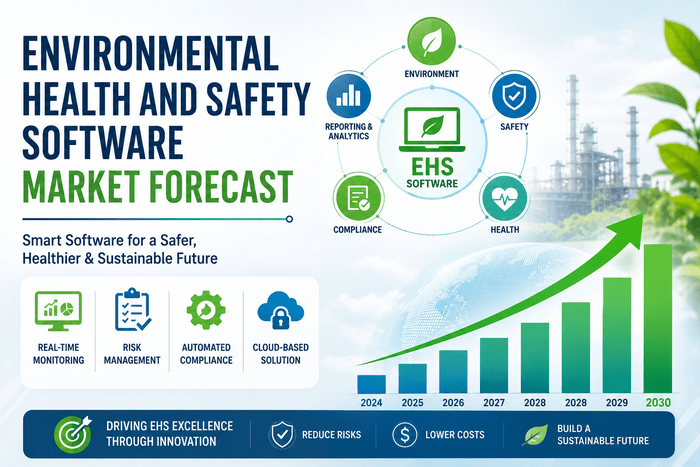
The Environmental Health and Safety Software Market is entering a new phase of expansion as organizations worldwide prioritize workplace safety, environmental compliance, and risk management. According to industry analysis, the Market Forecast: Environmental Health and Safety (EHS) Software, 2026-2030, Worldwide indicates sustained growth driven by stricter regulations, digital transformation initiatives, and the increasing adoption of AI-powered safety solutions.
QKS Group projects the Environmental Health and Safety (EHS) Software Market to grow steadily through 2030 at a CAGR of 6.66%. As businesses face growing operational complexity across global supply chains, manufacturing facilities, construction sites, and energy operations, the need for centralized EHS platforms has become more critical than ever.
What Is Driving Growth in the Environmental Health and Safety Software Market?
Organizations today operate in highly regulated environments where safety incidents, environmental violations, and compliance failures can result in significant financial and reputational damage. Traditional manual processes are no longer sufficient to manage these challenges effectively.
Several factors are accelerating growth in the Environmental Health and Safety Software Market:
1. Increasing Regulatory Compliance Requirements
Governments and regulatory agencies worldwide continue to strengthen environmental and workplace safety regulations. Standards such as OSHA, EPA, ISO 45001, and ISO 14001 require organizations to maintain accurate records, conduct audits, and ensure ongoing compliance.
EHS software helps automate compliance tracking, reporting, and documentation, reducing the risk of penalties and regulatory violations.
2. Growing Focus on Workplace Safety
Employee well-being has become a strategic priority for organizations. Businesses are investing in technologies that help identify hazards, reduce workplace incidents, and improve safety culture.
Modern EHS platforms provide real-time incident reporting, risk assessments, corrective action management, and safety training management to support safer work environments.
3. Expansion of ESG Initiatives
Environmental, Social, and Governance (ESG) reporting has become a major focus for enterprises and investors. Organizations are increasingly using EHS software to track environmental performance, sustainability metrics, emissions, waste management, and resource utilization.
The integration of EHS and ESG programs is creating new growth opportunities for software providers.
4. Digital Transformation Across Industries
Industries such as manufacturing, energy, chemicals, healthcare, logistics, and construction are digitizing operational processes. EHS software serves as a critical component of this transformation by replacing spreadsheets and paper-based systems with centralized digital platforms.
How AI Is Transforming the Environmental Health and Safety Software Market
Artificial Intelligence is becoming one of the most influential technologies shaping the future of EHS software.
AI-powered EHS platforms are helping organizations move from reactive safety management to predictive risk prevention.
Key AI-driven capabilities include:
- Predictive incident analysis
- Automated compliance monitoring
- Intelligent hazard identification
- Safety trend forecasting
- Natural language processing for incident reports
- Automated corrective action recommendations
By analyzing large volumes of operational data, AI can identify risk patterns before incidents occur, enabling organizations to take proactive preventive measures.
As AI adoption continues to expand, software vendors are increasingly embedding machine learning and advanced analytics into their EHS solutions to deliver greater business value.
Top Environmental Health and Safety Software Market Trends to Watch in 2026–2030
The Market Forecast: Environmental Health and Safety Software, 2026-2030, Worldwide highlights several important trends expected to influence market growth.
Cloud-Based Deployments
Organizations are rapidly migrating from on-premise systems to cloud-based EHS platforms. Cloud deployments offer scalability, lower implementation costs, remote accessibility, and faster updates.
Mobile-First Safety Management
Mobile applications allow employees to report incidents, conduct inspections, complete audits, and access safety information directly from the field. This improves reporting accuracy and response times.
Integration with IoT Technologies
Internet of Things (IoT) devices and sensors are increasingly being integrated with EHS systems. Connected devices can monitor environmental conditions, worker exposure levels, equipment safety, and operational risks in real time.
Advanced Analytics and Dashboards
Organizations are demanding deeper insights into safety performance. Advanced analytics dashboards help identify trends, monitor KPIs, and support data-driven decision-making.
Unified Risk and Compliance Platforms
Many enterprises are consolidating risk management, compliance, sustainability, and EHS functions into integrated platforms to improve visibility and operational efficiency.
Top Growth Opportunities in the EHS Software Market Through 2030
Several high-growth opportunities are emerging within the Environmental Health and Safety Software Market.
Manufacturing Sector Expansion
Manufacturers continue to face complex safety and environmental regulations. EHS software helps streamline compliance, incident management, and operational risk monitoring.
Energy and Utilities
The energy sector operates in high-risk environments where safety management is critical. Advanced EHS solutions help reduce incidents and ensure regulatory compliance.
Construction Industry Adoption
Construction companies are increasingly investing in digital safety technologies to improve worker protection, manage contractor compliance, and reduce project risks.
Sustainability Management
As ESG reporting requirements continue to grow, organizations are expanding their use of EHS software to support environmental tracking and sustainability initiatives.
Emerging Markets
Rapid industrialization in developing economies is creating new opportunities for EHS software vendors as organizations seek modern compliance and risk management solutions.
What Does the Future Hold for the Environmental Health and Safety Software Market?
The future outlook for the Environmental Health and Safety Software Market remains highly positive. Organizations are recognizing that safety, compliance, and environmental stewardship are no longer isolated functions but critical components of overall business performance.
Future EHS platforms will become increasingly intelligent, connected, and predictive. AI, IoT, cloud computing, and advanced analytics will continue to transform how organizations manage risk and compliance.
Additionally, the convergence of EHS, ESG, sustainability, and operational risk management will further expand the role of EHS software as an enterprise-wide strategic platform.
Conclusion
The Environmental Health and Safety Software Market is positioned for steady growth through 2030 as organizations prioritize worker safety, regulatory compliance, environmental responsibility, and operational resilience. According to the Market Forecast: Environmental Health and Safety (EHS) Software, 2026-2030, Worldwide, increasing regulatory requirements, digital transformation, AI adoption, and ESG initiatives will continue to drive market expansion.
Organizations that invest in modern EHS platforms will be better equipped to reduce risk, improve compliance performance, enhance workplace safety, and achieve long-term sustainability goals. As technology continues to evolve, EHS software will play an increasingly vital role in helping enterprises build safer, smarter, and more resilient operations.
FAQs
1. What is Environmental Health and Safety (EHS) Software?
EHS software is a digital platform that helps organizations manage workplace safety, environmental compliance, incident reporting, audits, risk assessments, and regulatory requirements through centralized processes and analytics.
2. What is driving the growth of the Environmental Health and Safety Software Market?
Key growth drivers include stricter regulatory requirements, increasing workplace safety initiatives, ESG reporting demands, digital transformation programs, and growing adoption of AI-powered risk management solutions.
3. How is AI impacting EHS software?
AI helps organizations predict safety risks, automate compliance monitoring, identify hazards, analyze incident trends, and recommend corrective actions, enabling more proactive safety management.
Related Reports:
Environmental Health & Safety Software
https://qksgroup.com/sparkplus?market-id=479&market-name=environmental-health-%26-safety-software
Market Share: Environmental Health and Safety (EHS) Software, 2025-2030, Worldwide
SPARK Matrix™: Environmental Health & Safety Software (EHS), Q2 2025
https://qksgroup.com/market-research/spark-matrix-environmental-health-safety-software-ehs-q2-2025-8978
#EnvironmentalHealthAndSafety #EHSSoftware #EnvironmentalHealthAndSafetySoftwareMarket #MarketForecast #WorkplaceSafety #ESGReporting #RiskManagement #DigitalTransformation

 English
 Arabic
 Français
 Español
 Português
 Deutsch
 Türkçe
 Italiano
 Russian
 Romaian