


Carbon Credit Platform Development: A Complete Business Guide
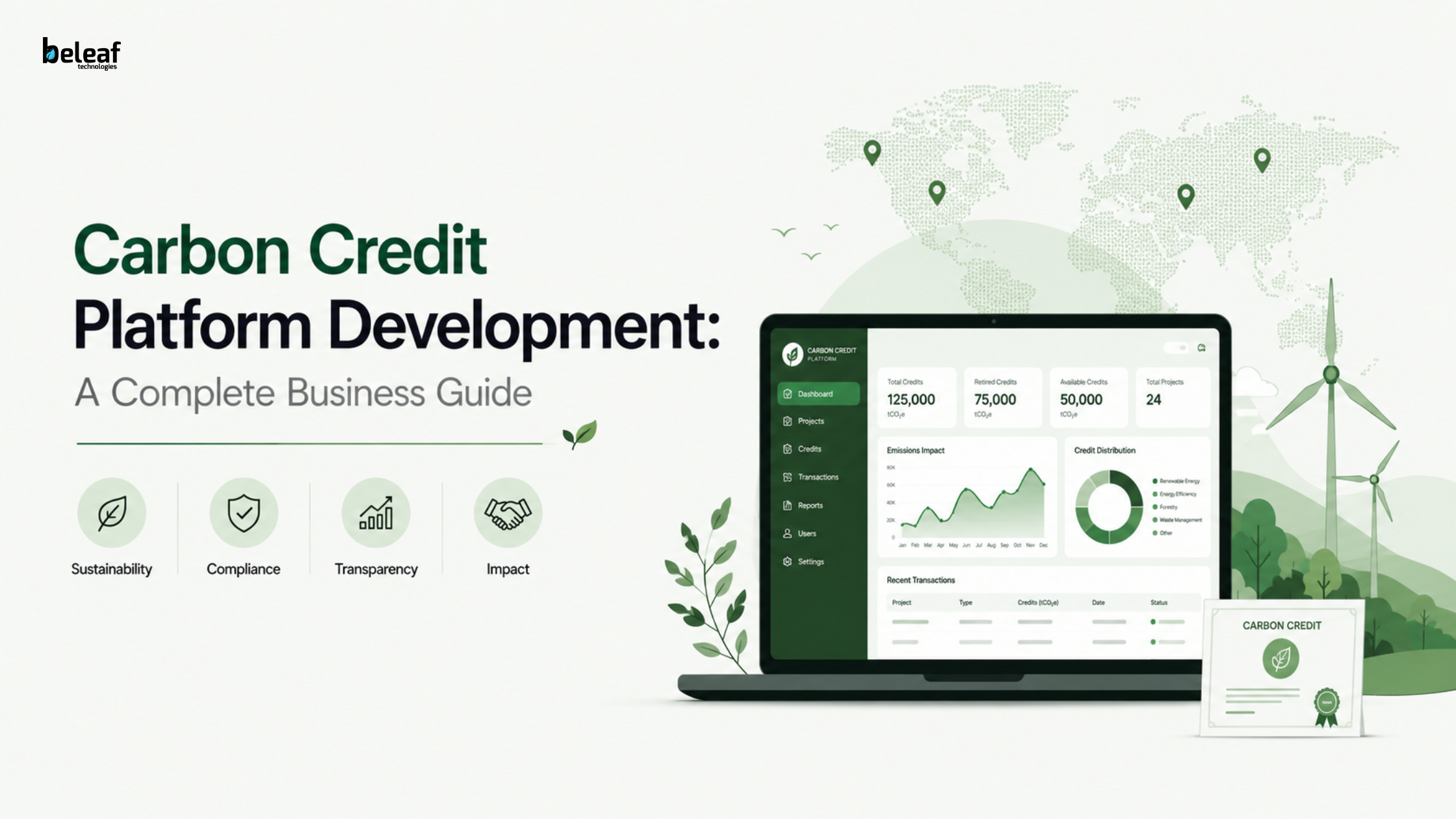
Ask any CFO what keeps them up at night these days, and emissions reporting is somewhere on that list. Sustainability used to live quietly in its own department with its own small budget. Now it sits right next to revenue and growth in every serious strategy meeting. That shift is exactly why carbon markets are heating up, and why Carbon Credit Platform Development has become one of the more interesting business opportunities for founders willing to build something genuinely useful in this space. A platform that connects buyers, sellers, and verifiers of carbon credits isn't a feel-good side project, it's a business model with real revenue behind it. Here's what you actually need to know before building one.
Why Carbon Markets Are Finally Getting Boardroom Attention
A few years ago, carbon offsetting was treated as optional, something a company did if budgets allowed. That's changed. Many businesses can't fully eliminate their emissions overnight, no matter how much they invest in cleaner operations, so credits have become the practical bridge between where a company is and where it wants to be.
What's pushing this along:
-
More companies are putting public, measurable emission targets into their annual reports
-
Regulators in several regions now require disclosure of carbon impact, not just intention
-
Investors are factoring environmental performance into funding decisions
-
Buyers want a trustworthy place to purchase credits, not scattered, unverifiable deals
For a founder, this is the kind of demand you don't have to manufacture it already exists. Your job is building something businesses can rely on.
What Building a Carbon Credit Platform Actually Looks Like
Strip away the marketing language and Carbon Credit Platform Development comes down to one thing: creating a marketplace people trust with real money. Buyers need to know the credit they're purchasing actually represents the carbon reduction it claims to.
A working platform usually needs:
-
A verification layer that checks sellers and projects before anything goes live
-
A trading system where credits can be browsed, priced, and purchased
-
A connection to recognised standards bodies, such as Verra or Gold Standard
-
Clear transaction history so every purchase can be traced back to its origin
-
Reporting that shows a buyer exactly what they've offset and when
None of this is flashy. It's plumbing. But it's the plumbing that decides whether your platform earns repeat business or gets abandoned after one bad experience.
The Features Buyers and Sellers Actually Care About
Here's something founders often get wrong early on: they chase impressive features instead of solving small, daily frustrations. The companies buying credits aren't looking for excitement. They're looking for clarity.
What tends to matter most in practice:
-
A dashboard that shows available credits and pricing without extra clicks
-
Certificates generated automatically the moment a transaction closes
-
Safeguards that catch duplicate listings before they cause a dispute
-
Support for different currencies and languages if you're courting global buyers
-
Project pages with photos, location data, and verification status laid out simply
If a buyer can find what they need in under a minute, they'll come back. If they can't, they'll go find a competitor who made it easier.
Getting the Technology Right From Day One
Technology choices made in month one tend to follow a platform for years, so it's worth slowing down here rather than rushing to launch.
Cloud infrastructure is the sensible default for most teams; it scales without forcing a rebuild later. Some platforms also add blockchain to record transactions in a way that can't be quietly altered, which buyers genuinely appreciate even if they never ask for it by name. It isn't a requirement, but it does answer a question buyers are increasingly asking: how do I know this record is real?
Beyond that, a few practical decisions matter:
-
Keep registry integrations in mind from the start, not as an afterthought
-
Build for mobile use, since many buyers check credits on the go
-
Treat data security as a feature, not a checkbox
Get this part right early, and scaling later becomes a lot less painful.
A Smarter Way for Startups to Break Into This Market
You don't need deep pockets to take your first step into the market. Some of the strongest platforms in this space began narrow and grew sideways once they had proof that people would actually use what they built.
A sensible entry path looks something like this:
-
Pick one lane first reforestation, renewable energy, or community-based projects, for example
-
Build a relationship with a verification body before you need one urgently
-
Make onboarding painless so early sellers don't bail halfway through
-
Talk to your first twenty users directly and actually act on what they tell you
-
Use that early momentum as proof when you go looking for partners or funding
Founders who try to serve every type of credit on day one usually end up serving none of them well. Narrow first. Widen later.
Where the Money Comes From
This is the part that turns interest into a real business. A carbon credit platform doesn't rely on a single income stream, which is one of the reasons it appeals to people building for the long run.
The main revenue paths worth planning around:
-
A small fee on every transaction that runs through the platform
-
Subscription tiers for businesses that want deeper reporting or compliance tools
-
Paid placement for project developers who want more visibility
-
Advisory or consulting work layered on top of the core platform
-
Data packages for companies that need detailed sustainability metrics
Stack two or three of these together, and a modest volume of monthly trades can turn into a genuinely steady income.
Closing Thoughts
Carbon markets are still young enough that the rules of the game haven't fully settled and that's good news if you're building now rather than later. The businesses that get this right won't be the ones with the flashiest interface. They'll be the ones buyers trust without thinking twice. If you're weighing whether to invest time into Carbon Credit Platform Development, the honest answer is that the opportunity is real, the market is still forming, and there's room for someone to build the version of this that businesses end up relying on for years.

 English
 Arabic
 Français
 Español
 Português
 Deutsch
 Türkçe
 Dutch
Dutch
 Russian
 Romaian