


Why Engineering Managers Should Care About Which Postman Alternative Their Team Uses
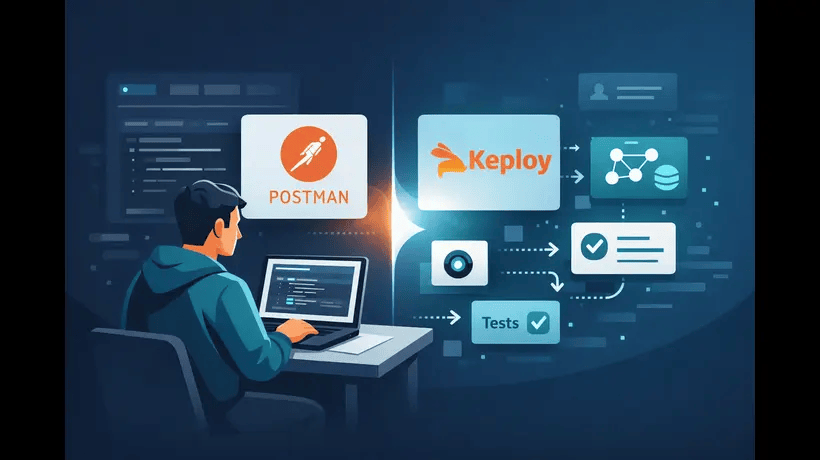
The postman alternative decision usually gets made by developers. The person with the most opinions about API testing tooling advocates for a switch, the team agrees or disagrees, and the decision gets made at the individual contributor level with varying degrees of management awareness.
This is fine for most tool decisions. It's less fine for API testing infrastructure, because the properties of the testing infrastructure affect things that engineering managers specifically care about: how long it takes to onboard new team members, how visible quality issues are before they reach production, how much engineering time gets spent on testing overhead versus building product, and how resilient the team's practices are to personnel change.
The Onboarding Metric
One of the clearest indicators of testing infrastructure quality is how long it takes a new developer to go from zero to running the full test suite. For teams using Postman without collection management conventions, this number is often measured in days rather than hours. Finding the right workspace, getting the right access, understanding the environment configuration, and learning enough about the pre-request scripts to not break anything takes time that usually requires pairing with someone who already knows the system.
For teams using Git-native tools like Bruno with collections in the repository, the same process takes the time it takes to clone the repository and read a README. The testing infrastructure is discoverable through the same mechanisms as the rest of the codebase.
The engineering management implication is direct: testing infrastructure that requires tribal knowledge to use is infrastructure that will consistently slow down new team members and consistently create risk when team members leave. Tools that store their artifacts in version control alongside the code they test eliminate that class of onboarding friction structurally rather than through documentation that has to be kept manually up to date.
The Quality Visibility Question
Engineering managers typically have limited visibility into the actual state of API test coverage. The metrics they see, test count, coverage percentage, CI pass rate, don't necessarily reveal whether the tests would catch the issues that matter.
A Postman collection with a hundred requests and a passing CI run can coexist with significant gaps in meaningful coverage. The requests cover the happy path for each endpoint. The error cases, authorization checks, and integration failure modes aren't covered because nobody specifically decided not to cover them, they just never made it onto anyone's list.
Traffic-based test generation changes what quality visibility looks like. When tests are generated from real traffic, the coverage reflects actual usage patterns rather than a developer's mental model of what should be tested. The engineering manager can ask "what percentage of the API's real traffic patterns are covered by tests" rather than "how many tests do we have," which is a question with a more meaningful answer.
Keploy's coverage is meaningful in the sense that matters: it reflects the scenarios that actually occur in production-like conditions rather than the scenarios that were easiest to write tests for. The gap between "tests exist" and "tests cover the things that break" narrows significantly when coverage is derived from behavior rather than from manual test authoring.
The Maintenance Overhead Problem
Engineering capacity spent on test maintenance is capacity not spent on product development. For most teams this trade-off is invisible because test maintenance doesn't show up as a discrete line item in sprint planning. It shows up as the task that someone does when a test breaks, the hour spent figuring out why CI is failing, the afternoon spent updating a collection after an endpoint changed.
The aggregate of these small, unplanned interruptions is significant. For teams with large API surfaces and active development, test maintenance can consume a meaningful fraction of engineering time without anyone explicitly deciding to allocate that time.
The tools that reduce this overhead are the ones worth managing toward. Bruno reduces the collection drift problem that causes surprise maintenance work by keeping tests and code in the same version-controlled location. Keploy reduces the test authoring and update problem by generating tests from behavior rather than requiring manual maintenance of assertions that need to match current behavior.
An engineering manager who asks "how much time did the team spend on test maintenance last sprint" will often get an underestimate because the time is distributed across many small incidents rather than concentrated in visible blocks. Getting a more accurate picture of that cost is the first step toward evaluating whether better tooling would recover meaningful engineering capacity.
The Bus Factor Conversation
Every engineering team has implicit dependencies on specific individuals for specific types of knowledge. "Bus factor" is the informal measure of how many people need to be unavailable before a critical system becomes unmaintainable.
API testing infrastructure that was set up by one developer and exists primarily in that developer's understanding of a Postman workspace has a bus factor of one. If that developer leaves, the team has a period of degraded testing capability while someone reverse-engineers the infrastructure they left behind.
API testing infrastructure that lives in version control, that follows conventions documented in the repository, and that doesn't depend on any individual's mental model of how a proprietary workspace is organized has a bus factor equal to the number of developers who understand the codebase generally. The testing infrastructure is as resilient to personnel change as the codebase itself.
From an engineering management perspective, moving testing infrastructure from Postman-style workspace management to Git-native tools is a form of risk reduction that pays dividends gradually and becomes most visible only when it prevents the kind of disruption that would otherwise have happened when a key team member leaves.
The Conversation Worth Having Before the Next Renewal
The Postman renewal date is a natural moment for an engineering manager to have the tooling conversation explicitly rather than leaving it to implicit individual decisions.
The questions worth asking are specific. How much engineering time did we spend on test maintenance in the past quarter? How long does it take a new developer to run our full API test suite from scratch? How confident are we that our tests would catch the issues that caused our last three production incidents? Where does our testing infrastructure knowledge live, and what happens to it if the people who built it leave?
The answers to these questions are more useful for making a tooling decision than any feature comparison. They describe the actual cost of the current situation in terms that are relevant to engineering management rather than to individual developer preference. And they make the case for or against switching in terms that are grounded in the team's real experience rather than in the theoretical advantages of one tool over another.

 English
 Arabic
 Français
 Español
 Português
 Deutsch
 Türkçe
 Dutch
Dutch
 Russian
 Romaian