


Optical Sight Systems: Real-World Accuracy and Performance Challenges
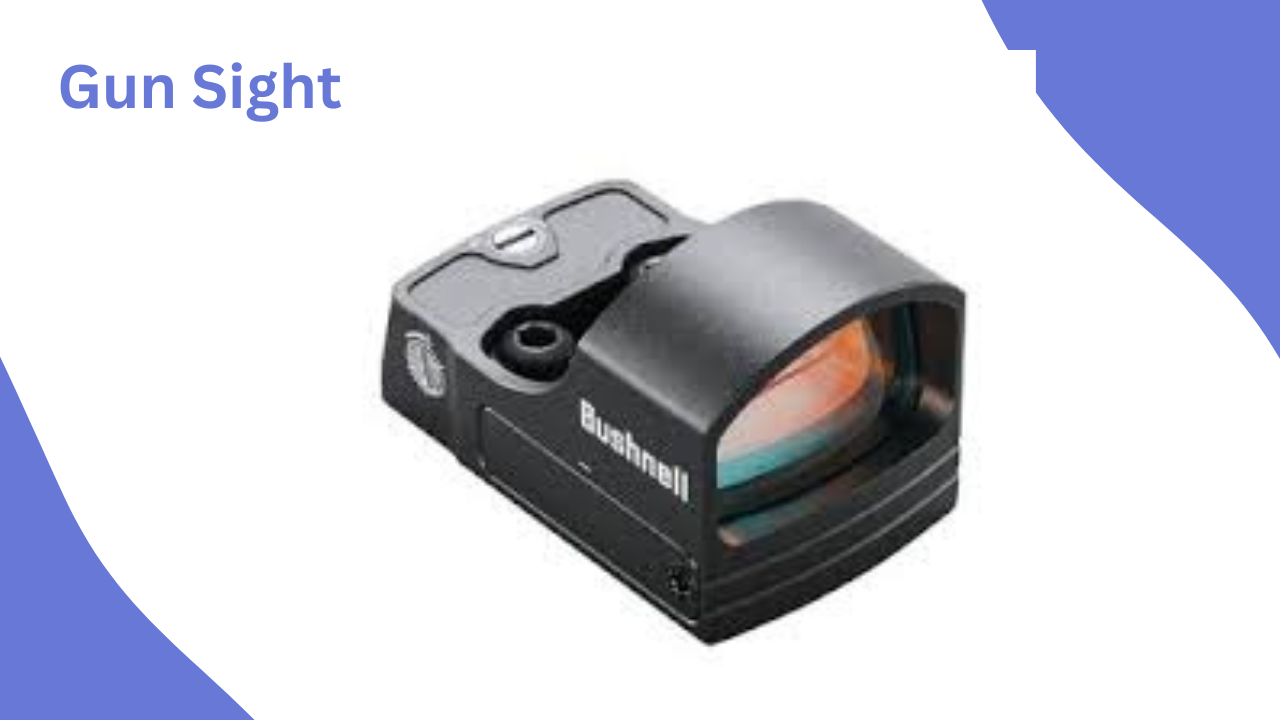
Many optical sighting systems look extremely precise on paper.
Manufacturers often highlight magnification, clarity, and alignment precision. But in real-world environments, performance often tells a different story. Users frequently experience visibility issues, misalignment errors, and reduced accuracy when conditions change.
This is not just a hardware problem. It is a system-level challenge.
Even small optical distortions or environmental changes can significantly affect how accurately a sighting system performs. Engineers working with Gun sight optical systems, simulation optics, and precision targeting devices often face the same core issue: what looks perfect in controlled testing may behave very differently in the field.
Understanding these real-world problems helps improve optical design, calibration methods, and user reliability across many industries.
Why Alignment Errors Create Major Performance Issues
One of the most common challenges in optical sighting systems is alignment drift.
Even microscopic misalignment between optical components can shift the point of reference. This leads to inaccurate targeting, reduced consistency, and user frustration.
According to optical engineering principles documented by organizations such as SPIE (International Society for Optics and Photonics), alignment precision plays a critical role in maintaining system accuracy in high-precision optics.
The problem becomes worse under vibration, impact, or temperature changes.
In real use conditions, systems rarely stay perfectly stable. That means engineers must design optical assemblies that can tolerate movement without losing calibration.
Think of it like trying to aim a camera that slightly moves every time you breathe. Even a tiny shift matters.
Environmental Conditions Distort Optical Performance
Outdoor environments introduce variables that lab testing often ignores.
Light intensity, fog, dust, humidity, and temperature changes all affect how optical systems perform.
For example:
- Bright sunlight can reduce contrast
- Fog can scatter light and blur reference points
- Dust can reduce clarity and introduce distortion
- Heat can shift optical alignment slightly
Research from IEEE optics studies confirms that environmental instability is one of the leading causes of real-world performance variation in precision optical systems.
A system that works perfectly indoors may struggle outdoors under changing light and weather conditions.
This gap between lab and field performance remains a major engineering challenge.
Eye Strain and User Fatigue Reduce Accuracy
Human factors play a bigger role than many engineers expect.
When users experience eye strain, their ability to focus decreases. This directly affects accuracy and response time in precision optical tasks.
Extended use of optical sighting systems can lead to:
- Visual fatigue
- Reduced focus stability
- Delayed reaction time
- Misjudgment of alignment
Display and optics research from SID (Society for Information Display) highlights that visual comfort strongly influences user performance in optical systems.
A poorly optimized viewing experience can turn a precise system into a frustrating one.
In simple terms, if users struggle to see clearly, they cannot perform accurately—no matter how advanced the system is.
Optical Distortion Creates Hidden Errors
Not all errors are visible immediately.
Some optical systems introduce subtle distortions such as barrel distortion, chromatic aberration, or edge blur. These issues may not be obvious in short tests but become noticeable during extended use.
Even small distortions can shift perceived alignment.
This becomes especially important in high-precision applications where small deviations lead to large performance differences.
Optical designers often spend significant effort correcting distortion through lens design, coatings, and calibration methods.
The goal is simple: keep the image consistent across the entire viewing area.
Brightness and Contrast Limitations Affect Visibility
Visibility is not just about magnification.
If contrast is too low, users may struggle to distinguish reference points from the background. If brightness is too high or too low, details may become unclear.
According to optical display research from Optica (formerly OSA), contrast perception plays a major role in visual accuracy and target recognition under different lighting conditions.
Modern optical systems must balance:
- Brightness efficiency
- Contrast stability
- Light transmission
- Anti-reflection control
Poor balance leads to reduced usability, especially in challenging lighting environments.
Calibration Drift Over Time Reduces Long-Term Accuracy
Even well-designed optical systems do not stay perfect forever.
Mechanical stress, repeated use, and environmental exposure can slowly shift calibration settings. This phenomenon is known as calibration drift.
Over time, this can reduce system reliability and require frequent recalibration.
In engineering applications, calibration stability is just as important as initial precision.
Without it, even the most accurate system loses value over time.
Manufacturing Tolerances Determine Real-World Performance
Many performance issues originate during manufacturing.
Small variations in lens curvature, coating thickness, or assembly alignment can create noticeable differences in performance.
Organizations like ISO and SPIE emphasize tight manufacturing tolerances in precision optics because small defects often multiply into larger system-level errors.
Two systems that look identical externally may perform very differently due to microscopic differences inside.
This is why quality control remains a critical part of optical system production.
Why System Integration Matters More Than Individual Components
Optical performance does not depend on a single component.
It depends on how all components work together.
Even a high-quality optical element can underperform if paired with weak mechanical design, poor calibration, or unstable mounting structures.
System integration challenges often include:
- Mechanical instability
- Thermal expansion mismatch
- Optical misalignment between modules
- Software calibration inconsistencies
Successful optical system design requires both precision engineering and system-level thinking.
Conclusion
Optical sighting systems face many real-world challenges that do not always appear during controlled testing. Alignment errors, environmental conditions, optical distortion, brightness limitations, calibration drift, and manufacturing tolerances all contribute to performance variation.
A Gun sight optical system, or any precision optical sighting technology used in industrial, research, or simulation environments, must account for these challenges to maintain reliability in real conditions.
Ultimately, accuracy depends on more than optical design alone. It depends on stability, environmental resistance, calibration consistency, and human usability.
When all these factors work together, optical systems deliver the precision users expect in real-world applications.

 English
 Arabic
 Français
 Español
 Deutsch
 Türkçe
 Dutch
Dutch
 Italiano
 Russian
 Romaian