


EU CLP Regulation Update: Compliance Checklist for Companies
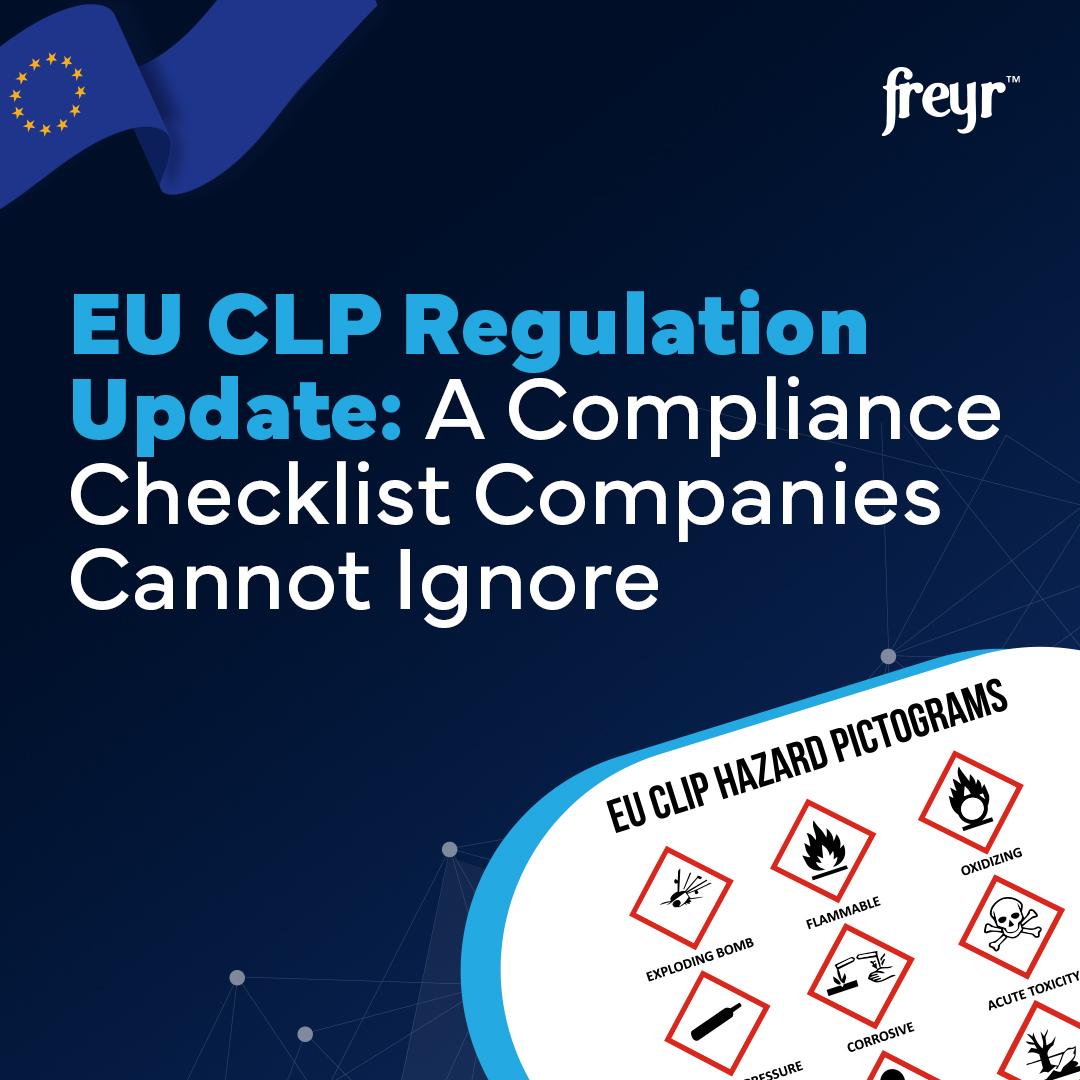
Updated EU CLP Rules: A Practical Breakdown for Chemical Businesses
The EU has revised its Classification, Labelling and Packaging (CLP) Regulation again, and this round carries enough weight that manufacturers, importers, and exporters of chemicals should plan a real response rather than a quick skim.
What's in the Update
- 27 newly added harmonized classifications
- 16 classifications revised
- 7 classifications dropped as outdated
- A formal hazard pathway for Endocrine Disruptors (ED)
- PBT and PMT substances brought into the CLP hazard class structure
- Mixtures already on the market by May 1, 2026 get a transition runway through May 1, 2028
The practical fallout touches four areas: how substances get classified, what your SDS documents say, how products are labeled, and how compliant your supply chain stays end to end.
The Underlying Shift
Earlier versions of CLP centered on hazards that show up quickly — toxicity, flammability, skin and eye irritation. This revision pulls in risks that build up over time instead.
For endocrine disruptors, that means classification now leans on a weight-of-evidence method: combining toxicological testing, validated data sets, and literature review rather than any single study.
For persistence and mobility in the environment, four categories now apply:
- PBT – Persistent, Bioaccumulative, Toxic
- vPvB – Very Persistent, Very Bioaccumulative
- PMT – Persistent, Mobile, Toxic
- vPvM – Very Persistent, Very Mobile
Falling into any of these can reshape how an entire product line is positioned, not just one SKU.
Where the Risk Actually Sits
Stale SDS files. Safety Data Sheets need updating whenever hazard data changes, a formula shifts, a supplier revises their numbers, or — as now — the classification rules themselves move. Letting an SDS go stale invites audit failures, fines, worker-safety blind spots, shipment delays, and lost market access.
Trusting supplier data without checking it. Hazard classifications inherited from unverified supplier SDS data can quietly propagate errors into your own labels and compliance filings. Periodic validation closes that gap.
Labels that don't catch up. A revised hazard classification means nothing if the pictograms, signal words, and precautionary statements on the physical label haven't been updated to match.
Checklist for Getting Ready
- Screen your portfolio for substances the update newly affects
- Match current classifications against the latest ATP and CLP criteria
- Update SDS Sections 2, 3, 11, and 12 wherever needed
- Validate supplier-provided SDS data rather than taking it at face value
- Audit your chemical inventory against the revised classification list
- Check compliance impact at the mixture level, not only per ingredient
- Bring label artwork in line with the new hazard communication rules
- Train regulatory, EHS, and supply chain teams on what's changed
- Tighten change-management processes so the next update doesn't catch you flat-footed
Why Waiting Costs More
Putting this off tends to compound the downside: bigger regulatory exposure, more operational disruption, rushed and costlier label redesigns, supply chain friction, and added barriers at export.
This update isn't paperwork — it's a reason to rethink how hazard communication, SDS upkeep, and portfolio compliance work together as a system.
The question that matters isn't "Are we compliant today?" It's "Will we still be compliant as this keeps evolving?"
Companies that move early tend to spend less time reacting later, and keep their products moving through markets without interruption.
Organizations that act early can reduce risk, strengthen compliance resilience, and maintain uninterrupted market access in an evolving regulatory landscape.
Unsure how the latest CLP updates impact your products? Connect with Freyr to assess CLP compliance gaps and build a proactive roadmap for CLP Regulation readiness.
 Deutsch
 English
 Arabic
 Français
 Español
 Português
 Türkçe
 Dutch
Dutch
 Italiano
 Russian
 Romaian