


AI Asset Library for Ecommerce Brands: How Better Asset Management Improves Customer Experience
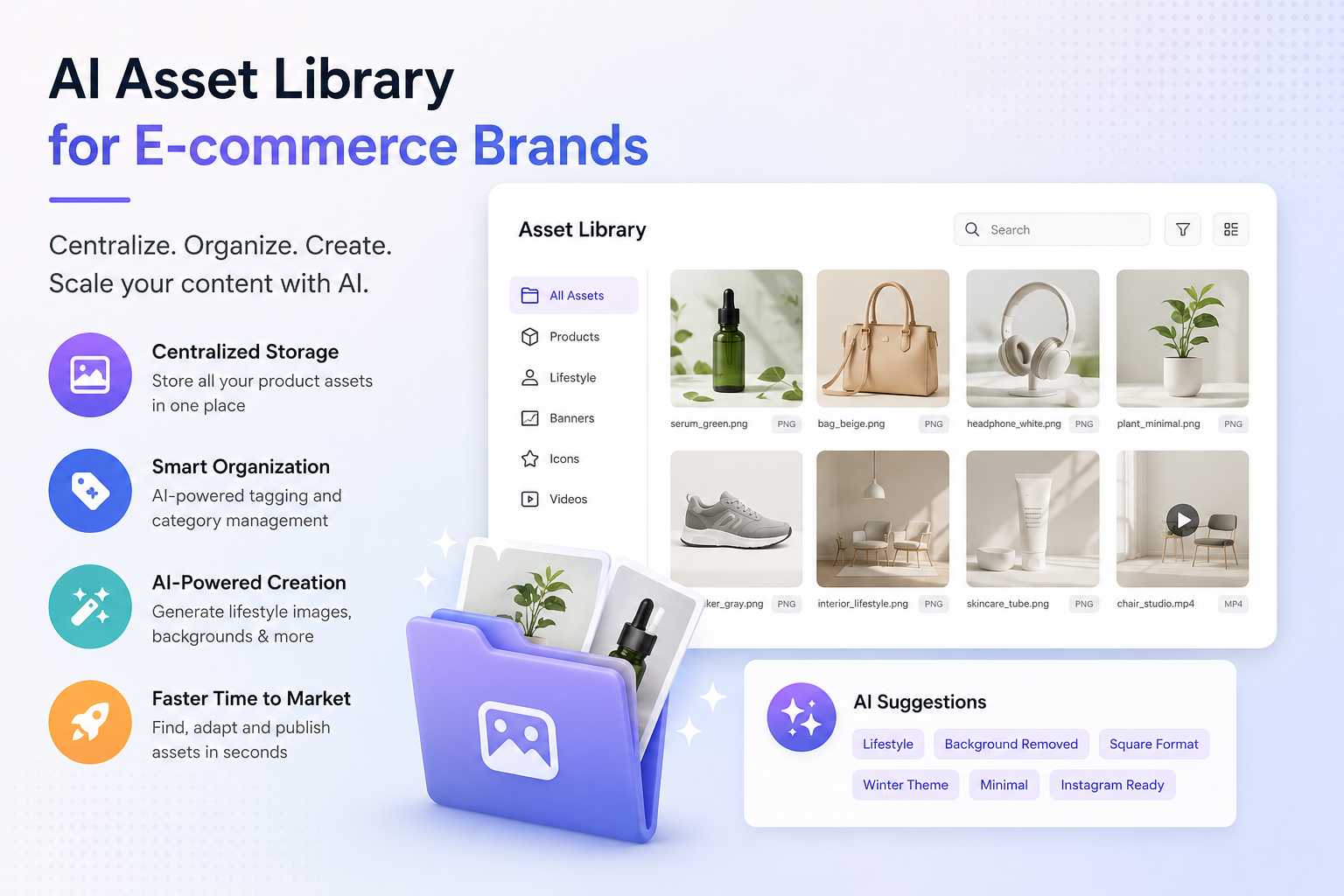
Customers don't decide to purchase a product the moment they visit an ecommerce website. Their buying journey usually starts much earlier through advertisements, search results, social media, influencer recommendations, email campaigns, or online marketplaces. At every stage, digital content shapes how they perceive a brand. Product images create the first impression, videos explain product features, banners communicate promotions, and lifestyle photography helps customers imagine using the product in their daily lives.
AI asset library for ecommerce brands is becoming increasingly valuable because delivering a consistent customer experience depends on managing these digital assets efficiently. As businesses grow, maintaining quality and consistency across hundreds or even thousands of customer touchpoints becomes much more challenging. Without a structured system, outdated visuals, inconsistent branding, and missing assets can easily affect the buying journey.
The brands that deliver the best customer experiences are often the ones that manage their content most effectively behind the scenes.
Why Better Content Creates Better Shopping Experiences
AI asset library for ecommerce brands helps businesses deliver consistent and accurate content wherever customers interact with the brand. Modern shoppers move between multiple channels before making a purchase. They may discover a product through Instagram, compare prices on Amazon, visit the brand's website, watch product demonstrations on YouTube, and finally complete their purchase through a mobile app.
Each platform requires different versions of the same content, but the customer expects a consistent experience throughout the journey. If one platform displays outdated product packaging while another uses updated branding, trust begins to weaken.
A centralized asset library ensures every channel uses approved images, videos, and marketing materials. Instead of manually updating assets across multiple platforms, businesses maintain one reliable repository that supports every customer-facing channel.
Why Inconsistent Content Reduces Customer Confidence
Customers often notice inconsistencies even when businesses do not. Different product colors across marketplaces, outdated packaging in advertisements, or incorrect promotional banners create uncertainty during the buying process.
Imagine purchasing skincare products after seeing one design on social media and another on the brand's website. Even if the product itself is identical, inconsistent visuals may create hesitation because customers begin questioning whether they are buying the correct item.
Maintaining consistent content across every touchpoint strengthens customer confidence and supports better purchasing decisions.
How Accurate Assets Reduce Customer Support Issues
Many customer support requests originate from inaccurate or outdated product information. Incorrect product images, missing instructional graphics, or inconsistent specifications often create unnecessary confusion after purchase.
When teams work from centralized and approved assets, product information remains accurate across every sales channel. This reduces customer questions, improves satisfaction, and allows support teams to focus on more meaningful interactions instead of resolving preventable issues.
Building Trust Through Consistent Brand Experiences
Trust is one of the most valuable assets an ecommerce business can build. While pricing and product quality certainly influence buying decisions, visual consistency also plays an important role in establishing credibility.
A structured Digital Asset Management for E-commerce strategy ensures that every department, marketplace, agency, and sales channel uses the same approved assets. This consistency reinforces the brand identity customers recognize and trust.
Whether someone encounters the brand through a digital advertisement or a product listing, the experience feels connected rather than fragmented.
Helping Teams Respond Faster To Market Changes
Ecommerce moves quickly. Businesses frequently launch new collections, introduce limited-time offers, update packaging, or adjust promotional campaigns based on seasonal demand.
Modern AI-powered asset management helps organizations respond to these changes without creating confusion. Instead of manually distributing revised assets to every department, teams can update one centralized repository where the latest approved files become immediately available.
For example, if a food brand introduces new packaging to comply with updated labeling requirements, every sales channel can access the revised assets from one location. This reduces the risk of outdated visuals remaining active after important changes.
Making Collaboration More Customer Focused
Every department contributes to the customer experience, even if customers never interact with those teams directly.
An organized ecommerce creative asset library allows marketing, merchandising, ecommerce operations, customer support, and external agencies to collaborate around the same approved content.
Helping Marketing Deliver Consistent Campaigns
Marketing campaigns often appear across websites, email newsletters, paid advertising platforms, social media, and marketplaces simultaneously. If different teams use different creative assets, customers receive inconsistent messages that reduce campaign effectiveness.
Centralized content management ensures every campaign reflects the same branding, messaging, and visual identity regardless of where customers encounter it.
Supporting Product Teams With Better Content
Product teams constantly update specifications, packaging information, user manuals, and product imagery. Managing these updates manually across multiple platforms increases the likelihood of inconsistencies.
Centralized asset management allows product teams to publish updated content once while ensuring every department has immediate access to the latest approved assets.
Improving Content Quality Without Increasing Workloads
Many businesses assume delivering better customer experiences requires producing more content. In reality, it often requires using existing content more effectively.
Modern brand asset management for ecommerce helps businesses improve quality by making approved assets easier to locate and reuse. Teams spend less time searching for files and more time optimizing customer-facing experiences.
This also encourages higher creative standards because approved assets remain accessible long after campaigns have ended, allowing businesses to maintain consistency instead of starting every project from scratch.
Creating Greater Value From Every Creative Investment
Professional photography, product videos, campaign graphics, and promotional assets require considerable investment. Businesses naturally want those assets to continue creating value long after the original campaign finishes.
Modern AI-Powered Digital Asset Management systems help organizations maximize those investments by making assets easier to discover, organize, and repurpose.
Some of the biggest business advantages include:
- Consistent customer experiences across channels
- Faster updates for campaigns and product listings
- Better reuse of existing creative assets
- Reduced duplication of creative production
- Improved collaboration across teams
- Stronger brand governance and quality control
When businesses increase the lifespan of creative assets, every investment delivers greater long-term value.
Preparing Customer Experiences For AI-Driven Commerce
The next generation of ecommerce will depend even more heavily on digital content. AI shopping assistants, personalized storefronts, conversational commerce, and intelligent product recommendations all require structured, high-quality digital assets.
An AI asset library for ecommerce brands provides the foundation needed for these future experiences. Well-organized content allows AI systems to retrieve accurate product information, recommend relevant assets, and support personalized shopping journeys more effectively.
Businesses that invest in structured asset management today will be better prepared for the next evolution of ecommerce tomorrow.
Final Thoughts
An AI asset library for ecommerce brands is not just an internal productivity tool. It directly influences the customer experience by ensuring every image, video, campaign, and product asset remains consistent, accurate, and accessible across every sales channel.
As ecommerce businesses compete through customer experience rather than price alone, managing digital assets intelligently becomes a strategic advantage. Organizations that centralize their content, improve collaboration, and strengthen governance create smoother buying journeys, stronger customer trust, and a more scalable foundation for long-term growth.
FAQs
1. How does an AI asset library improve customer experience?
It ensures customers see consistent, accurate, and approved content across every platform, reducing confusion and building trust throughout the buying journey.
2. Can better asset management reduce customer complaints?
Yes. Accurate product images, updated specifications, and consistent marketing materials help reduce misunderstandings that often lead to customer support requests.
3. Why is consistency important across ecommerce channels?
Customers interact with brands through multiple platforms before purchasing. Consistent visuals and messaging create familiarity and strengthen brand credibility.
4. How does AI improve content quality?
AI helps organize, categorize, and retrieve approved assets more efficiently, making it easier for teams to use high-quality content consistently.
5. How does an AI asset library support future ecommerce trends?
It creates structured content that can support AI shopping assistants, personalized recommendations, conversational commerce, and other emerging ecommerce technologies.
 Deutsch
 English
 Arabic
 Français
 Español
 Português
 Türkçe
 Dutch
Dutch
 Italiano
 Russian
 Romaian