


The Future of AI Agent Engineering
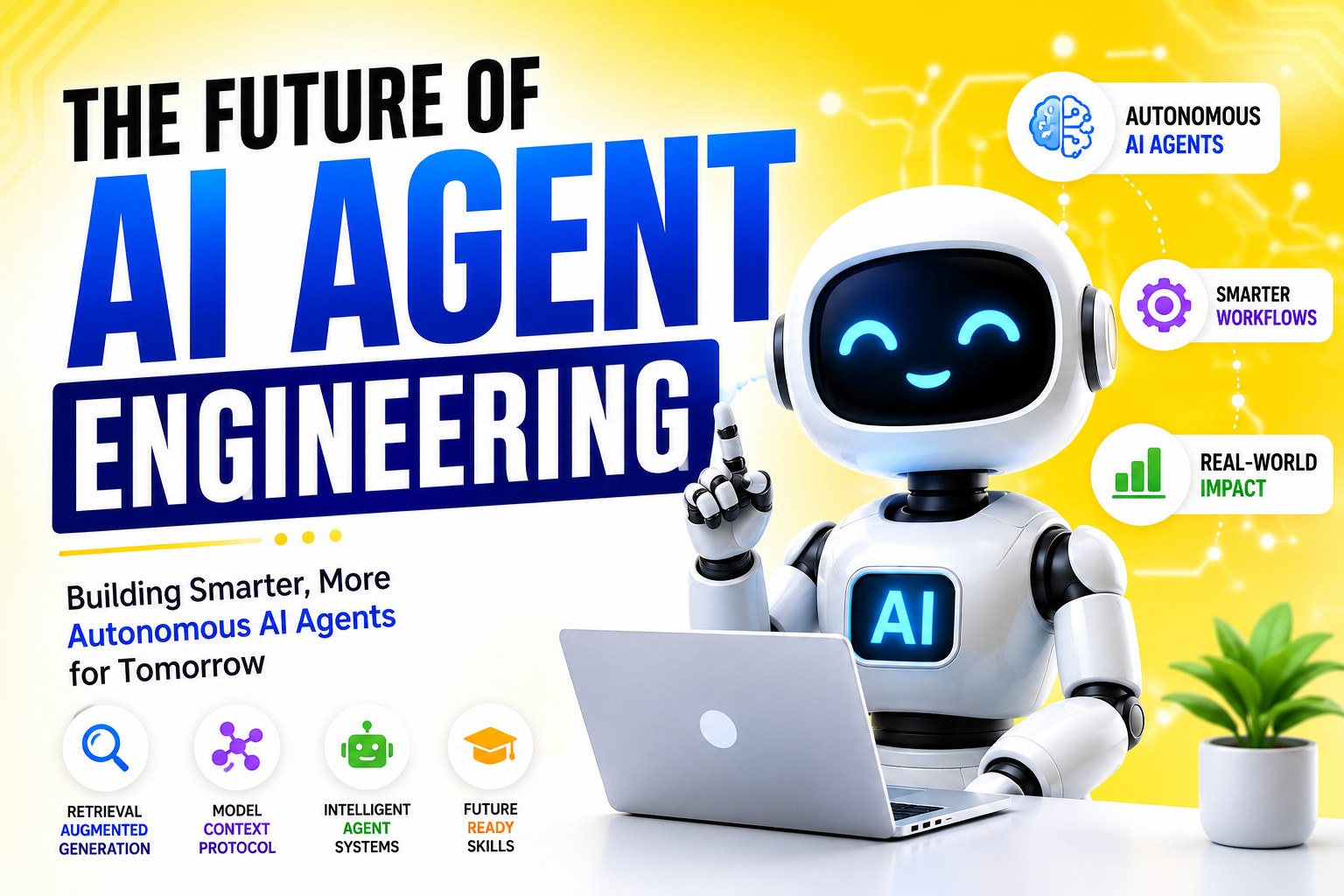
Today, businesses are using AI agents that complete tasks, automate workflows, and support teams with minimal human involvement.
As a result, Agentic AI Engineering is quickly becoming one of the most important areas in AI.
But where is this field heading next? Let's explore.
Major Trends Shaping the Future of AI Engineering
The field isn't standing still. Here's what's driving the next chapter of AI engineering:
-
Generative AI and large language models are transforming software by helping machines generate content, write code, answer questions, and even assist with complex tasks like drafting legal documents.
-
Multimodal AI allows systems to understand and combine different types of information, including text, images, audio, and video, creating more natural and powerful user experiences.
-
Edge AI brings intelligence directly to devices such as smartphones, sensors, and cameras, reducing response times while improving privacy and security.
-
AI-powered software development is changing the way engineers work by automating coding, testing, debugging, and deployment tasks, enabling faster software delivery.
-
Open-source AI tools are making advanced AI technology more accessible, allowing startups and small teams to build and deploy sophisticated AI solutions without massive budgets.
The Skills That Will Define Tomorrow's AI Agent Engineers
Let's be honest — the job of an AI engineer is evolving fast.
Knowing Python and a few ML libraries used to be enough to get you in the door. That bar has risen significantly. The engineers who will thrive in this space are the ones who understand agents not just as code, but as systems with goals, memory, tools, and reasoning capabilities.
You'll need to understand how to design agent architectures that are modular and scalable. You'll need to know how to evaluate agent behavior, debug hallucinations, and optimize reliability under real-world conditions.
You'll also need a solid grasp of how frameworks like LangChain, AutoGen, or CrewAI work — and when to use each one.
Challenges That Will Define the Future of AI Agent Engineering
While the future looks promising, several challenges remain.
Reliability continues to be a major concern. AI agents must consistently produce accurate results, especially in high-stakes environments such as healthcare, finance, and legal services.
Security is another critical issue. As AI agents gain access to sensitive systems and data, organizations must implement robust safeguards to prevent misuse.
Scalability also presents challenges. Managing large networks of autonomous agents requires sophisticated monitoring, governance, and resource allocation strategies.
Additionally, ethical considerations will become increasingly important. Engineers must ensure that AI systems operate responsibly, transparently, and fairly.
Addressing these challenges will be a key responsibility for professionals working in Agentic AI engineering.
Will AI Replace AI Engineers In The Future?
Let's address the elephant in the room — and give it a straight answer. AI can automate repetitive coding tasks, generate boilerplate, and flag simple errors. But designing multi-agent systems, making architectural decisions under pressure, or catching when a model is quietly failing in production still needs a human brain.
The engineers who understand Agentic AI engineering, know how to work with model context protocol, and can build reliable pipelines using retrieval augmented generation are solving problems AI cannot fully own yet.
The role isn't disappearing — it's evolving into something more strategic and far more valuable.
The only engineers at risk are the ones who stop learning.
How to Prepare for the Future of AI Engineering?
Start by building a solid technical foundation in Python, machine learning, and cloud platforms. Then go deeper into modern frameworks and protocols — understanding model context protocol and retrieval augmented generation will set you apart from engineers who only know surface-level AI tools. Work on real projects, contribute to open-source, and document your builds.
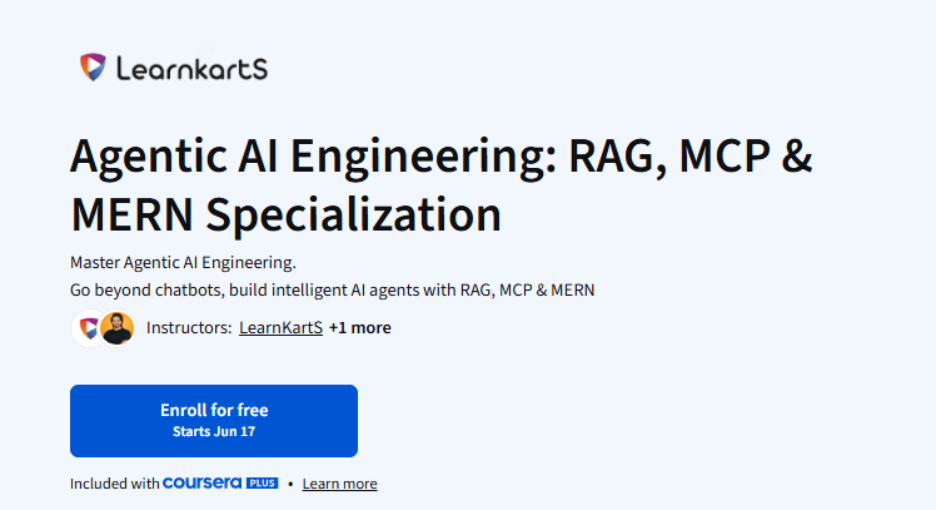
Most importantly, invest in structured learning. Enrolling in an Agentic AI engineering course is one of the smartest moves you can make right now. A quality course gives you the hands-on, practical skills that employers are actively searching for.
The Road Ahead Is Being Built Right Now
The future of AI agent engineering isn't something that's going to arrive someday. It's being written right now, in codebases, research labs, and startups you haven't heard of yet.
The engineers who show up with strong foundations in agentic architectures, retrieval systems, and tool integration protocols will be the ones shaping it.
This is one of those moments in technology where getting in early can pay off for years. The tools are maturing, the demand is accelerating, and the gap between where the industry is and where it's going is still wide enough for ambitious engineers to carve out real expertise.
Don't wait for the future of AI agent engineering to be obvious — by then, the seats at the table will already be taken.

 English
 Arabic
 Français
 Español
 Português
 Deutsch
 Türkçe
 Dutch
Dutch
 Russian
 Romaian