


Biometric System: Complete Guide to Types, Benefits, Applications & Future Trends (2026)
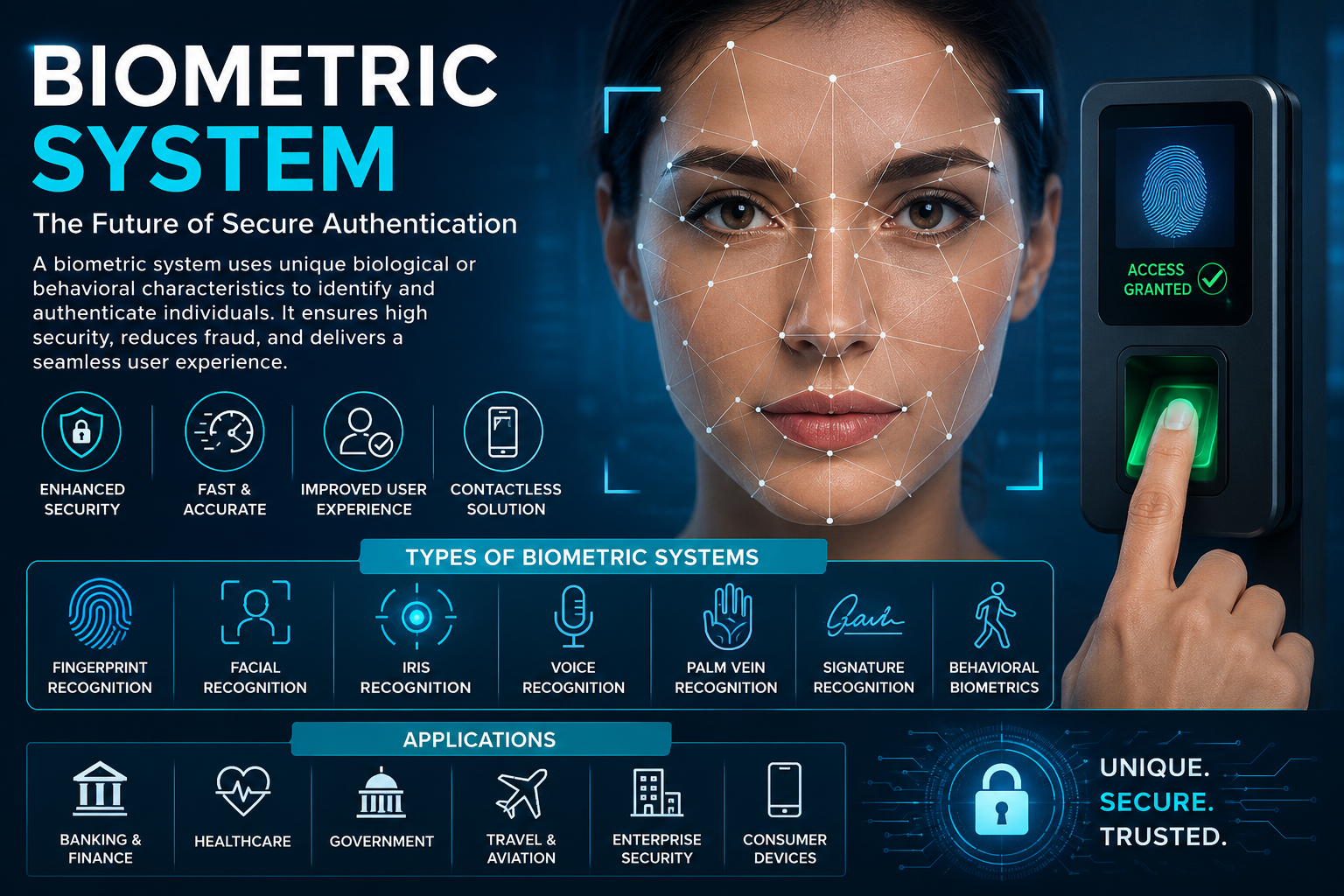
In today’s digital-first economy, the Biometric System has become one of the most reliable methods of identity verification. As cyber threats, identity theft, and unauthorized access continue to increase, businesses and governments are investing heavily in biometric technologies to enhance security while improving user convenience.
From fingerprint scanners and facial recognition to iris recognition and voice authentication, biometric systems are transforming industries such as banking, healthcare, government, travel, education, and consumer electronics. The integration of Artificial Intelligence (AI), machine learning, cloud computing, and Internet of Things (IoT) technologies has further accelerated the adoption of advanced biometric authentication solutions across the globe.
DOWnload PDF Brochure -https://www.marketsandmarkets.com/pdfdownloadNew.asp?id=697
What is a Biometric System?
A Biometric System is an identification and authentication technology that recognizes individuals based on their unique biological or behavioral characteristics. Unlike traditional passwords or PINs, biometric identifiers cannot be easily forgotten, shared, or duplicated.
A biometric system typically captures biometric data, processes it into a digital template, stores it securely, and compares future scans against stored templates to verify a user’s identity.
Common biometric traits include:
- Fingerprint Recognition
- Facial Recognition
- Iris Recognition
- Retina Recognition
- Voice Recognition
- Palm Vein Recognition
- Hand Geometry
- Signature Recognition
- Behavioral Biometrics
Because every individual’s biometric characteristics are unique, these systems offer a higher level of security than traditional authentication methods.
How Does a Biometric System Work?
A biometric system generally follows four essential steps:
Enrollment
The system captures a user’s biometric data through specialized sensors such as cameras, fingerprint scanners, iris scanners, or microphones.
Feature Extraction
Advanced AI algorithms analyze the captured biometric information and convert it into a secure mathematical template rather than storing the original image.
Storage
The encrypted biometric template is securely stored in local devices, cloud platforms, or enterprise databases.
Authentication
When the user attempts access again, the system captures new biometric data and compares it with the stored template. Access is granted only if the match exceeds the required confidence threshold.
Types of Biometric Systems
Fingerprint Recognition
Fingerprint authentication remains the most widely deployed biometric technology due to its affordability, reliability, and fast processing speed.
Applications include:
- Smartphones
- Employee attendance
- Banking
- Access control
- Government identification
Facial Recognition
Facial recognition uses AI-powered computer vision algorithms to analyze facial features for authentication.
It has become popular in:
- Airports
- Border security
- Smartphones
- Smart cities
- Retail analytics
- Law enforcement
Iris Recognition
The iris contains highly complex and unique patterns that remain stable throughout an individual’s lifetime.
Benefits include:
- Extremely high accuracy
- Contactless authentication
- Difficult to forge
Common applications include airports, government agencies, healthcare, and military facilities.
Voice Recognition
Voice biometrics identifies users based on vocal characteristics, speech patterns, and frequency analysis.
Popular use cases include:
- Banking call centers
- Smart assistants
- Customer verification
- Remote authentication
Palm Vein Recognition
Palm vein technology authenticates users by scanning unique vein patterns beneath the skin using infrared light.
Advantages include:
- Contactless operation
- High security
- Excellent hygiene
- Difficult to counterfeit
Behavioral Biometrics
Unlike physical biometrics, behavioral biometrics continuously monitor user behavior.
Examples include:
- Typing rhythm
- Mouse movement
- Touchscreen behavior
- Device handling
- Walking pattern
Behavioral biometrics is increasingly used for continuous fraud detection.
Benefits of Biometric Systems
Enhanced Security
Biometric authentication eliminates many risks associated with stolen passwords and identity theft.
Faster Authentication
Users can unlock devices or verify identities within seconds.
Improved User Experience
There is no need to remember multiple passwords.
Fraud Prevention
Financial institutions increasingly rely on biometric verification to reduce fraudulent transactions.
Contactless Authentication
Modern facial and iris recognition systems support hygienic, touch-free authentication.
Regulatory Compliance
Many industries use biometric systems to comply with Know Your Customer (KYC), anti-money laundering (AML), and digital identity regulations.
Applications of Biometric Systems
Banking and Financial Services
Banks use biometric authentication for:
- Mobile banking
- ATM verification
- Customer onboarding
- Digital payments
- Fraud prevention
Healthcare
Hospitals deploy biometric systems for:
- Patient identification
- Electronic health records
- Staff authentication
- Prescription security

 Arabic
 Français
 Español
 Português
 Deutsch
 Türkçe
 Dutch
Dutch
 Italiano
 Russian
 Romaian