


The Modern B2B Lead Generation Process: How AI Helps Businesses Find Better Leads
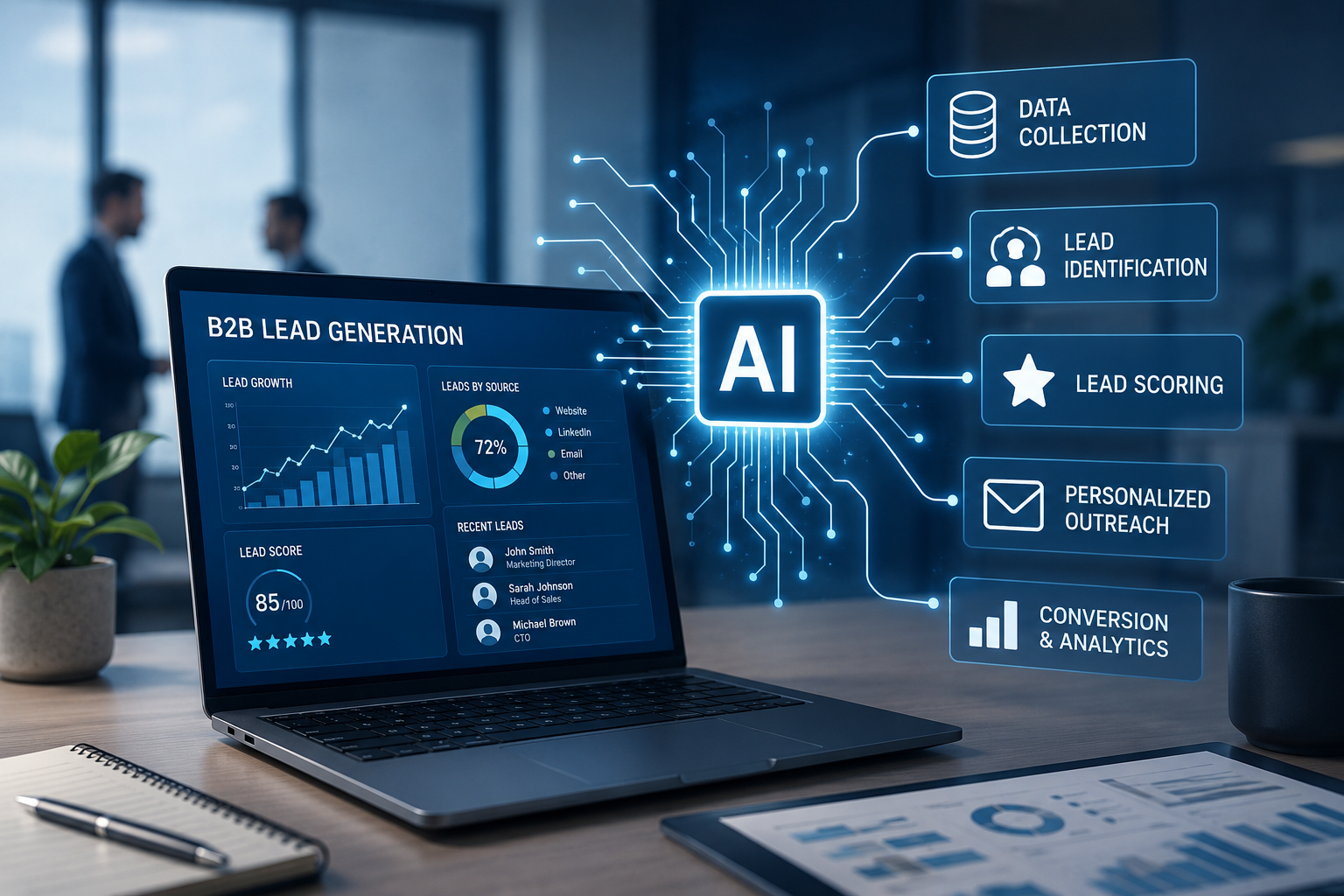
AI Is Reshaping Modern B2B Sales
The B2B lead generation process has evolved significantly as businesses adapt to changing buyer behavior and growing competition. Today's decision-makers expect personalized communication, quick responses, and relevant information before engaging with a sales team. Traditional prospecting methods alone are no longer enough to meet these expectations.
Artificial intelligence is helping businesses modernize the way they attract, qualify, and nurture potential customers. Instead of spending countless hours on manual research and repetitive administrative tasks, sales and marketing teams can use AI to identify high-quality prospects, personalize outreach, and make smarter decisions based on data. This combination improves productivity while creating better customer experiences.
How the B2B Lead Generation Process Becomes Smarter with AI
Artificial intelligence has transformed the B2B lead generation process by making every stage more intelligent and efficient. Rather than treating every prospect the same, AI analyzes customer behavior, engagement history, company information, and buying signals to determine which leads are most likely to convert.
Sales teams receive prioritized prospect lists based on real-time insights, allowing them to focus on opportunities with the highest potential. Marketing teams also benefit from better audience segmentation, enabling them to deliver personalized campaigns that resonate with specific industries or decision-makers.
The result is a more strategic approach to lead generation that reduces wasted effort while increasing conversion opportunities.
Better Data Creates a Better Lead Generation Process
Every successful lead generation process depends on accurate and reliable data. Unfortunately, many businesses struggle with incomplete contact information, duplicate records, and outdated customer databases.
AI helps solve these challenges by continuously cleaning, organizing, and enriching customer data. It identifies patterns, fills information gaps, and improves customer segmentation, making marketing campaigns more targeted and effective.
When businesses work with clean data, they gain a clearer understanding of customer behavior and can make informed decisions throughout the sales journey.
AI Makes Lead Qualification Faster
Qualifying leads manually often consumes valuable time that sales representatives could spend building customer relationships.
AI-powered lead scoring evaluates multiple factors including website activity, email engagement, content downloads, social interactions, and previous conversations. Based on these signals, prospects are automatically ranked according to their likelihood of becoming customers.
This allows sales teams to respond quickly to high-intent buyers while marketing automation continues nurturing prospects who are still in the research stage.
Personalization at Scale Improves Customer Engagement
Today's buyers expect businesses to understand their specific challenges and provide relevant solutions from the very first interaction.
Artificial intelligence enables personalized communication across emails, landing pages, advertisements, and websites. Instead of sending identical messages to every prospect, businesses can tailor content according to industry, company size, job role, or previous engagement.
This creates more meaningful interactions that increase trust and improve response rates throughout the customer journey.
Automating Repetitive Tasks Saves Valuable Time
A large portion of the B2B lead gen process involves repetitive administrative work such as entering CRM data, assigning leads, scheduling follow-ups, and organizing contact information.
Automation handles these routine activities efficiently, reducing manual effort and minimizing human error.
With less time spent on repetitive work, sales professionals can focus on building relationships, understanding customer needs, and closing more opportunities.
Predictive Analytics Helps Businesses Stay Ahead
One of AI's most valuable capabilities is predicting future customer behavior using historical and real-time data.
Predictive analytics identifies prospects showing strong buying intent before they actively contact a business. This allows organizations to engage potential customers earlier with relevant content and timely outreach.
Businesses also gain better visibility into campaign performance, enabling smarter budget allocation and more effective marketing strategies.
AI Chatbots Keep the Lead Gen Process Active 24/7
Potential customers often visit websites outside normal business hours. Without immediate assistance, valuable opportunities may be lost.
AI-powered chatbots answer common questions, qualify visitors, collect contact information, and even schedule meetings automatically.
This keeps the lead gen process running around the clock while providing visitors with quick responses that improve their overall experience.
Stronger Collaboration Between Sales and Marketing
Successful lead generation requires both marketing and sales teams to work toward shared objectives.
AI provides centralized dashboards that give both departments access to customer insights, campaign performance, and lead quality metrics. This shared visibility improves communication and helps teams make consistent, data-driven decisions.
Better alignment ultimately leads to higher conversion rates and a smoother buying experience for customers.
Continuous Optimization Through AI Analytics
Generating leads is only the beginning. Businesses also need to understand what is working and where improvements can be made.
AI-powered analytics measure campaign performance, conversion rates, customer engagement, lead quality, and sales outcomes in real time.
These insights help organizations continuously refine their strategies, optimize marketing investments, and improve future campaigns with confidence.
Final Thoughts
The B2B lead generation process continues to evolve as artificial intelligence becomes an essential part of modern sales and marketing strategies. Businesses that combine AI-powered insights with experienced sales professionals can identify better opportunities, improve customer engagement, and achieve higher conversion rates while reducing manual effort.
Rather than replacing human expertise, AI strengthens every stage of the sales journey by enabling faster decisions, smarter targeting, and more personalized customer experiences. Organizations that embrace this approach today will be better prepared to compete in an increasingly data-driven marketplace.
FAQs
1. What is the biggest advantage of using AI in B2B lead generation?
AI improves lead quality, automates repetitive tasks, personalizes customer engagement, and helps sales teams focus on prospects with the highest conversion potential.
2. How does AI improve the lead generation process?
AI analyzes customer behavior, scores leads, automates follow-ups, and provides insights that help businesses generate more qualified opportunities.
3. Can small businesses use AI for lead generation?
Yes. Many affordable AI tools help small and medium-sized businesses automate lead generation, improve efficiency, and compete with larger organizations.
4. Does AI replace human sales teams?
No. AI supports sales professionals by handling repetitive work and providing valuable insights, allowing them to focus on relationship building and closing deals.
5. Why is data quality important in lead generation?
High-quality data improves targeting, personalization, lead scoring, and campaign performance, resulting in better conversion rates and more effective sales efforts.

 English
 Arabic
 Français
 Español
 Português
 Deutsch
 Türkçe
 Dutch
Dutch
 Italiano
 Romaian