


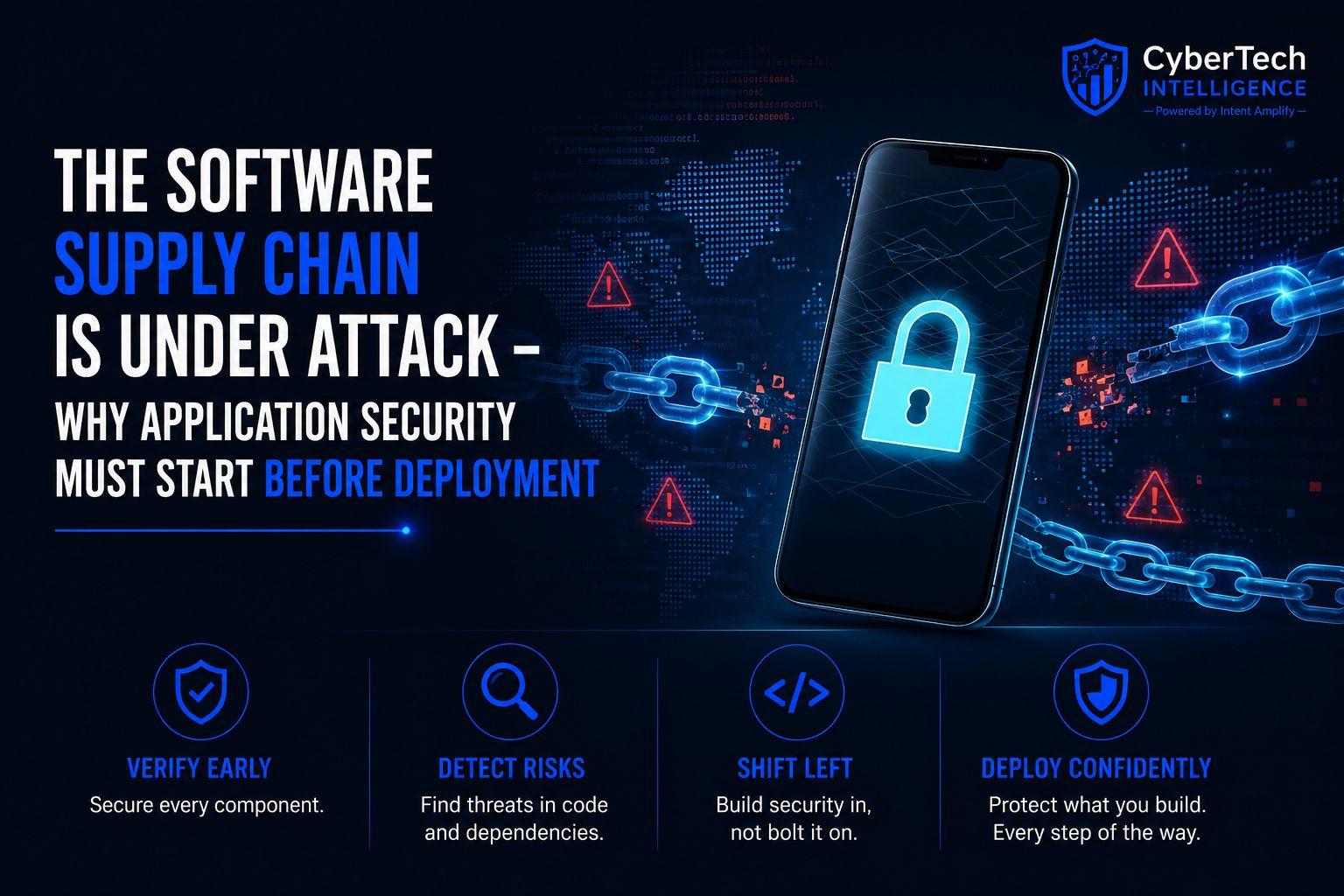
The Software Supply Chain Is Under Attack—Why Application Security Must Start Before Deployment
Applications power nearly every digital interaction today. Whether customers are shopping online, accessing financial services, managing healthcare records, or collaborating through enterprise platforms, applications have become the foundation of modern business. Unfortunately, they have also become one of the most attractive targets for cybercriminals.
Modern attacks rarely focus on infrastructure alone. Instead, attackers increasingly exploit application vulnerabilities, insecure APIs, exposed credentials, and vulnerable third-party libraries to gain unauthorized access to sensitive systems.
As organizations accelerate digital transformation and cloud-native development, application security is no longer just a developer concern - it is a strategic business requirement that directly influences resilience, customer trust, and regulatory compliance.
Why the Application Attack Surface Continues to Expand
Today's applications are significantly different from those built a decade ago.
Modern software often includes:
-
Microservices architectures
-
Open-source components
-
Public APIs
-
Containers and Kubernetes
-
Cloud-native infrastructure
-
Continuous software updates
While these technologies improve development speed and scalability, they also introduce additional security risks.
Every software dependency, API connection, and deployment pipeline creates another opportunity for attackers to exploit weaknesses if security controls are absent.
Common Application Security Risks
Organizations face an increasingly diverse range of application-level threats, including:
-
SQL injection
-
Cross-site scripting (XSS)
-
Broken authentication
-
API abuse
-
Insecure software dependencies
-
Business logic flaws
-
Remote code execution
Many of these vulnerabilities originate during software development and remain undetected until after deployment, increasing remediation costs and business risk.
Shift Security Earlier in the Development Lifecycle
One of the most effective application security strategies is adopting a "shift-left" approach.
Rather than identifying vulnerabilities after software reaches production, organizations integrate security throughout development.
Best practices include:
-
Secure coding standards
-
Threat modeling
-
Automated code analysis
-
Dependency scanning
-
Security testing during CI/CD
Early detection significantly reduces remediation effort while improving software quality.
Industry Perspective: Retail & Digital Commerce
Retail organizations rely heavily on web applications, mobile commerce platforms, payment gateways, and customer portals.
Application vulnerabilities can expose payment information, customer accounts, and transaction data while disrupting online sales.
Application security helps retailers strengthen:
-
Customer trust
-
Payment protection
-
API security
-
Digital shopping experiences
As digital commerce continues expanding, secure applications become essential for protecting revenue and brand reputation.
Industry Perspective: Business Services
Professional service organizations increasingly deliver consulting, legal, financial, and customer services through cloud-based business applications.
Protecting client information requires secure applications that can withstand both external attacks and insider threats.
Application security supports:
-
Confidential client data
-
Secure collaboration
-
Regulatory compliance
-
Business continuity
Organizations that prioritize secure software development reduce operational risk while strengthening client confidence.
Building an Effective Application Security Strategy
A mature application security program should include:
-
Secure software design principles
-
Continuous vulnerability assessments
-
API protection
-
Runtime application monitoring
-
Developer security awareness
-
Regular penetration testing
Security should become an ongoing process rather than a final validation step.
Organizations seeking to strengthen their Application Security strategy can improve software resilience by integrating security throughout the development lifecycle and continuously monitoring emerging application risks.
Final Thoughts
Applications have become the digital foundation of modern enterprises, making application security one of the most critical components of cybersecurity strategy. Organizations that invest in secure development practices, continuous testing, API protection, and runtime monitoring significantly reduce cyber risk while enabling faster innovation.
As software ecosystems continue expanding, application security will remain essential for protecting business operations, customer trust, and long-term digital transformation.

 English
 Arabic
 Français
 Español
 Português
 Deutsch
 Türkçe
 Dutch
Dutch
 Russian
 Romaian