


Smooth Motor Custom Stepper Motor Solutions for Precision Applications
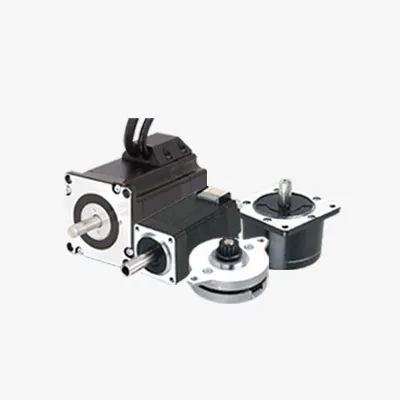
Precision applications leave very little room for compromise, since even small deviations in step accuracy, torque consistency, or thermal performance can translate directly into product defects, missed tolerances, or unreliable machine behavior over an extended production run. Custom stepper motor solutions address this challenge directly, giving engineers the ability to specify exactly the performance characteristics their application demands rather than trying to force a standard off-the-shelf part into a role it wasn't really designed to fill in the first place.
Why Standard Motors Sometimes Fall Short
Standard catalog stepper motors work well for a huge range of general applications, but precision-demanding equipment, from medical devices to semiconductor handling systems, often needs performance characteristics that fall outside what a generic product line can reliably deliver. Issues like resonance at specific speeds, inadequate holding torque for a particular load profile, or a physical envelope that simply doesn't fit within tight space constraints all push engineers toward custom solutions rather than accepting a standard motor that technically functions but never quite performs optimally within the specific application it's been asked to serve.
Customizing Winding Configuration for Specific Performance
A custom stepper motor built around a specific winding configuration can deliver meaningfully better torque and speed characteristics matched precisely to an application's actual operating profile, rather than the broad, general-purpose performance curve typical of standard catalog products. Adjusting wire gauge, turn count, and winding pattern allows engineers to optimize a motor for either high-speed operation with lower torque or high-torque, lower-speed applications, depending on exactly what the driving application actually requires from the motor throughout its typical duty cycle. This level of customization requires genuine engineering collaboration between the buyer and manufacturer, since getting winding specifications right demands a thorough understanding of the actual load and speed requirements involved.
Mechanical Customization for Tight Integration
Beyond electrical performance, many precision applications also require mechanical customization around shaft dimensions, mounting hole patterns, and connector placement to achieve tight, reliable integration with the rest of the machine's mechanical design. Custom shaft configurations, including specialized keyways, flats, or extended lengths, allow the motor to connect directly with precision coupling components or gearing systems without requiring additional adapter parts that could introduce unwanted mechanical play or backlash into the overall motion system. This mechanical precision matters enormously in applications like optical positioning systems or laboratory automation equipment, where even small amounts of mechanical slop can compromise the entire system's positioning accuracy.
Environmental and Durability Considerations
Precision applications often operate in demanding environments, whether that involves cleanroom conditions requiring special coatings, high-temperature environments needing modified insulation systems, or vibration-heavy settings requiring reinforced bearing configurations to maintain long-term reliability. Custom stepper motor development can address these environmental factors directly, selecting appropriate materials, coatings, and bearing types matched to the specific conditions the motor will actually encounter throughout its operational life rather than relying on generic environmental ratings that may not fully account for a particular application's unique operating conditions.
Testing and Validating Custom Solutions
Custom motors deserve thorough testing before committing to full production quantities, verifying that the actual performance matches design intent across the full range of operating conditions the motor will encounter once deployed in the field. Reputable manufacturers support this validation process by providing prototype units for testing, along with detailed performance data that helps engineers confirm torque curves, thermal behavior, and positioning accuracy meet the application's actual requirements before finalizing a production order. This validation step, while adding some time to the overall development process, considerably reduces the risk of discovering performance problems only after a large production quantity has already been manufactured and shipped.
Partnering With the Right Development Team
Successful custom stepper motor projects depend heavily on working with a manufacturer whose engineering team genuinely understands precision motion control challenges, rather than one simply modifying a standard product without deeper consideration of how those changes affect overall system performance. Buyers pursuing custom development should look for manufacturers with demonstrated experience in similarly demanding precision applications, since this kind of applied experience typically translates into fewer surprises and a smoother path from initial specification through to a finished, well-performing custom motor ready for integration into the final precision application. That combination of technical depth and genuine collaboration ultimately makes the difference between a motor that merely works and one that excels.

 Arabic
 Français
 Español
 Português
 Deutsch
 Türkçe
 Dutch
Dutch
 Italiano
 Russian
 Romaian