


From Standing Transfers to Knee Stability: Two Support Devices That Change Daily Care
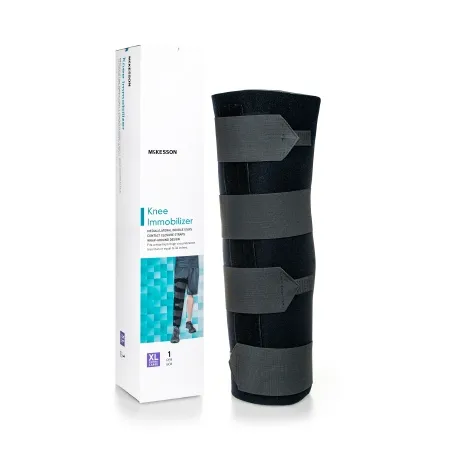
Home care covers an enormous range of physical challenges. At one end sits the demanding, high-stakes work of helping a partially dependent patient rise safely from a chair or bed — a task that puts both the patient and the caregiver at risk when done without the right equipment. At the other end sits the quieter but equally important work of supporting a recovering knee through daily activity, protecting the joint from the lateral forces that can set back a recovery or worsen an existing condition.
Two products address these challenges directly, each engineered around a specific physical need that generic solutions don't adequately meet.
The Hidden Risk in Manual Patient Transfers
For caregivers assisting patients who can bear partial weight but cannot rise independently, the sit-to-stand transfer is one of the most frequently performed — and most physically dangerous — tasks of the daily routine. Without mechanical assistance, the caregiver absorbs much of the patient's weight through their own back, shoulders, and knees during the critical transition from seated to standing. Over time, this load accumulates into caregiver injury rates that are among the highest of any occupational category, including nursing homes, home health aides, and family caregivers managing complex home care situations.
The risk to the patient is equally real. A transfer that goes wrong — a foot that slips, an unexpected shift in weight distribution, a caregiver who loses grip — can result in a fall that causes far more serious injury than the condition the patient is already managing.
A properly fitted stand assist sling eliminates this dynamic by anchoring the patient's torso to a mechanical lift, converting the caregiver's role from load-bearer to guide and monitor. The caregiver's physical contribution shifts from absorbing the patient's weight to controlling the direction and pace of the transfer — a fundamentally safer and more sustainable arrangement for daily repetition.
The Proactive Stand Assist Sling: Built for Partial Weight Bearers
Proactive sit-to-stand slings are designed for individuals who are partially dependent, have head and neck control, have at least 60% weight bearing capacity, can sit up on the edge of the bed and are able to bend at the hip, knees, and ankles. This patient profile covers a significant proportion of home care patients — those recovering from surgery, managing neurological conditions that affect strength without eliminating it, or dealing with the generalized deconditioning that follows extended hospitalization. Accessibility Medical Equipment ®
The Proactive Stand Assist Sling in Large, rated to 450 pounds provides torso and lower back support during the transfer while leaving the legs free — a design choice that serves the therapeutic goal of the transfer, not just its mechanical completion. By leaving the legs free, the sling allows and encourages the patient to participate actively in the standing motion rather than being passively hoisted. This active participation is clinically meaningful: weight-bearing practice during sit-to-stand transfers is one of the primary mechanisms by which partially dependent patients rebuild the strength and coordination needed to eventually transfer more independently.
The polyester fabric construction performs in both wet and dry environments, which matters for patients whose transfers include toileting or bathing — situations where a fabric that degrades with moisture exposure would require a separate, dedicated sling. Washing instructions are built directly into the sling label, and the material withstands washing temperatures up to 185°F, supporting the hygiene standards that daily use in a care environment demands. The 450-pound weight capacity accommodates a wide range of patient body types without requiring a transition to bariatric-specific equipment, and the large size provides the coverage needed for taller or broader patients who need more surface area across the torso for secure, comfortable positioning during the transfer.
Compatibility with Proactive Medical's Protekt sit-to-stand lift systems is designed-in, and the loop-style attachment works with many other stand-assist lift brands using the same interface standard. Selecting the correct sling size requires measurement of patient weight and girth rather than height alone, since the sling needs to wrap and secure properly across the torso at the patient's actual dimensions — a consideration that caregivers and clinical coordinators should verify before the first use.
Why a Hinged Knee Brace Does What a Sleeve Cannot
For patients managing knee conditions that involve medial or lateral instability — MCL and LCL sprains, mild to moderate arthritis, post-arthroscopic meniscectomy recovery, or generalized knee instability — a standard compression sleeve addresses only part of the clinical picture. Compression sleeves manage swelling and provide proprioceptive feedback, but they offer no meaningful resistance to the side-to-side forces that stress the collateral ligaments and cause the joint to shift laterally during normal walking, stair use, or direction changes.
A hinged knee brace adds the structural element that a sleeve cannot provide: polycentric hinges along the medial and lateral sides of the joint that resist those lateral forces mechanically, keeping the knee tracking correctly through its range of motion even when the surrounding soft tissue is weakened, healing, or chronically insufficient.
The McKesson Hinged Knee Brace: Polycentric Support in a Practical Wraparound Design
The bilateral hinges improve the brace with added support and stability, and the hinges on this wrap-around knee brace are dual-axis and polycentric to provide good lateral and medial support. The significance of polycentric over single-axis hinges is practical: the human knee doesn't flex on a single fixed axis the way a door hinge does. It follows a rolling and gliding motion that shifts the instantaneous center of rotation throughout flexion. A single-axis hinge that doesn't match this motion creates binding, pressure points, and migration during walking — reducing both comfort and effectiveness. A polycentric, dual-axis hinge tracks the knee's actual biomechanical path, maintaining alignment and support throughout the full range of motion rather than only at a fixed angle. Honestmed
The McKesson Hinged Knee Brace in wraparound design builds this hinge system into a neoprene construction that delivers the warmth and compressive support that soft tissue recovery benefits from. The posterior strap adjustment allows the hinges to be positioned correctly for the individual patient's anatomy in a single setup step rather than requiring ongoing readjustment, and the hinges themselves are housed in inner pockets — fully encased so the brace remains safe for contact sports and water environments without the hinges creating external snag or impact points.
The open patella design addresses two simultaneous concerns: it accommodates post-surgical swelling and dressing access when the brace is used during recovery from arthroscopic procedures, and it improves ventilation across the kneecap — the area where heat buildup is most pronounced during extended neoprene wear. The open popliteal design at the back of the knee reduces bunching during flexion, which is the primary comfort complaint with closed-back neoprene braces during activities that involve repeated bending. Wraparound application with hook-and-loop D-ring straps allows self-application and adjustment with one hand, which is relevant for patients managing the brace independently during daily dressing and undressing routines.
The brace is indicated for mild MCL and LCL sprains, mild arthritis management, post-arthroscopic meniscectomy support, and mild global knee instability — conditions that collectively represent a large portion of the knee injury and degeneration presentations that home care and outpatient recovery patients manage on a daily basis. Available across a full size range based on knee circumference, it fits both left and right knees from a universal design.
Two Different Needs, One Unified Approach to Better Daily Function
What connects a stand assist sling and a hinged knee brace in the context of daily home care is the same underlying principle: the right equipment, correctly matched to the patient's actual physical situation, makes care safer and more sustainable for everyone involved. A caregiver performing manual transfers without a sling is absorbing risk with every repetition. A patient walking on an unstable knee without lateral support is compounding their injury with every step. Neither situation requires complex intervention — just the right device for the specific task.
SimplyRenting's compression and orthotics support range, operated by Sky Medical Supplies in Denver, Colorado, covers both categories through weekly and monthly rental options that give patients and families access to the right equipment at the right time without the financial commitment of an outright purchase.
The Bottom Line
Safe transfers and stable joints are foundational to functional home care, and both depend on equipment that's engineered for the specific physical demands involved. A stand assist sling rated for 450 pounds with therapeutic positioning allows caregivers to assist partial weight bearers safely and consistently. A polycentric hinged knee brace with compressive neoprene support addresses the lateral instability that compression alone cannot manage. Together they represent the kind of practical, targeted support that makes recovery and daily care more manageable — for patients and caregivers alike.

 Arabic
 Français
 Español
 Português
 Deutsch
 Türkçe
 Dutch
Dutch
 Italiano
 Russian
 Romaian