


Features That Future Buyers Expect In Electric Gate Systems
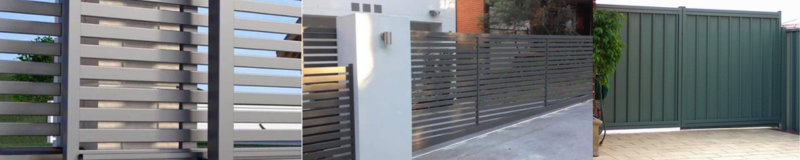
A premium property inspection in an upscale Australian suburb quickly reveals changing buyer priorities. Modern-day property owners focus more on the driveway entrance, and they are no longer satisfied with the basic metal barrier that lumbers with a clicker. They now want modern installations, and one such is an electric gate. Buyers of these electric gates look at how the system feels on wet days, whether it will still work after a blackout, and how much maintenance it will require over the next 5 years. They are not interested in negotiating in terms of smoother automation, better safety, cleaner access control and less fiddly servicing. Future-proofing an entrance requires balancing immediate convenience against long-term mechanical reliability.
CONVENIENCE IS OKAY, BUT NOT AT THE COST OF RELIABILITY
The strongest shift is simple: People expect the gate to behave like part of a home, not as a separate machine that needs management. That means remote access, keypad entry, smartphone control and intercom integration are now expected far more often compared to years ago. The live Australian search landscape reflects this shift clearly, with vendors' guides leaning hard on convenience, security, style, solar options and access control rather than just the gate's opening and closing feature.
The catch here is that convenience only sells when the gate remains dependable in bad weather and during hot summers. They should cope well with awkward driveways and lack of maintenance as well. A flashy system that needs constant resetting can easily annoy buyers compared to a plain one that just works.
SMOOTH MOVEMENT AND SENSIBLE MOTOR SIZING
Future buyers notice whether the gate starts and stops cleanly, without any glitches or jerks. They also notice noise, and this means that a gate that scrapes, jerks or sounds underpowered feels cheap even if it looks impressive on day one.
COMMON MISTAKES HERE ARE USUALLY BORING ONES:
● Motor undersized for the gate weight
● Poor hinge or track alignment
● Weak support posts
● No allowance for wind load
● Cheap hardware that loosens over time
That is where electric gate services matter more than the brochure. Buyers are really paying for the setup behind the gate, not just the gate itself.
SAFETY IS NO LONGER A SIDE FEATURE NOW
This is the section where many homeowners go under budget. Electric gate installations that don't handle obstacles properly or those that can crush, snag or trap are not a "premium feature" problem. It is a design-related problem, and SafeWork NSW says that it has notified 17 incidents involving industrial gates since 2017. Two of them were fatal, and WorkSafe Queensland therefore wants that automatic sliding gates can still present serious hazards even when they are used manually during outages and breakdowns. This is a blunt reminder: safety hardware and maintenance are not extras, but something to consider as "essential".
BACKUP ACCESS IS NOW MORE EXPECTED
Buyers don't like being locked into a single mode of entry. If the power fails, there is a glitch in the app, or the remote battery is missing, the gate should still be manageable. This changing habit has posed a challenge for experts in electric gate services, but now they provide services and features that look very straightforward.
● Battery backup or fail-safe access
● Manual release that is easy to use
● Access options for family, trades, and guests
● Clear override behaviour during outages
They might sound unglamorous, but they are also the difference between a smooth system and an expensive complaint.
MATERIALS THAT COPE WITH AUSTRALIAN CONDITIONS
Experts in electric gate services understand that buyers now want materials that can withstand the harshness of Australian climates, particularly for moving parts. Heat, dust, salt air, extended sun and UV exposure, all can punish low-grade materials and components. Buyers are now more concerned about this, particularly in coastal areas and suburbs that experience harsh sun and ultraviolet rays exposure.
GOOD ELECTRIC GATES INSTALLATIONS USUALLY ACCOUNT FOR:
● Corrosion-resistant hardware
● Powder-coated finishes
● Weather-appropriate motors
● Proper drainage near tracks and footings
Service access that does not require half the driveway to be pulled apart
Often, the last point is ignored, and the gate that looks fine at handover can become annoying in just a couple of months, leaving the homeowner with the option of calling technicians who came for electric gate installations.
FEATURES THAT USUALLY SURVIVE THE FIRST FIVE YEARS
Buyers can live without the fanciest app, but manufacturers and vendors of electric gates services understand that they cannot live without the following.
● Quiet, predictable operation
● Obstacle sensing that actually works
● Simple visitor access
● Low-maintenance hardware
● Parts that are easy to source locally
A layout that suits the driveway rather than fighting it
The last one is a trade-off that no one wants to face. The cheapest fence gate installed is not always the best value, and a slightly expensive system with better alignment, better sensors and a stronger motor costs less over time. It avoids repeat call-outs and patch-up work.
A PRACTICAL WAY BUYERS TEND TO JUDGE THE SYSTEM
One useful filter is this: if the gate had to work every day for ten years, what would fail first? That question usually exposes the weak points fast. If the answer is:
● The motor → spec is too light
● The track → site preparation was rushed
● The electronics → access control was bolted on too cheaply
● The finish → materials were chosen for price, not weather
● The serviceability → the installer did not plan for maintenance
That is the real buying test.
FAQs
WHAT DO BUYERS EXPECT FROM ELECTRIC GATES?
They usually expect smooth operation, safe movement, simple access options, and hardware that does not feel temporary.
ARE ELECTRIC GATES SERVICES WORTH PAYING FOR?
Yes, if the service includes proper sizing, alignment, safety setup, and realistic maintenance planning. That is where most long-term problems are avoided.
WHAT SHOULD ELECTRIC GATES INSTALLATIONS INCLUDE?
At minimum: a suitable motor, stable posts or footings, obstacle sensing, backup access, and weather-appropriate hardware.
DO ELECTRIC GATES NEED BACKUP POWER?
Not always, but buyers now expect some way to open or manage the gate during outages. Manual release should be easy and safe.
ARE SMARTPHONE CONTROLS ACTUALLY USEFUL?
They are useful when multiple people need access, but they should not be the only way in. Convenience should never replace reliability.
HOW MUCH DO ELECTRIC GATE SYSTEMS COST IN AUSTRALIA?
Supplier guides currently place many basic automation projects around $2,500 to $6,500 with installation, while larger custom systems cost more.
WHAT SAFETY FEATURES MATTER MOST?
Obstacle sensing, clean stop/start behaviour, manual release, and a layout that avoids crush points matter far more than fancy extras.
ARE SOLAR SYSTEMS A GOOD IDEA?
They can be, especially on sites where power access is awkward. They still need proper sizing and realistic expectations about usage.
WHAT SHOULD I CHECK BEFORE CHOOSING A SYSTEM?
Look at gate weight, wind exposure, daily traffic, servicing access, and whether the installer has allowed for future maintenance.
MOVING FORWARD CAREFULLY
Quality materials and integrated tech usually deliver the strongest return when upgrading property access. For a system matched to your land's layout, consider professional options or book a site consultation for premium electric gate installations and dependable electric gate services that suit your needs.

 Arabic
 Français
 Español
 Português
 Deutsch
 Türkçe
 Dutch
Dutch
 Italiano
 Russian
 Romaian