


How Does a Game Development Company Build Secure Blockchain Games
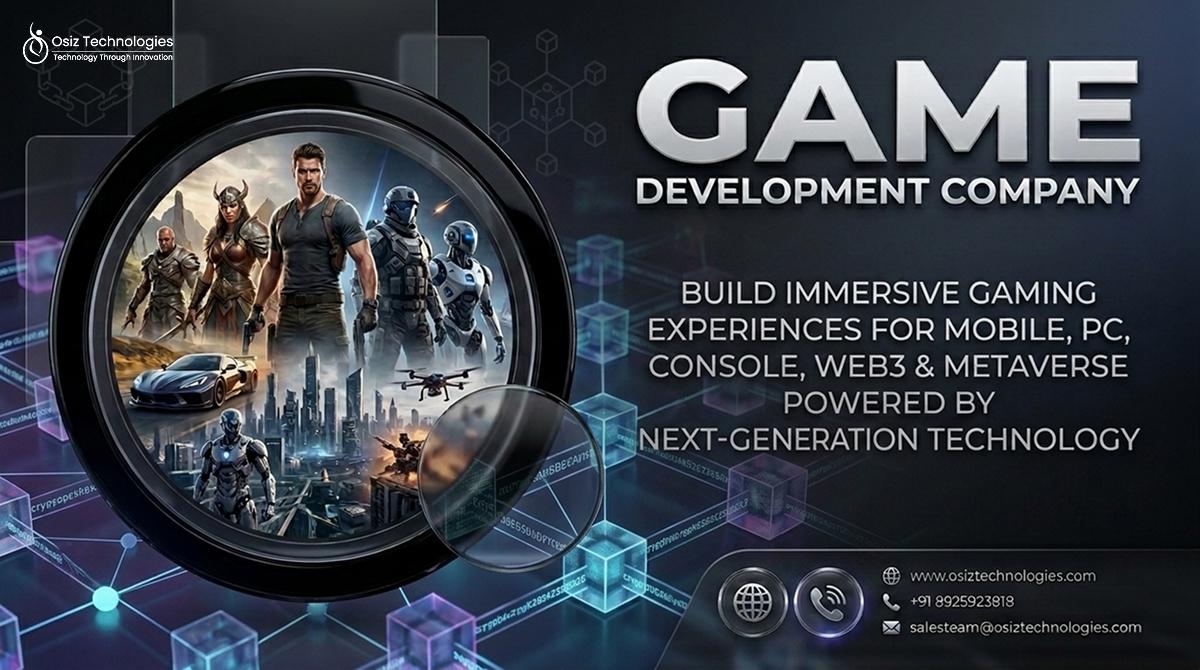
Blockchain gaming is reshaping the digital entertainment industry by giving players true ownership of in-game assets, transparent transactions, and decentralised economies. However, these advantages also introduce new security challenges, including smart contract vulnerabilities, wallet protection, and asset fraud. Building a secure blockchain game requires more than creative gameplay—it demands a strong technical foundation, rigorous testing, and secure infrastructure. This article explores the essential practices and technologies that help development teams create blockchain-powered games that are reliable, scalable, and trusted by players.
Designing a Secure Blockchain Architecture
A successful Game Development Company begins with a well-planned blockchain architecture that balances security, scalability, and performance. Choosing the right blockchain network, defining asset ownership models, and establishing secure communication between the game client and decentralised systems are critical early decisions. The architecture should also separate gameplay logic from blockchain transactions whenever possible, minimising latency while protecting sensitive operations. A modular design enables easier updates, better maintenance, and improved resilience against evolving cyber threats.
Smart Contract Development and Security
Smart contracts form the backbone of blockchain games, making their security a top priority. A professional Blockchain Game Development Company focuses on building contracts that are transparent, efficient, and resistant to attacks.
- Perform multiple code reviews before deployment.
- Conduct independent smart contract security audits.
- Prevent common vulnerabilities such as reentrancy and overflow attacks.
- Restrict privileged functions using role-based access control.
- Implement upgrade mechanisms without compromising decentralisation.
- Test contracts extensively on public test networks before launch.
These practices help ensure fair gameplay while protecting digital assets and player investments.
Protecting Digital Assets and Player Accounts
Security extends beyond the blockchain code to the entire player ecosystem. Digital wallets, NFTs, in-game currencies, and user identities require strong protection against unauthorized access. Multi-factor authentication, encrypted communications, secure wallet integrations, and fraud detection mechanisms significantly reduce security risks. Secure key management and encrypted data storage also help safeguard valuable assets. By combining blockchain transparency with modern cybersecurity practices, developers create a trusted environment where players can confidently own, trade, and manage virtual assets.
Ensuring Scalable and Secure Game Infrastructure
A secure blockchain game also depends on a reliable backend infrastructure capable of supporting growing player communities.
- Deploy cloud-native infrastructure with automatic scaling.
- Use distributed servers to improve availability and reduce downtime.
- Protect APIs with authentication and rate limiting.
- Monitor network traffic to detect suspicious activities.
- Implement DDoS protection for uninterrupted gameplay.
- Maintain secure backup and disaster recovery systems.
These infrastructure strategies allow games to deliver consistent performance while defending against operational and network-level threats.
Continuous Testing, Monitoring, and Compliance
Security is an ongoing process rather than a one-time implementation. Development teams regularly perform penetration testing, vulnerability assessments, and automated security scans to identify potential weaknesses before attackers do. Real-time monitoring helps detect unusual transaction patterns, while logging and analytics support faster incident response. Compliance with regional regulations, data privacy standards, and blockchain best practices further strengthens player confidence and ensures long-term platform sustainability. Continuous updates and proactive maintenance keep blockchain ecosystems secure as technologies and threats evolve.
Conclusion
Building a secure blockchain game requires the right blend of technical expertise, robust security practices, and scalable development strategies. As a trusted Game Development Company, Osiz Technologies combines blockchain innovation, smart contract security, advanced game engineering, and rigorous quality assurance to deliver reliable gaming solutions. With a focus on transparency, performance, and long-term scalability, the team helps businesses launch secure blockchain games that protect digital assets, enhance player trust, and achieve lasting success in the competitive gaming market.


 English
 Arabic
 Français
 Español
 Português
 Deutsch
 Dutch
Dutch
 Italiano
 Russian
 Romaian