


Pro Rata Basis: Complete Guide to Salary Calculations & Examples
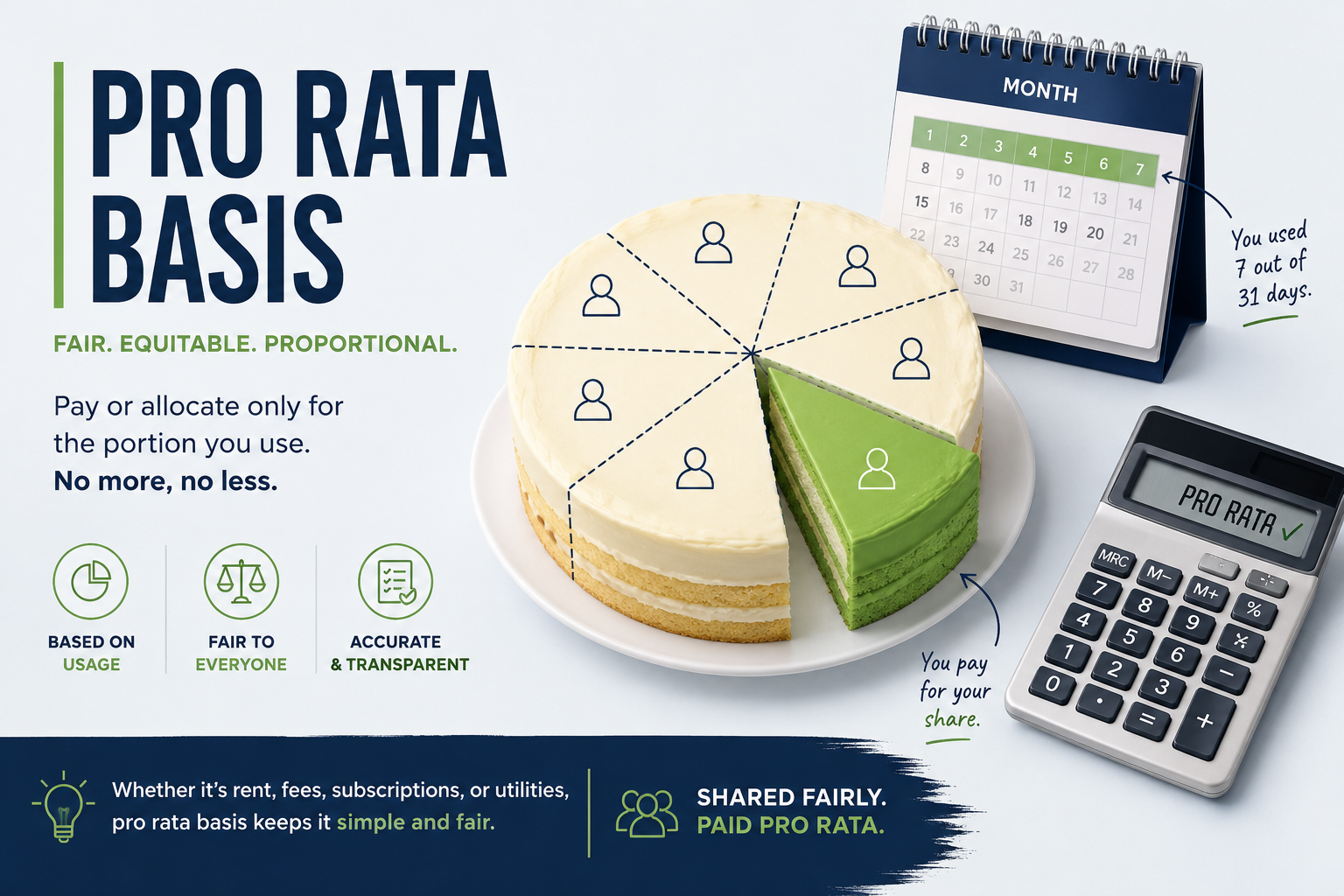
Managing employee salaries accurately is one of the most important responsibilities of every HR and payroll team. Whether an employee joins in the middle of the month, resigns before the salary cycle ends, works part-time, or takes unpaid leave, calculating compensation fairly becomes essential. This is where the pro rata basis plays a crucial role.
A pro rata calculation ensures that employees receive payment based on the actual time they have worked instead of receiving the full salary for a complete pay period. It helps organizations maintain transparency, ensure legal compliance, and build trust with employees.
In this guide, we'll explain everything you need to know about the pro rata basis, including its meaning, calculation formula, examples, benefits, and best practices for employers.
What is the Pro Rata Basis?
The term pro rata basis comes from the Latin phrase pro rata, which means "in proportion." In payroll and HR, it refers to calculating an employee's salary, benefits, bonuses, or leave entitlement proportionally according to the time worked or services provided.
Instead of paying the full monthly salary, employers calculate the amount based on the number of days or hours an employee has actually worked during the pay period.
This method ensures fairness for both employers and employees while reducing payroll errors.
When Is the Pro Rata Basis Used?
Organizations commonly use the pro rata basis in several HR and payroll situations, including:
-
Employees joining mid-month
-
Employees leaving before the month's end
-
Part-time employees
-
Contractual employees
-
Employees returning from unpaid leave
-
Salary revisions effective during a payroll cycle
-
Bonus calculations based on service duration
-
Annual leave entitlement calculations
Using pro rata calculations helps organizations maintain consistent payroll practices across different employment scenarios.
Pro Rata Salary Formula
The basic formula for calculating salary on a pro rata basis is:
Pro Rata Salary = (Monthly Salary ÷ Total Working Days) × Days Worked
Example 1: Mid-Month Joining
Suppose an employee:
-
Monthly Salary: ₹60,000
-
Working Days in Month: 30
-
Date of Joining: 16th
-
Days Worked: 15
Calculation:
₹60,000 ÷ 30 = ₹2,000 per day
₹2,000 × 15 = ₹30,000
The employee will receive ₹30,000 as salary for that month.
Example 2: Employee Resignation
An employee resigns after working 18 days.
-
Monthly Salary: ₹45,000
-
Working Days: 30
-
Days Worked: 18
Calculation:
₹45,000 ÷ 30 = ₹1,500 per day
₹1,500 × 18 = ₹27,000
The employee receives ₹27,000 for the month.
Example 3: Part-Time Employee
Suppose a full-time employee works 40 hours per week, while a part-time employee works only 20 hours.
If the full-time annual salary is ₹8,40,000:
20 ÷ 40 = 50%
₹8,40,000 × 50% = ₹4,20,000
The part-time employee receives ₹4,20,000 annually on a pro rata basis.
Why is the pro rata basis important?
Using the pro rata basis offers several advantages for organizations and employees alike.
1. Ensures Fair Compensation
Employees receive payment according to the exact duration they have worked, creating a transparent and equitable payroll process.
2. Reduces Payroll Errors
Manual payroll calculations often result in mistakes, especially when employees join or leave during a pay cycle. Pro rata calculations provide a standardized method that minimizes errors.
3. Supports Legal Compliance
Many labour laws and employment contracts require employers to pay employees accurately for the work performed. A pro rata approach helps organizations meet these obligations.
4. Builds Employee Trust
Transparent salary calculations improve employee confidence in payroll processes and reduce disputes regarding salary payments.
5. Simplifies HR Operations
Having a standardized calculation method allows HR teams to process payroll faster and more consistently.
Applications of the Pro Rata Basis Beyond Salary
Although salary calculation is the most common use case, the pro rata basis is also widely used for:
1. Leave Entitlement
Employees joining midway through the year may receive leave credits proportional to their remaining months of service.
2. Bonuses
Annual performance bonuses are often calculated based on the length of service during the financial year.
3. Insurance Benefits
Certain employee insurance or healthcare benefits may begin on a pro rata basis depending on the joining date.
4. Training Costs
Organizations sometimes recover training expenses proportionally if employees leave before completing a specified service period.
5. Performance Incentives
Sales incentives and productivity bonuses can also be adjusted according to the employee's active service duration.
Common Mistakes to Avoid
While calculating salaries on a pro rata basis, employers should avoid the following mistakes:
-
Using calendar days instead of working days when the company policy specifies working days.
-
Ignoring weekends or public holidays inconsistently.
-
Forgetting to account for unpaid leave.
-
Applying different calculation methods across departments.
-
Not documenting payroll calculation policies clearly.
Consistency is essential to maintain fairness across the organization.
Best Practices for HR Teams
To ensure accurate pro rata calculations, HR professionals should:
-
Maintain a clearly defined payroll policy.
-
Standardize salary calculation methods.
-
Automate payroll wherever possible.
-
Verify employee joining and exit dates.
-
Keep attendance records updated.
-
Communicate salary calculations transparently.
-
Review payroll before final processing.
Payroll automation significantly reduces manual intervention and ensures greater accuracy.
How HRMS Software Simplifies Pro Rata Calculations
Modern HRMS and payroll software make pro rata basis calculations effortless by automatically considering:
-
Employee joining dates
-
Exit dates
-
Attendance records
-
Leave balances
-
Working days
-
Shift schedules
-
Payroll policies
-
Salary structures
Automation minimizes manual calculations, reduces payroll errors, and saves valuable time for HR professionals.
Organizations using HRMS software can process payroll faster while maintaining compliance and improving employee satisfaction.
Conclusion
The pro rata basis is an essential payroll concept that ensures employees are compensated fairly according to the actual time they work. Whether an employee joins mid-month, resigns before the payroll cycle ends, works part-time, or takes unpaid leave, pro rata calculations help maintain transparency, accuracy, and consistency.
For HR professionals, adopting standardized pro rata calculations not only improves payroll accuracy but also supports compliance and strengthens employee trust. By leveraging modern HRMS software, organizations can automate these calculations, reduce administrative effort, and create a more efficient payroll process.
Understanding and implementing the pro rata basis correctly is a small step that makes a significant difference in delivering fair and reliable payroll management.

 English
 Arabic
 Français
 Español
 Português
 Deutsch
 Türkçe
 Dutch
Dutch
 Italiano
 Romaian