


What Causes Electrical Overheating in Homes?
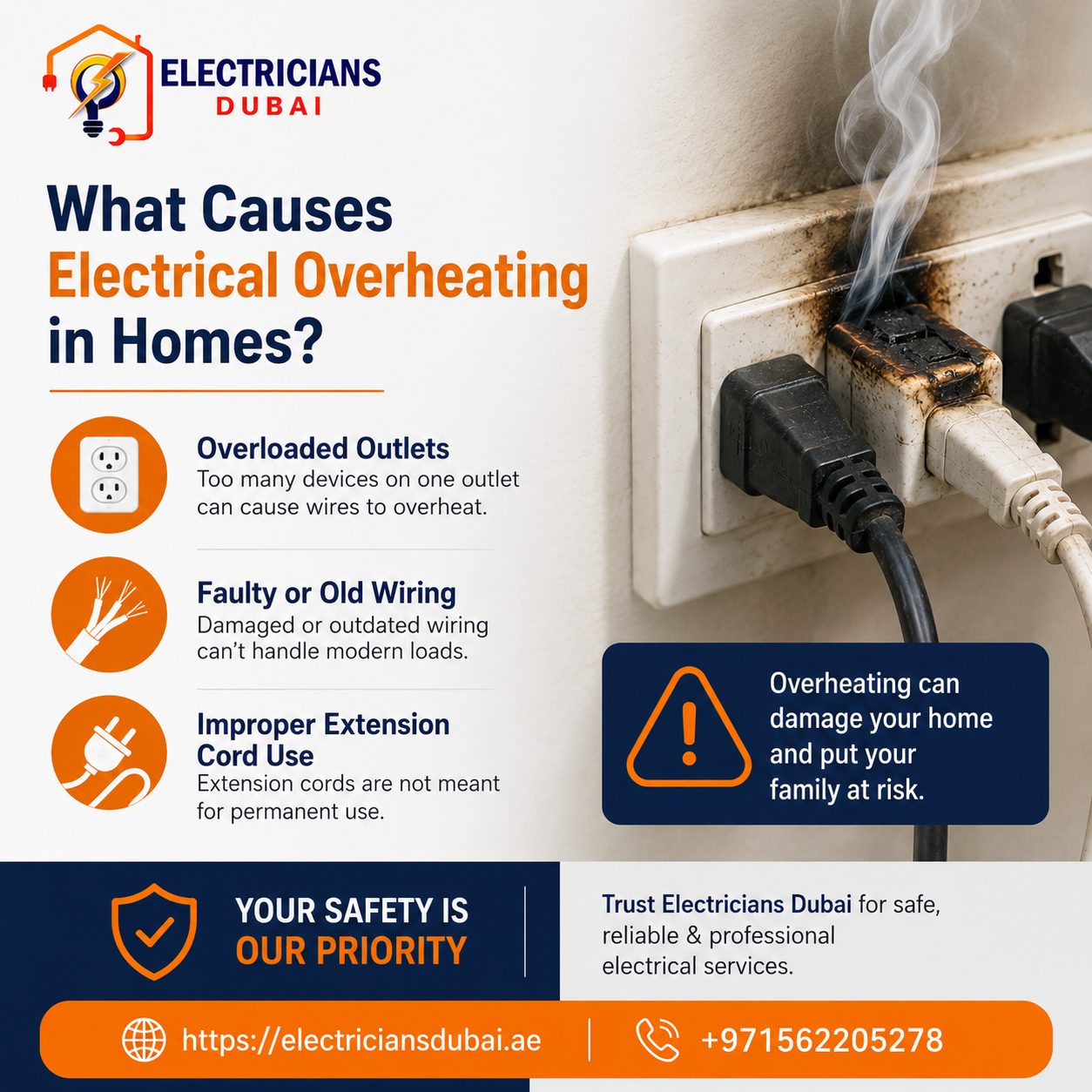
Ever touched a light switch and noticed it was warmer than expected? Most people catch it, shrug it off, and go about their day. That's usually a mistake. A switch running warm, or a socket letting out a low hum, is often the first sign that something's brewing behind the wall. Dubai's heat doesn't help — AC units run nearly nonstop for most of the year, kitchens stay packed with appliances, and home electrical systems end up under constant pressure as a result. This piece looks at what actually causes wiring to overheat inside a home, and why calling an Electrician In Dubai for a look is worth doing before a small warning sign turns into an expensive fix.
Electrician In Dubai Insights: Why Overheating Happens in the First Place
Heat comes from electricity moving through a wire — that part is unavoidable, plain and simple. Trouble starts when something along the circuit resists that flow more than it should, or when a circuit ends up handling more current than it's built for. Once heat piles faster than it can escape, insulation begins to break down, plastic parts start to discolour, and if nobody steps in, a mild warning can turn into a real hazard fast.
Signs That Shouldn't Be Ignored
A few red flags usually show up before things get serious:
-
A switch plate that feels noticeably warm
-
A faint burning smell after using the kettle, oven, or AC
-
A breaker tripping more than once a week — not just once in a while
-
Lights flickering or dimming without any obvious reason
-
A socket buzzing or humming softly
One of these showing up alone might not mean much. A few together, though, usually means it's worth getting a qualified set of eyes on the setup.
What's Actually Driving the Overheating
1. Circuits Carrying More Than They Should
Think of a typical kitchen counter — kettle, microwave, toaster, all plugged into the same double socket through a power strip. Nearly every household runs into this at some point, and older Dubai apartments especially weren't wired with today's appliance load in mind.
-
Several high-wattage appliances sharing one outlet at the same time
-
An extension cord that was supposed to be temporary but has stuck around for two years
-
A breaker that keeps tripping, with everyone just resetting it instead of asking why
2. Wiring That's Simply Getting Old
Wiring rarely gives a heads-up before it fails. Insulation dries out and cracks, connections corrode bit by bit, and none of it shows until there's a burning smell or a spark. An Electrician In Dubai often finds exactly this in villas that haven't been rewired in fifteen or twenty years — far more common than most homeowners realize.
-
Insulation has gone brittle inside the wall cavity
-
Junction box connections that have loosened over the years
-
Rodent damage to cables — not glamorous, but more common than people think
3. Fittings That Look Fine but Aren't
Two sockets can look exactly alike on a shelf and behave completely differently once installed. Some cheaper fittings just weren't made to handle sustained load, even though nothing looks wrong on the surface.
-
Breakers that don't trip when they're supposed to
-
Sockets that run warm even under normal use
-
Parts bought purely because they were cheaper at the shop
4. A Connection That's Just a Bit Loose
This one's sneaky. A loose terminal doesn't cause an issue on day one — it creates resistance, and resistance slowly builds into heat over weeks or months, until eventually something gives out.
-
Terminals inside the distribution board that were never tightened properly
-
Wire nuts from an old repair job that have loosened over time
-
Vibration from a nearby washing machine or generator, gradually working connections loose
5. Dubai's Climate Isn't Doing Anyone Any Favours
Ambient heat matters more here than almost anywhere else. A distribution panel sitting in direct sun on a balcony, or crammed into a cupboard with no airflow, is fighting a losing battle just to stay at a safe temperature.
-
Panels mounted in unshaded outdoor spots
-
Switchboards tucked away with zero ventilation
-
Appliances pushed right up against a wall, blocking whatever airflow remained
6. Repairs Done Without the Right Training
A quick DIY fix, or a job handed off to someone without proper electrical training, usually causes more problems than it fixes — wrong wire gauge, a missing earth connection, mismatched parts that were never meant to work together.
-
Wiring too thin for the appliance it's feeding
-
Grounding skipped entirely to save time
-
Basic safety codes ignored altogether
How Electrical Services In Dubai Catch This Before It Becomes a Problem
Routine maintenance is genuinely what separates catching an issue early from dealing with a much bigger one down the road. A solid Electrical Services In Dubai provider will typically offer:
Thermal Imaging A thermal camera picks up hot spots inside wiring and panels long before anything becomes visible — genuinely useful for older properties.
Load Assessments A qualified Electrician In Dubai can look at existing circuits and give an honest answer on whether these can handle what's actually plugged in, especially after a renovation or a new appliance purchase.
Rewiring Where It's Needed Older villas and apartments often just need an update — not a full overhaul, but enough to bring things up to a safer standard.
Small Habits That Help
-
Stop stacking extension cords on top of each other
-
Book an inspection once a year, even if nothing seems off
-
Replace switches and sockets that look worn before they fail outright
-
Keep the distribution panel clear of dust and stored boxes
-
If a breaker trips, figure out why instead of just flipping it back on
FAQs
1. What's usually the first sign of electrical overheating at home?
A switch or socket that feels warmer than usual, often paired with a breaker tripping more often than normal, is typically the first thing a homeowner notices.
2. How often should home wiring actually be checked in Dubai?
Once a year works fine for most homes. Older properties, or ones running heavy appliances constantly, are often better off with a check every six months.
3. If a circuit's been overloaded but the extra appliance is removed, is the risk gone? Not entirely. Repeated overloading wears down insulation and connections over time, so some of that damage lingers even after the load gets reduced.
4. Is it fine to fix small electrical issues without calling someone?
Usually not worth the risk. Even something as small as the wrong wire gauge can create a hazard that only shows up much later.
5. Why does the weather in Dubai make this worse specifically?
High ambient heat makes it harder for panels and wiring to shed heat naturally, so any existing electrical strain gets compounded by the climate itself.
Conclusion
Electrical overheating rarely happens out of nowhere — it just usually gives a warning small enough to ignore. A warm switch, a strange smell, a breaker that keeps tripping. None of it feels urgent in the moment. But overloaded circuits, aging wiring, and low-grade fittings all quietly raise the risk of something worse down the line, and Dubai's heat only adds to that pressure. The fix, in most cases, is simpler than it sounds: a proper inspection from someone who actually knows what to look for. Electrical Services In Dubai can help spot potential issues, flag anything that needs attention, and keep a home running all year round safely.
Click here to contact us.

 English
 Arabic
 Français
 Español
 Português
 Deutsch
 Türkçe
 Dutch
Dutch
 Russian
 Romaian