


The Burst Fade Explained: Everything to Know Before Cut
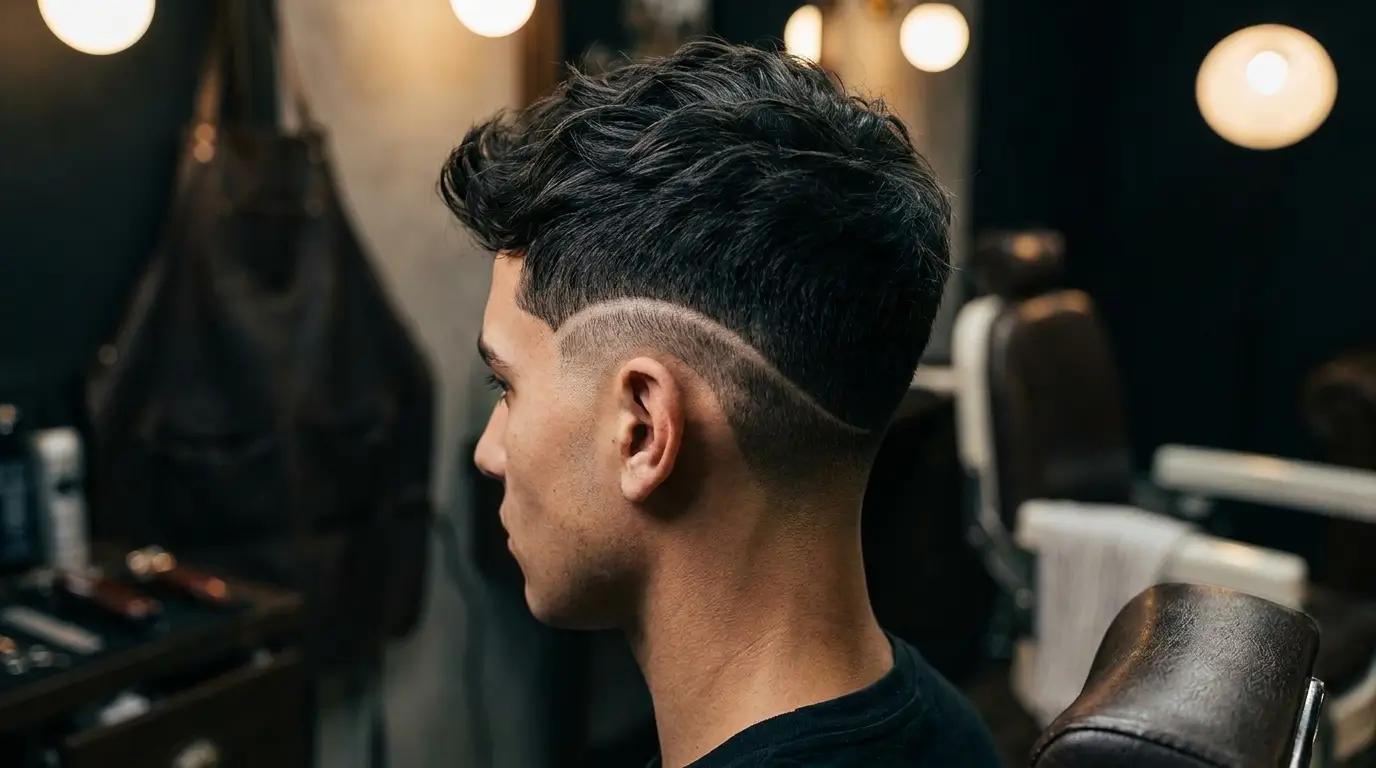
Ask ten guys what a burst fade is and you'll get ten different answers. Some think it's just a high fade with a fancy name. Others confuse it with a drop fade. A few have no idea it even exists until a barber suggests it. That confusion is exactly why this cut gets misunderstood, and often mis-cut, more than almost any other fade.
Here's the real breakdown, without the guesswork.
What Actually Makes a Fade a "Burst" Fade
A standard fade runs in a straight horizontal line across the side of the head. A burst fade breaks that rule entirely. Instead of a straight line, the fade curves outward from the ear in a semicircle, "bursting" around it like a sunburst pattern.
That single design choice changes the entire personality of the cut. A straight fade reads as clean and structured. A burst fade reads as dynamic and a little unconventional, because the shape itself breaks the usual grid.
Why Barbers Recommend It for Specific Hair Types
Burst fades aren't just a style preference, they solve a real problem for certain hair textures.
-
Curly and coily hair pairs especially well with a burst fade. The curve of the fade line complements the natural roundness of curl patterns instead of fighting against it with a hard, straight edge.
-
Mohawks and faux hawks almost always use a burst fade rather than a standard one, since the curved line frames the raised center section more naturally.
-
Longer top styles benefit too. When there's more volume up top, a straight fade line can look disconnected. The curved burst line ties the two lengths together more smoothly.
The Height Question: Low, Mid, or High Burst
Just like any other fade, a burst fade can start at different heights, and the height changes how bold the final look reads.
Low burst fade: starts just above the ear, curving around it subtly. The most conservative option, and a solid choice for anyone new to the style who doesn't want a dramatic change.
Mid burst fade: starts around the temple, curving outward with more visible contrast. This is the most requested version because it balances boldness with everyday wearability.
High burst fade: starts near the crown, creating a dramatic, high-contrast curve. Best suited for guys who already lean toward statement haircuts and don't mind more frequent touch-ups.
What to Actually Say to Your Barber
Vague requests are where most burst fade disappointments start. Instead of just pointing at a photo, be specific about three things:
-
The height: tell your barber whether you want it starting low, at the temple, or higher near the crown.
-
The curve intensity: some bursts fade curve subtly, others sweep dramatically around the ear. Say which look you're picturing.
-
The top length: a burst fade pairs differently with a short crop than it does with a longer, textured top, so be clear about how much length you're keeping.
A simple script works well here: "I want a burst fade starting at my temple, curving noticeably around my ear, with about two inches left on top." That single sentence removes almost all the ambiguity that leads to a disappointing result.
Maintenance Reality Check
Because the fade line itself is more intricate than a straight cut, burst fades tend to lose their crispness a little faster than standard fades. Expect to book a touch-up every 2 to 3 weeks if you want the curve to stay defined. Skipping appointments doesn't just make it look grown out, it makes the burst shape blur into something closer to a regular fade, which defeats the point of choosing it in the first place.
A light matte clay or texture paste on top helps keep the overall look intentional between visits, especially if your hair on top has any natural movement or curl.
Is a Burst Fade Right for You?
If you like the idea of a fade but want something with a bit more personality than the standard straight line, a burst fade is one of the easiest ways to stand out without going drastically different. It works especially well if you're already leaning toward a mohawk, a longer textured top, or you simply have curly hair that never quite sits right with a hard-edged fade.
The best move before your appointment is the same as with any fade: bring a reference photo, but pair it with clear, specific language about height and curve. That combination is what separates a burst fade that looks intentional from one that just looks like a regular fade gone slightly wrong.
Frequently Asked Questions
Is a burst fade the same as a drop fade?
No. A drop fade curves downward behind the ear, following the natural hairline. A burst fade curves outward around the ear in a full semicircle. They can look similar from certain angles, but the technique and the finished shape are different.
Does a burst fade work with straight hair?
Yes, though it's most commonly recommended for curly or coily hair. On straight hair, the curved line still creates a distinctive look, especially when paired with a textured or spiked top that echoes the same rounded shape.
How long does a burst fade take at the barber?
Slightly longer than a standard fade, usually an extra 5 to 10 minutes, since the curved line requires more precise blending around the ear.
Can I combine a burst fade with a beard?
Yes, and it's a popular pairing. A well-groomed beard balances the boldness of the curved fade line, giving the whole look a more finished, intentional feel.
Final Thoughts
A burst fade isn't just a variation on a regular fade, it's a genuinely different design choice that changes how the whole haircut reads. Once you understand the height options, know how to ask for the curve intensity you want, and stay on top of the shorter maintenance window, it becomes one of the easiest ways to make a familiar fade look distinctly your own.
For a deeper look at how burst fades compare to other fade styles and full barber scripts for each height, see this complete taper vs fade breakdown and this dedicated guide to the mid fade, which covers the exact height most burst fade requests are built around.

 Arabic
 Français
 Español
 Português
 Deutsch
 Türkçe
 Dutch
Dutch
 Italiano
 Russian
 Romaian