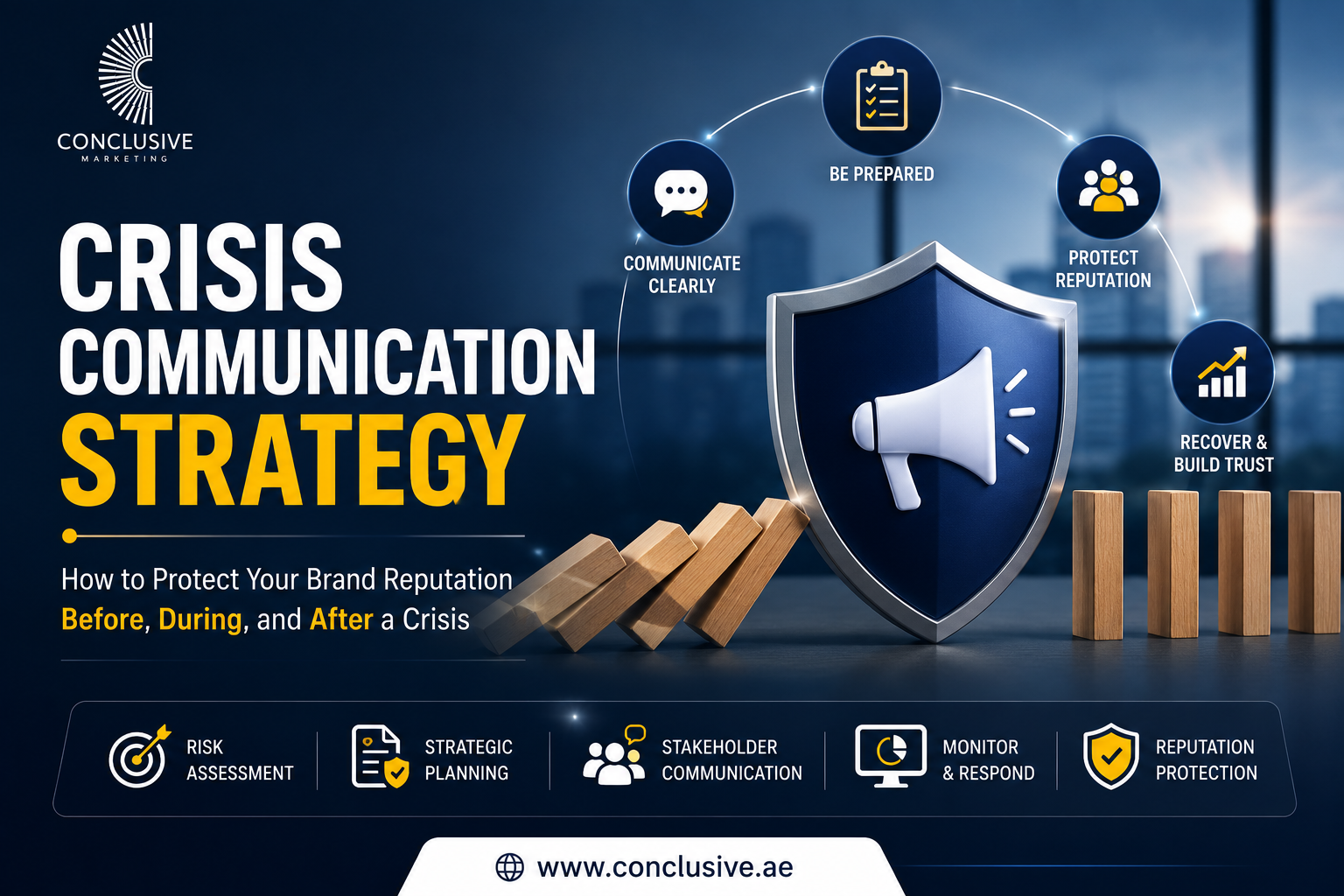
In today's digital world, news spreads in seconds. A single negative review, data breach, product issue, or social media controversy can quickly damage years of hard-earned trust. That's why every organization needs a well-defined Crisis Communication Strategy. Effective Crisis Communication helps businesses respond quickly, maintain transparency, and protect their reputation when unexpected situations arise.
Whether you're a startup, SME, or enterprise, having a proactive communication plan can make the difference between recovering stronger or losing customer confidence.
What Is a Crisis Communication Strategy?
A Crisis Communication Strategy is a structured plan that outlines how an organization communicates with employees, customers, stakeholders, media, and the public during a crisis. Its goal is to deliver accurate information, reduce confusion, and maintain trust throughout the situation.
Instead of reacting emotionally, businesses with a clear strategy respond with confidence, consistency, and professionalism.
Why Crisis Communication Matters
A crisis can impact more than just your brand image. It can affect customer loyalty, employee morale, investor confidence, and business continuity. Strong Crisis Communication helps organizations:
- Protect brand reputation
- Build public trust through transparency
- Reduce misinformation and speculation
- Maintain customer confidence
- Support business continuity
- Strengthen relationships with stakeholders
The faster and more effectively a company communicates, the better its chances of minimizing long-term damage.
Before a Crisis: Prepare in Advance
Preparation is the foundation of successful crisis management.
Businesses should:
- Identify potential risks and vulnerabilities.
- Develop a documented crisis communication plan.
- Assign a dedicated response team with clear responsibilities.
- Prepare approved messaging templates for common scenarios.
- Train spokespersons for media interactions.
- Monitor news, social media, and online conversations regularly.
Preparation allows businesses to respond immediately instead of scrambling for answers when a crisis occurs.
During a Crisis: Communicate with Clarity
When a crisis happens, speed and honesty are essential.
A strong Crisis Communication Strategy includes:
- Acknowledging the situation quickly.
- Sharing verified facts only.
- Providing regular updates as new information becomes available.
- Maintaining a consistent message across all communication channels.
- Addressing customer concerns with empathy and professionalism.
- Avoiding speculation or assigning blame before investigations are complete.
Clear communication helps reduce uncertainty and reassures stakeholders that the organization is taking responsibility.
After a Crisis: Rebuild Trust
Communication doesn't end when the crisis is over.
Businesses should continue to:
- Share updates on corrective actions.
- Explain improvements made to prevent future incidents.
- Thank customers and stakeholders for their patience and support.
- Evaluate the effectiveness of the crisis response.
- Update the crisis communication plan based on lessons learned.
Post-crisis transparency demonstrates accountability and helps rebuild credibility over time.
Key Elements of an Effective Crisis Communication Strategy
An effective strategy should include:
- Crisis response team
- Defined communication protocols
- Designated spokesperson
- Media response guidelines
- Internal employee communication plan
- Customer communication process
- Social media monitoring and response
- Reputation management strategy
- Recovery and follow-up plan
These elements ensure every stakeholder receives accurate and timely information.
Why Professional Crisis Communication Support Matters
Managing a crisis requires experience, strategic thinking, and effective communication. Professional Crisis Communication Strategy services help businesses prepare for potential risks, create response frameworks, train leadership teams, and manage public messaging across multiple channels.
At Conclusive, we help organizations develop customized Crisis Communication strategies that protect brand reputation, strengthen stakeholder confidence, and enable businesses to respond effectively during challenging situations.
Conclusion
Every business will face challenges at some point, but not every business will be prepared. A proactive Crisis Communication Strategy enables organizations to respond with confidence, protect their reputation, and maintain customer trust before, during, and after a crisis. Investing in effective communication today can safeguard your brand for the future.
FAQs
1. What is a Crisis Communication Strategy?
A Crisis Communication Strategy is a structured plan that outlines how a business communicates with stakeholders before, during, and after a crisis to protect its reputation and maintain trust.
2. Why is Crisis Communication important?
It helps businesses manage reputation, reduce misinformation, maintain customer confidence, and ensure clear communication during unexpected situations.
3. What types of crises require a communication strategy?
Businesses should prepare for product recalls, cyberattacks, legal issues, operational disruptions, executive controversies, workplace incidents, and social media crises.
4. Who should be responsible for Crisis Communication?
A dedicated crisis response team, including leadership, PR professionals, legal advisors, and trained spokespersons, should manage crisis communications.
5. How often should a Crisis Communication Strategy be updated?
Businesses should review and update their strategy at least once a year or whenever significant operational, organizational, or industry changes occur.
6. How can Conclusive help with Crisis Communication?
Conclusive provides professional Crisis Communication Strategy services, including risk assessment, communication planning, spokesperson training, media management, and reputation protection to help businesses navigate crises with confidence.




 English
 Arabic
 Français
 Español
 Português
 Deutsch
 Türkçe
 Italiano
 Russian
 Romaian