


Vendor Intelligence: Reducing Third-Party Risk Through Smarter Technology Decisions
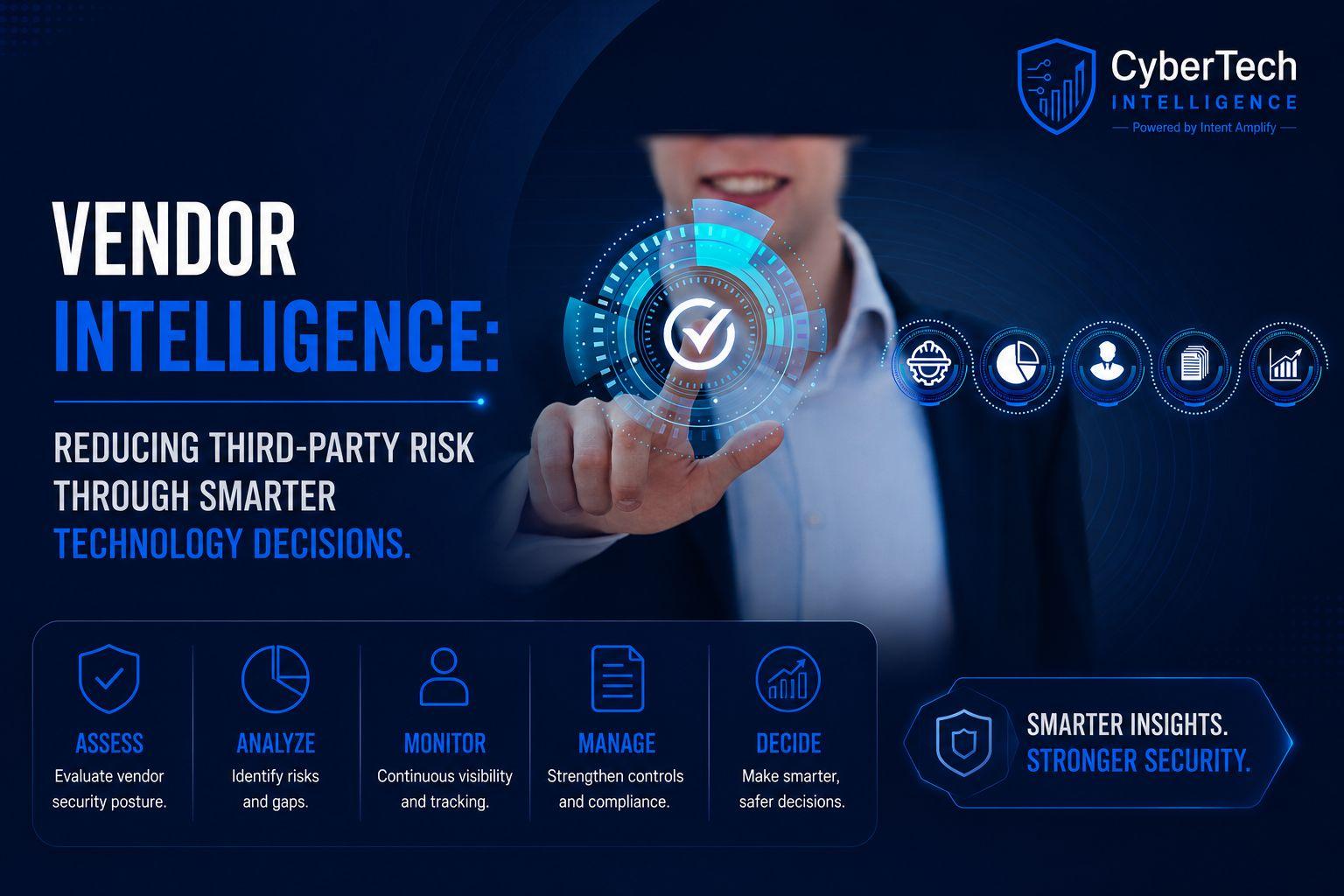
Modern enterprises depend on an extensive network of technology vendors, cloud providers, software suppliers, managed service providers, and strategic partners to drive innovation. While these relationships accelerate business growth, they also introduce significant operational, cybersecurity, compliance, and financial risks.
Selecting the right vendor is no longer based solely on pricing or product features. Decision-makers must evaluate security posture, business stability, regulatory compliance, service capabilities, innovation maturity, and long-term strategic alignment. This growing need has made Vendor Intelligence a critical component of enterprise risk management and procurement strategy.
Organizations that invest in vendor intelligence are better equipped to reduce third-party risk, improve procurement outcomes, and make more informed technology investment decisions.
Why Vendor Intelligence Matters More Than Ever
Enterprise ecosystems have become increasingly interconnected. A single vendor may have access to sensitive business data, customer information, cloud infrastructure, or mission-critical applications.
This dependency creates several challenges:
-
Limited visibility into third-party risks
-
Supply chain vulnerabilities
-
Compliance uncertainties
-
Vendor performance inconsistencies
-
Financial stability concerns
-
Cybersecurity exposure
Rather than reacting to vendor issues after they occur, organizations are adopting intelligence-driven evaluation processes that provide deeper visibility before contracts are signed.
Looking Beyond Product Features
Successful vendor selection requires a holistic assessment.
Organizations should evaluate:
-
Security certifications
-
Regulatory compliance
-
Product roadmap
-
Service reliability
-
Financial health
-
Customer support capabilities
-
Integration maturity
-
Innovation strategy
This broader perspective enables organizations to select partners that align with both operational requirements and long-term business goals.
Building a Vendor Intelligence Framework
Effective vendor intelligence combines multiple sources of business insight.
Security and Risk Assessment
Before onboarding any technology provider, organizations should assess:
-
Security controls
-
Data protection practices
-
Incident response capabilities
-
Identity and access management
-
Cloud security maturity
Assessing cybersecurity preparedness lessens vulnerability to supply chain and third-party breaches.
Performance Benchmarking
Vendor performance should be continuously monitored using measurable indicators such as:
-
Service availability
-
Support responsiveness
-
Product adoption
-
Customer satisfaction
-
Innovation delivery
Benchmarking enables organizations to make objective procurement decisions rather than relying solely on marketing claims.
Continuous Vendor Monitoring
Business environments evolve rapidly.
Vendor intelligence should include ongoing monitoring of:
-
Financial changes
-
Regulatory developments
-
Security incidents
-
Acquisition activity
-
Technology roadmap updates
Continuous visibility allows organizations to proactively manage vendor relationships throughout the contract lifecycle.
Industry Spotlight: Technology & Telecommunications
Technology and telecommunications organizations depend on a broad ecosystem of cloud providers, software vendors, infrastructure partners, and managed service providers to deliver highly available digital services. Vendor intelligence enables decision-makers to assess suppliers based on cybersecurity maturity, service reliability, compliance readiness, innovation capabilities, and long-term business stability.
A structured vendor evaluation process helps reduce third-party risk while ensuring technology investments support scalability, resilience, and continuous innovation.
Industry Spotlight: Retail & Digital Commerce
Retail organizations rely on payment providers, e-commerce platforms, logistics partners, marketing technologies, and cloud infrastructure to deliver seamless customer experiences.
Vendor intelligence enables retailers to identify reliable technology partners capable of supporting business continuity, transaction security, and scalable digital commerce initiatives during periods of peak demand.
Why Vendor Intelligence Supports Better Business Outcomes
Organizations with mature vendor intelligence programs often experience:
-
Stronger procurement decisions
-
Reduced third-party cyber risk
-
Improved regulatory compliance
-
Better technology investments
-
Greater supplier transparency
-
Enhanced operational resilience
Instead of making procurement decisions based solely on cost, organizations evaluate long-term strategic value.
Businesses looking to strengthen Vendor Intelligence capabilities should improve supplier evaluation, reduce third-party risk, and make more confident technology investment decisions through structured intelligence-driven assessments.
Final Thoughts
Technology partnerships have become essential to business success, but they also introduce new levels of operational and cybersecurity complexity. Vendor intelligence provides organizations with the visibility needed to evaluate suppliers objectively, mitigate risk, and build stronger strategic partnerships.
As digital ecosystems continue expanding, organizations should integrate vendor intelligence into procurement and governance processes to improve resilience, accelerate innovation, and protect long-term business value.

 Arabic
 Français
 Español
 Português
 Deutsch
 Türkçe
 Dutch
Dutch
 Italiano
 Russian
 Romaian