


How AI Is Driving Growth in the Data Center Power Semiconductor Market
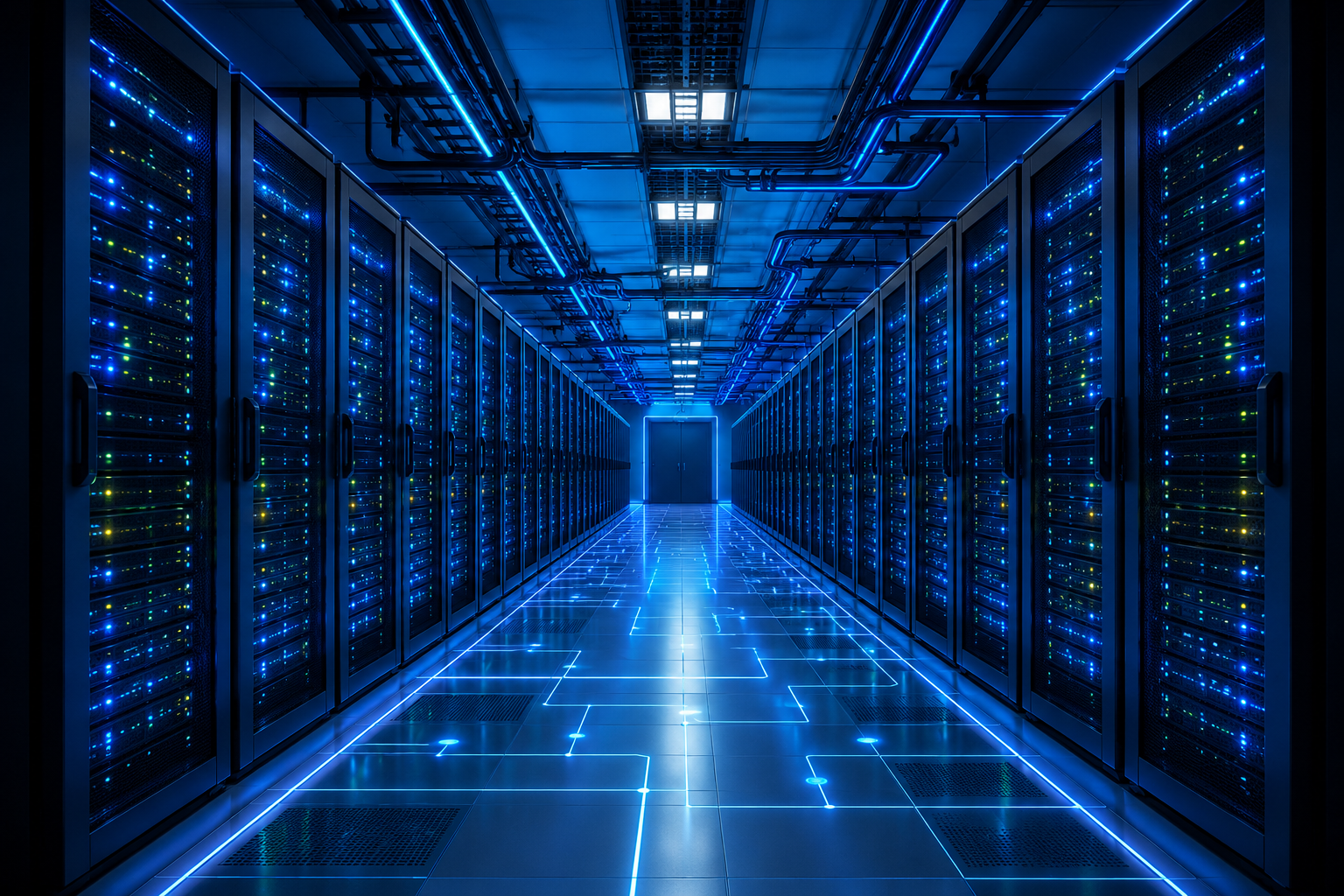
Artificial intelligence has transformed the data center industry from traditional cloud computing facilities into high-performance AI factories. Modern AI servers equipped with advanced GPUs consume significantly more power than conventional servers, creating an urgent need for efficient power delivery. This is where Data Center Power Semiconductors have become indispensable.
Power semiconductors regulate, convert, and distribute electricity throughout servers, storage systems, networking equipment, cooling infrastructure, and power supplies. As AI workloads continue to expand, hyperscale cloud providers are investing billions in next-generation power architectures that maximize efficiency while minimizing energy loss. Industry analysts expect AI infrastructure spending to remain one of the strongest growth drivers for semiconductor demand over the coming years.
Why Data Center Power Semiconductors Matter
Every watt consumed by an AI processor must be delivered efficiently. Poor power conversion results in energy waste, excessive heat generation, and higher operating costs.
Power semiconductors perform several critical functions:
- AC-to-DC power conversion
- Voltage regulation
- Power distribution
- Battery backup management
- Thermal protection
- Energy optimization
These components ensure maximum computing performance while improving Power Usage Effectiveness (PUE), one of the most important metrics for modern data centers.
AI Is Reshaping Power Architecture
Generative AI, large language models, and accelerated computing are dramatically increasing rack power density. AI servers require much higher power than traditional enterprise servers, forcing operators to redesign electrical infrastructure.
As GPU clusters grow larger, data centers are transitioning toward:
- Higher voltage power distribution
- Intelligent power management
- Digital power monitoring
- Advanced cooling systems
- High-efficiency power supplies
Researchers are also exploring new DC power architectures and solid-state power conversion technologies to meet future AI infrastructure requirements.
Download PDF Brochure -https://www.marketsandmarkets.com/pdfdownloadNew.asp?id=8488058
Silicon Carbide (SiC) and Gallium Nitride (GaN) Lead Innovation
Traditional silicon devices are reaching their efficiency limits.
Wide-bandgap materials are becoming the preferred choice for next-generation data centers.
Silicon Carbide (SiC)
SiC offers:
- Lower switching losses
- Higher voltage capability
- Better thermal performance
- Increased energy efficiency
- Longer equipment lifespan
These benefits make SiC ideal for high-power server power supplies and UPS systems.
Gallium Nitride (GaN)
GaN enables:
- Faster switching frequencies
- Smaller power supplies
- Reduced cooling requirements
- Higher power density
- Compact server designs
Together, SiC and GaN are redefining high-efficiency power conversion across AI infrastructure.
Hyperscale Data Centers Are Driving Market Growth
Global cloud providers continue expanding hyperscale facilities to support AI training and inference.
These facilities require:
- High-efficiency MOSFETs
- Power Management ICs (PMICs)
- Intelligent voltage regulators
- High-current power stages
- Advanced cooling electronics
The rapid deployment of AI clusters is increasing demand for sophisticated power semiconductor solutions that can deliver higher efficiency without sacrificing reliability. Recent market forecasts show strong growth for both data center semiconductor and power semiconductor segments.
Sustainability Is Accelerating Innovation
Electricity consumption has become one of the biggest challenges facing AI infrastructure.
Data center operators are focusing on:
- Carbon reduction
- Renewable energy integration
- Efficient power conversion
- Smart energy management
- Lower cooling costs
Power semiconductors play a central role by reducing electrical losses throughout the power delivery chain. Even small efficiency improvements can save millions of dollars annually across hyperscale campuses.
Growing electricity demand is also encouraging operators to explore alternative energy strategies and on-site power generation.
Emerging Technology Trends
Several innovations are shaping the future of Data Center Power Semiconductors.
Digital Power Management
AI-enabled controllers continuously optimize voltage and current for maximum efficiency.
800V DC Power Distribution
Higher-voltage architectures reduce transmission losses while supporting extremely high rack power.
Integrated Smart Power Modules
Combining multiple functions into compact packages improves efficiency and simplifies server design.
Advanced Thermal Monitoring
Real-time sensors help prevent overheating while extending equipment life.
AI-Based Energy Optimization
Machine learning algorithms dynamically adjust power consumption based on workload demands.
Market Outlook
The outlook for Data Center Power Semiconductors remains exceptionally strong.
Growth is supported by:
- AI infrastructure expansion
- Hyperscale cloud investments
- Increasing GPU deployments
- Digital transformation
- Energy efficiency regulations
- Adoption of SiC and GaN technologies
Frequently Asked Questions (AEO Optimized)
What is a Data Center Power Semiconductor?
A Data Center Power Semiconductor is an electronic device that controls, converts, regulates, and distributes electrical power throughout servers, networking equipment, storage systems, and cooling infrastructure.
Why are power semiconductors important for AI data centers?
AI servers consume much more electricity than traditional servers. Power semiconductors improve efficiency, reduce energy loss, lower operating costs, and maintain stable power delivery.
Which technologies dominate the market?
Silicon Carbide (SiC), Gallium Nitride (GaN), MOSFETs, IGBTs, Power Management ICs, and intelligent power modules are leading technologies.
Data Center Power Semiconductors: The Backbone of AI-Driven Data Centers in 2026
Meta Title: Data Center Power Semiconductor Market: AI Driving High-Efficiency Power Infrastructure
Meta Description: Discover how data center power semiconductors are enabling AI infrastructure with SiC, GaN, efficient power conversion, and next-generation energy management.
Primary Keyword: Data Center Power Semiconductor
Secondary Keywords: AI data centers, power semiconductors, silicon carbide, GaN semiconductors, hyperscale data centers, server power supply, power management ICs, AI infrastructure, energy-efficient data centers
Data Center Power Semiconductors Are Powering the AI Revolution
Artificial intelligence has transformed the data center industry from traditional cloud computing facilities into high-performance AI factories. Modern AI servers equipped with advanced GPUs consume significantly more power than conventional servers, creating an urgent need for efficient power delivery. This is where Data Center Power Semiconductors have become indispensable.
Power semiconductors regulate, convert, and distribute electricity throughout servers, storage systems, networking equipment, cooling infrastructure, and power supplies. As AI workloads continue to expand, hyperscale cloud providers are investing billions in next-generation power architectures that maximize efficiency while minimizing energy loss. Industry analysts expect AI infrastructure spending to remain one of the strongest growth drivers for semiconductor demand over the coming years.
Why Data Center Power Semiconductors Matter
Every watt consumed by an AI processor must be delivered efficiently. Poor power conversion results in energy waste, excessive heat generation, and higher operating costs.
Power semiconductors perform several critical functions:
- AC-to-DC power conversion
- Voltage regulation
- Power distribution
- Battery backup management
- Thermal protection
- Energy optimization
These components ensure maximum computing performance while improving Power Usage Effectiveness (PUE), one of the most important metrics for modern data centers.
AI Is Reshaping Power Architecture
Generative AI, large language models, and accelerated computing are dramatically increasing rack power density. AI servers require much higher power than traditional enterprise servers, forcing operators to redesign electrical infrastructure.
As GPU clusters grow larger, data centers are transitioning toward:
- Higher voltage power distribution
- Intelligent power management
- Digital power monitoring
- Advanced cooling systems
- High-efficiency power supplies
Researchers are also exploring new DC power architectures and solid-state power conversion technologies to meet future AI infrastructure requirements.
Silicon Carbide (SiC) and Gallium Nitride (GaN) Lead Innovation
Traditional silicon devices are reaching their efficiency limits.
Wide-bandgap materials are becoming the preferred choice for next-generation data centers.
Silicon Carbide (SiC)
SiC offers:
- Lower switching losses
- Higher voltage capability
- Better thermal performance
- Increased energy efficiency
- Longer equipment lifespan
These benefits make SiC ideal for high-power server power supplies and UPS systems.
Gallium Nitride (GaN)
GaN enables:
- Faster switching frequencies
- Smaller power supplies
- Reduced cooling requirements
- Higher power density
- Compact server designs
Together, SiC and GaN are redefining high-efficiency power conversion across AI infrastructure.
Hyperscale Data Centers Are Driving Market Growth
Global cloud providers continue expanding hyperscale facilities to support AI training and inference.
These facilities require:
- High-efficiency MOSFETs
- Power Management ICs (PMICs)
- Intelligent voltage regulators
- High-current power stages
- Advanced cooling electronics
The rapid deployment of AI clusters is increasing demand for sophisticated power semiconductor solutions that can deliver higher efficiency without sacrificing reliability. Recent market forecasts show strong growth for both data center semiconductor and power semiconductor segments.

 English
 Arabic
 Français
 Português
 Deutsch
 Türkçe
 Dutch
Dutch
 Italiano
 Russian
 Romaian