


Key Takeaways
- Botox is designed to soften facial lines, not change your natural appearance.
- It is most effective for wrinkles caused by repeated facial expressions.
- Natural-looking results depend on the expertise of the treating dermatologist.
- Improvements appear gradually over several days rather than immediately.
- Results are temporary, giving you the flexibility to continue or discontinue treatment.
- Botox can help reduce existing expression lines while delaying the formation of deeper wrinkles.
- A consultation with a qualified dermatologist helps determine whether Botox or another treatment is the most suitable option.

Introduction
Botox is one of the most recognised cosmetic dermatology treatments worldwide, yet many first-time patients still have questions before considering it. Will the treatment look natural? Is it painful? Can it make the face appear expressionless?
These are common concerns discussed by Dr. Rinky Kapoor, Celebrity Cosmetic Dermatologist and Co-founder of The Esthetic Clinics.
Although Botox is often described as a quick cosmetic procedure, achieving natural-looking results requires careful facial assessment, precise planning, and expert technique.
Rather than changing facial features, Botox treatment works by relaxing selected muscles responsible for repeated facial expressions, helping soften dynamic wrinkles while preserving natural movement.
This guide explains how Botox works, its benefits, expected results, safety considerations, and what first-time patients should know before treatment.
What Is Botox and How Does It Work?
Botox is a purified protein derived from botulinum toxin that has been safely used in medicine for several decades. In cosmetic dermatology, very small, carefully measured doses are injected into targeted facial muscles.
The treatment temporarily reduces communication between nerves and selected muscles. As muscle activity decreases, the overlying skin gradually appears smoother because it is no longer folding repeatedly during facial expressions.
Botox works best for dynamic wrinkles, including:
- Forehead lines
- Frown lines
- Crow's feet
- Smile-related expression lines
It is less effective for wrinkles caused by ageing, sun damage, or volume loss.
Does Botox Make the Face Look Frozen?
One of the biggest misconceptions about Botox is that it removes facial expressions.
In reality, a frozen appearance is usually the result of excessive dosing or improper injection placement rather than Botox itself.
When performed by an experienced dermatologist, Botox simply softens excessive muscle movement while allowing the face to maintain natural expression.
Areas Commonly Treated with Botox
Although forehead wrinkles are the most commonly requested treatment area, Botox can address several facial concerns.
Cosmetic Treatment Areas
- Forehead lines
- Frown lines between the eyebrows
- Crow's feet
- Bunny lines on the nose
- Lip lines
- Lip flip procedures
Medical Applications
Botox is also widely used for several non-cosmetic conditions, including:
- Excessive sweating (Hyperhidrosis)
- Teeth grinding and jaw clenching
- Jaw muscle enlargement
- Chronic migraine management in selected patients
Its broad medical use reflects its long-standing safety profile when administered appropriately.
Benefits of Botox Treatment
Botox offers several advantages for individuals seeking non-surgical facial rejuvenation.
Some key benefits include:
- Softens fine lines and facial wrinkles without surgery
- Quick in-clinic treatment lasting approximately 15 to 30 minutes
- Minimal interruption to normal daily activities
- Results typically appear within a few days
- Effects generally last between four and six months
- Can help delay the formation of deeper expression lines
- Allows flexible treatment schedules because results are temporary
- Often combined with other anti-aging treatment options for comprehensive facial rejuvenation.
What Happens During a Botox Appointment?
The treatment process is relatively simple but begins with a detailed facial assessment.
Your dermatologist carefully evaluates:
- Facial muscle movement
- Existing expression lines
- Muscle strength
- Facial symmetry
- Areas requiring treatment
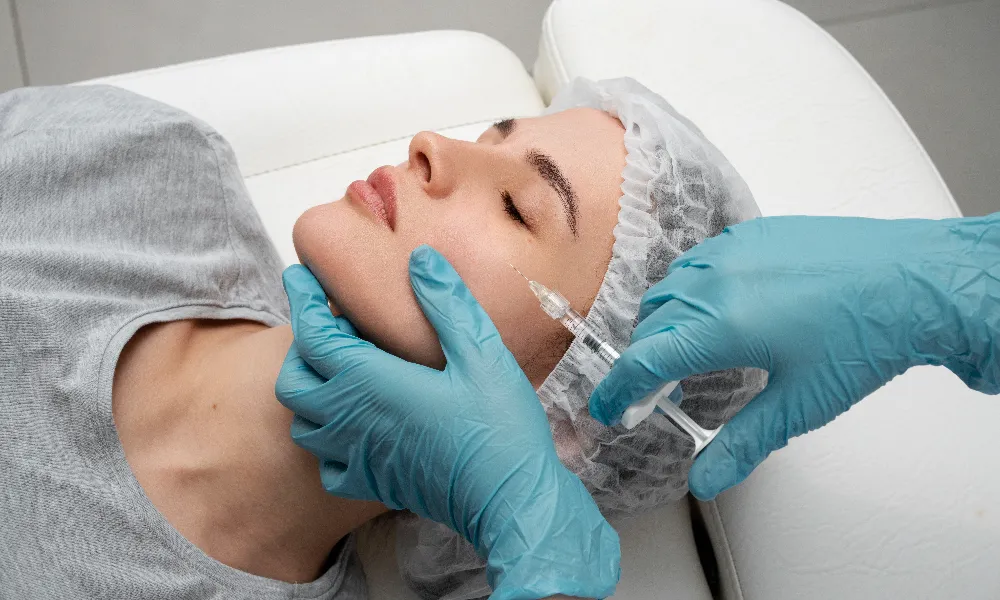
After cleansing the skin, Botox is injected using a very fine needle into selected muscles.
Most patients describe the injections as brief pinching sensations that last only a few seconds.
The entire appointment usually takes between 15 and 30 minutes.
Most people return to work or routine activities immediately afterward.
Botox Safety and Possible Side Effects
Botox has an excellent safety record when administered by trained professionals.
Common Temporary Side Effects
Some patients may experience:
- Mild redness
- Small swelling
- Minor bruising
- Mild headache
These effects generally resolve within a few hours or days.
Why Experience Matters
Botox requires anatomical precision.
Incorrect injection placement may rarely lead to temporary eyelid drooping or uneven muscle relaxation.
Choosing a qualified dermatologist significantly reduces these risks.
Who Should Avoid Botox?
Botox may not be suitable for:
- Pregnant women
- Breastfeeding mothers
- Individuals with certain neuromuscular disorders
- Patients with allergies to Botox ingredients
A consultation helps determine whether treatment is appropriate.
Botox vs Dermal Fillers
Although Botox and dermal fillers are often discussed together, they treat different ageing concerns.

Is Botox Right for You?
There is no universal age to begin Botox treatment.
Some individuals choose Botox preventatively to minimise early wrinkle formation, while others seek treatment after expression lines become more noticeable.
The Botox treatment cost in India varies depending on several factors:
- Treatment area
- Number of Botox units required
- Facial muscle strength
- Experience of the treating dermatologist
The best outcomes come from personalised treatment planning rather than using excessive amounts of Botox.
Treatments That Can Complement Botox
Botox is often part of a broader facial rejuvenation plan.
Depending on individual skin concerns, dermatologists may recommend combining Botox with treatments that improve:
- Skin texture
- Pigmentation
- Collagen production
- Skin quality
- Overall facial rejuvenation
Combination treatment plans are usually introduced gradually based on individual skin needs.
Conclusion
Botox treatment delivers the most natural results when used conservatively and strategically.
Its goal is not to erase every facial line but to soften repetitive muscle movements that contribute to wrinkle formation.
For individuals considering Botox for the first time, realistic expectations and expert consultation are essential.
When performed thoughtfully by an experienced dermatologist, Botox enhances facial appearance without making expressions look artificial.
This Blog Originally Posted Here: Botox Treatment: Everything You Need to Know Before Your First Session
Frequently Asked Questions
How soon will I see Botox results?
Most patients begin seeing improvements within three to five days, while full results typically develop over 10 to 14 days.
Will Botox make my face look expressionless?
No. Properly performed Botox preserves natural facial expressions while reducing excessive muscle movement.
How long do Botox results last?
Most treatments provide visible improvement for approximately four to six months.
Is Botox painful?
Most patients experience only mild discomfort similar to a quick pinprick, and no significant downtime is required.
Can Botox prevent wrinkles?
Yes. Botox is frequently used as a preventative treatment to minimise the development of deeper expression lines.
What happens if I stop getting Botox?
The treated muscles gradually regain normal movement, and wrinkles slowly return to their natural appearance without becoming worse than before.

 Arabic
 Français
 Español
 Português
 Deutsch
 Türkçe
 Dutch
Dutch
 Italiano
 Russian
 Romaian