


Military AI: How Artificial Intelligence Is Transforming Modern Defense
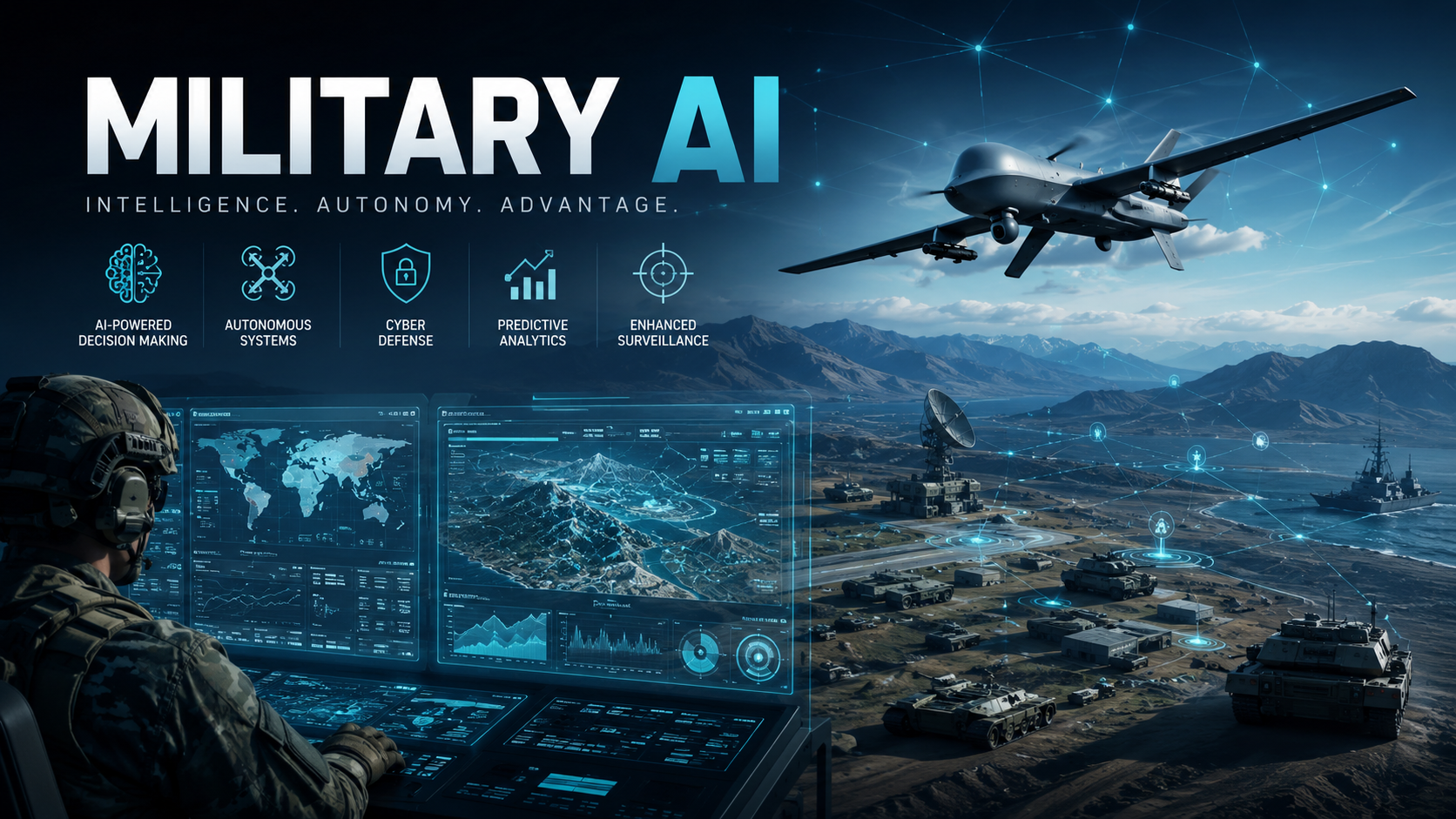
Artificial intelligence is rapidly becoming one of the most influential technologies shaping the future of military and defense operations. From autonomous systems and intelligent surveillance to cybersecurity, logistics, battlefield analytics, and decision support, Military AI is changing how defense organizations plan, operate, and respond to increasingly complex security challenges.
The integration of artificial intelligence into military systems is no longer limited to experimental research or future concepts. AI is increasingly being considered across multiple areas of defense operations, helping organizations process large volumes of information, improve operational efficiency, strengthen situational awareness, and support faster decision-making.
As global security environments become more dynamic, the demand for advanced technologies capable of analyzing information in real time is growing. This has created significant interest in the Artificial Intelligence in Military Market, with defense organizations, technology developers, research institutions, and industrial stakeholders focusing on the development of intelligent systems designed for modern defense requirements.
What Is Military AI?
Military AI refers to the use of artificial intelligence technologies in defense, security, and military applications. These technologies may include machine learning, deep learning, computer vision, natural language processing, robotics, predictive analytics, autonomous systems, and intelligent decision-support platforms.
The objective is not simply to replace traditional military systems with automated technologies. Instead, AI is increasingly being used to help defense organizations:
- Analyze large volumes of data
- Identify patterns and potential threats
- Improve surveillance and reconnaissance
- Support operational planning
- Strengthen cybersecurity
- Optimize military logistics
- Improve equipment maintenance
- Enhance communication systems
- Support autonomous platforms
- Improve situational awareness
The growing importance of Military AI is largely driven by the increasing volume, speed, and complexity of information generated across modern defense environments.
Why Is Artificial Intelligence Becoming Important in the Military Sector?
Modern defense operations generate enormous amounts of information from sensors, satellites, communication networks, unmanned platforms, surveillance systems, and other sources. Human teams may find it difficult to process this information quickly enough to support time-sensitive operational requirements.
Artificial intelligence can help analyze data at scale and identify patterns that may otherwise be difficult to detect.
Key factors driving the adoption of AI in military applications include:
- Increasing demand for real-time intelligence
- Growing cybersecurity threats
- Expansion of autonomous systems
- Rising need for advanced surveillance technologies
- Increasing complexity of defense operations
- Demand for predictive maintenance
- Growth of unmanned aerial, ground, and maritime systems
- Need for faster data processing
- Development of network-centric defense systems
- Increasing investment in advanced defense technologies
AI can potentially support faster analysis, improved operational efficiency, and more effective resource allocation. However, successful implementation requires strong governance, reliable data, secure infrastructure, and responsible technology development.
Major Applications of AI in Military and Defense
1. Intelligence, Surveillance, and Reconnaissance
One of the most important applications of AI in defense is intelligence, surveillance, and reconnaissance.
AI-powered systems can process data from multiple sources, including sensors, satellite imagery, video feeds, and other intelligence systems. Computer vision technologies can assist in identifying objects, recognizing patterns, and detecting unusual activity.
This can help reduce the time required to review large volumes of information and support faster analysis.
AI-based surveillance systems may assist with:
- Image and video analysis
- Object detection
- Pattern recognition
- Activity monitoring
- Threat assessment
- Intelligence data processing
The ability to analyze information continuously can be particularly valuable in environments where conditions change rapidly.
2. Autonomous and Unmanned Systems
Autonomous systems are becoming a major area of interest within the defense industry.
AI can support unmanned aerial systems, ground vehicles, maritime platforms, and other robotic systems by helping them navigate environments, process sensor information, and respond to changing conditions.
Potential applications include:
- Unmanned aerial vehicles
- Autonomous ground systems
- Robotic platforms
- Unmanned maritime systems
- Remote inspection systems
- Search and rescue technologies
The development of autonomous systems also creates new challenges related to reliability, cybersecurity, human oversight, communication, and operational control.
For this reason, the future of autonomous defense systems is likely to focus not only on automation but also on carefully designed human-machine collaboration.
3. Military Cybersecurity
As military infrastructure becomes increasingly connected, cybersecurity has become a critical priority.
AI can support cybersecurity teams by monitoring networks, identifying unusual behavior, detecting potential vulnerabilities, and helping security teams respond to emerging threats.
AI-driven cybersecurity solutions may be used for:
- Threat detection
- Network monitoring
- Anomaly identification
- Malware analysis
- Vulnerability assessment
- Incident response support
Cybersecurity is expected to remain one of the most important areas of Military AI development because modern defense operations increasingly depend on digital networks and connected infrastructure.
A cyberattack targeting communication systems, logistics platforms, or critical infrastructure could create significant operational challenges. AI may help organizations identify potential risks more quickly and strengthen their overall cyber defense capabilities.
4. Predictive Maintenance and Military Logistics
Military equipment and infrastructure require continuous maintenance. Unexpected equipment failures can create operational disruptions and increase costs.
AI-powered predictive maintenance systems can analyze equipment data and identify signs of potential failure before a major breakdown occurs.
This approach may help defense organizations:
- Reduce unexpected equipment downtime
- Improve maintenance planning
- Optimize spare parts management
- Extend equipment life cycles
- Improve operational readiness
AI can also support logistics operations by analyzing supply chains, transportation requirements, inventory levels, and resource allocation.
For large defense organizations managing complex equipment and supply networks, intelligent logistics systems may provide significant efficiency benefits.
5. Decision Support and Data Analysis
Military operations involve the analysis of complex and rapidly changing information. AI-based decision-support systems can help organize and analyze information to support human decision-making.
These systems may identify trends, compare scenarios, and provide analytical insights based on available data.
The importance of this technology is increasing because defense operations often require:
- Rapid information processing
- Multi-source data analysis
- Scenario evaluation
- Risk assessment
- Resource planning
However, AI-based systems should be designed to support human judgment rather than create unnecessary dependence on automated outputs.
The quality of the data, system design, cybersecurity controls, and human oversight all play important roles in determining the effectiveness of AI-based decision-support technologies.
6. Training and Simulation
AI is also transforming military training and simulation.
AI-powered simulations can create complex virtual environments for training personnel in different operational scenarios. These systems can adapt training conditions, simulate changing environments, and provide performance insights.
Potential benefits include:
- More realistic training environments
- Personalized learning experiences
- Reduced training costs
- Scenario-based preparation
- Improved performance analysis
Simulation technologies may become increasingly important as defense organizations seek to improve preparedness while reducing the cost and logistical complexity associated with physical training environments.
7. AI in Defense Communication Networks
Modern defense operations depend heavily on secure and reliable communication systems.
AI can help optimize communication networks by analyzing network traffic, identifying disruptions, managing resources, and supporting network security.
AI-enabled communication technologies may help improve:
- Network efficiency
- Signal management
- Cybersecurity
- Communication reliability
- Network monitoring
As defense systems become more connected, intelligent networking technologies may become an increasingly important part of military infrastructure.
The Role of Data in Military AI
Data is the foundation of artificial intelligence.
Without reliable, high-quality, and secure data, even advanced AI systems may produce inaccurate or unreliable results.
Military AI systems may rely on data from:
- Sensors
- Satellites
- Radar systems
- Surveillance platforms
- Communication networks
- Equipment monitoring systems
- Simulations
- Historical operational data
Managing this data presents several challenges.
Defense organizations must consider data quality, data security, interoperability, storage requirements, and access controls. AI systems must also be trained and tested using data that is relevant to the environments in which they are expected to operate.
Poor-quality data can lead to inaccurate analysis, which may reduce confidence in AI systems.
Challenges Facing Military AI Adoption
Although artificial intelligence offers significant opportunities, its adoption within the defense sector is not without challenges.
Cybersecurity Risks
AI systems themselves can become targets for cyberattacks. Protecting AI models, data, communication networks, and system infrastructure is essential.
Data Quality
AI requires reliable data. Incomplete, biased, outdated, or inaccurate data can reduce system performance.
System Reliability
Military systems may need to operate in difficult environments with limited connectivity, changing conditions, and significant technical constraints.
Interoperability
Many defense organizations operate complex systems developed at different times and by different technology providers. Ensuring that AI systems can communicate with existing infrastructure is a major challenge.
Ethical and Governance Requirements
The use of AI in military applications requires careful consideration of human oversight, accountability, transparency, safety, and responsible technology development.
Skilled Workforce
Successful AI implementation requires expertise in artificial intelligence, cybersecurity, data science, software engineering, defense systems, and operational requirements.
The shortage of professionals with combined technical and defense expertise may influence the pace of AI adoption.
Human Oversight Remains Important
One of the most important considerations in the development of Military AI is the relationship between humans and intelligent systems.
AI can process data rapidly, identify patterns, and support analysis. However, complex military and security environments require context, judgment, responsibility, and accountability.
For this reason, many AI strategies emphasize the importance of human oversight and clearly defined operational controls.
The future of Military AI is likely to involve closer collaboration between human expertise and intelligent systems. Instead of viewing AI only as a replacement for human activity, defense organizations are increasingly exploring how AI can help people work more efficiently and make better-informed decisions.
The Future of Artificial Intelligence in Military Applications
The future of Military AI is expected to be shaped by the convergence of several technologies.
These may include:
- Artificial intelligence
- Robotics
- Autonomous systems
- Cloud computing
- Edge computing
- Advanced sensors
- Cybersecurity
- Big data analytics
- Digital twins
- Quantum technologies
Edge AI may become particularly important for defense environments where real-time data processing is required but reliable connectivity may not always be available.
Processing information closer to the source can reduce latency and support faster system responses.
At the same time, AI-enabled cybersecurity is expected to remain a critical area of investment as defense networks become more interconnected.
Strategic Importance of Military AI for Organizations
For organizations operating in the defense technology ecosystem, artificial intelligence represents more than a technology upgrade. It is becoming a strategic capability.
The successful adoption of AI may require organizations to rethink:
- Technology infrastructure
- Data management
- Cybersecurity strategy
- Workforce development
- Research and development
- Procurement models
- System integration
- Risk management
Organizations that approach AI as a long-term strategic capability may be better positioned to respond to changing technology requirements.
However, successful implementation will depend on more than investment alone. Strong governance, secure infrastructure, technical expertise, and clearly defined objectives will be essential.
Conclusion
Military AI is becoming an increasingly important component of modern defense and security technology.
From intelligence analysis and cybersecurity to autonomous systems, predictive maintenance, logistics, training, and communication networks, artificial intelligence is creating new opportunities to improve how defense organizations process information and manage complex operations.
However, the future of AI in the military sector will depend on responsible development, strong cybersecurity, reliable data, interoperability, human oversight, and long-term strategic planning.
As technology continues to advance, Military AI is expected to remain a major area of research, investment, and innovation. Organizations that understand both the opportunities and challenges of artificial intelligence may be better positioned to participate in the next generation of defense technology development.
Frequently Asked Questions (FAQs)
What is Military AI?
Military AI refers to the use of artificial intelligence technologies such as machine learning, computer vision, robotics, predictive analytics, and natural language processing in defense and security applications.
What are the major applications of AI in the military?
Major applications include intelligence analysis, surveillance, cybersecurity, autonomous systems, predictive maintenance, logistics, training simulations, communication networks, and decision-support systems.
Why is AI important for the defense sector?
AI can help process large volumes of information, identify patterns, support faster analysis, improve operational efficiency, strengthen cybersecurity, and enhance the capabilities of various defense systems.
How is AI used in military cybersecurity?
AI can help monitor networks, identify unusual activity, detect potential threats, analyze security events, and support faster cybersecurity responses.
What role does AI play in autonomous military systems?
AI can support autonomous systems by helping them process sensor information, navigate environments, recognize objects, and respond to changing conditions. The design and operation of such systems require strong safety, security, and oversight frameworks.
Can AI replace human decision-making in defense operations?
AI is primarily being developed as a tool to support human analysis and decision-making. Human judgment, oversight, accountability, and operational control remain important considerations in the development and deployment of AI systems.
What are the major challenges of Military AI?
Key challenges include cybersecurity risks, data quality, system reliability, interoperability, ethical considerations, regulatory requirements, infrastructure limitations, and the need for specialized technical expertise.
How does AI improve military logistics?
AI can analyze inventory, equipment, transportation, and supply chain data to support demand forecasting, maintenance planning, resource allocation, and logistics optimization.
What is the future of AI in the military sector?
The future of Military AI is expected to involve greater integration with robotics, autonomous systems, edge computing, advanced sensors, cybersecurity platforms, cloud infrastructure, and data analytics.
Why is cybersecurity important for Military AI?
AI systems may process sensitive information and operate within critical defense infrastructure. Protecting AI models, data, networks, and connected systems is therefore essential for maintaining system reliability and security.
Is Military AI an emerging technology market?
Yes. The growing use of artificial intelligence across defense operations, cybersecurity, autonomous systems, surveillance, logistics, and data analytics is contributing to increasing interest in the Military AI market and related technology segments.

 Arabic
 Français
 Español
 Português
 Deutsch
 Türkçe
 Dutch
Dutch
 Italiano
 Russian
 Romaian