Emotions naturally change throughout the day.
However, some people experience feelings that become intense, unpredictable, and difficult to manage.
Emotionally Unstable Personality Disorder can affect emotions, impulses, self-image, and relationships. It is not simply extreme sensitivity or dramatic behaviour.
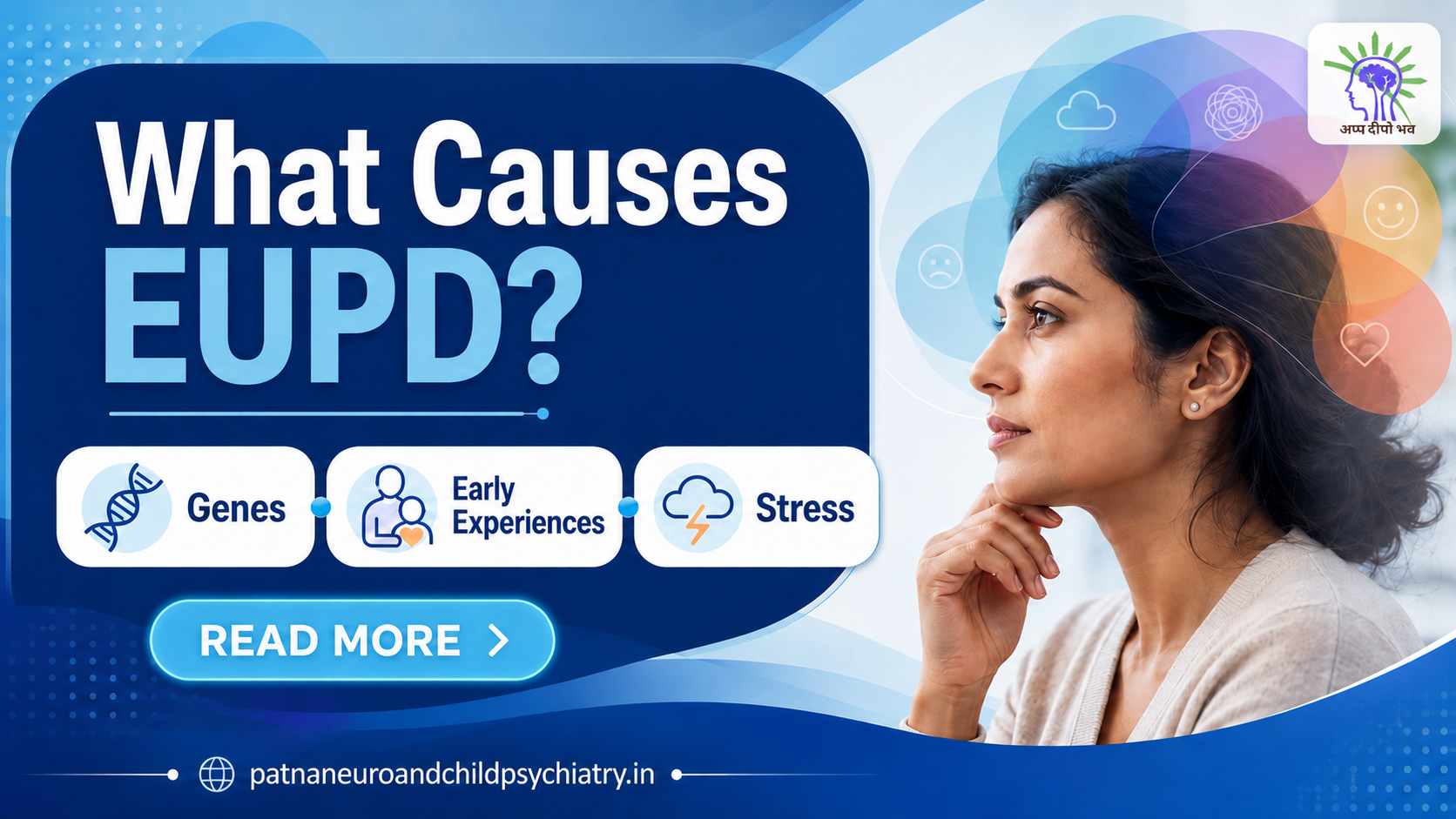
There is no single confirmed cause of EUPD.
Genetic vulnerability, childhood experiences, brain development, and environmental stress may contribute together.
This article explains Emotionally Unstable Personality Disorder causes, symptoms, treatment, and when professional help may be needed.
Note: Dr. Vivek Pratap Singh is a psychiatrist doctor in Patna who provides care for emotional regulation difficulties and related mental health conditions.
What Is Emotionally Unstable Personality Disorder?
Emotionally Unstable Personality Disorder, or EUPD, involves persistent difficulty managing emotions and impulsive reactions.
A person may react intensely to rejection, criticism, relationship conflict, or a fear of abandonment.
These reactions can affect their decisions, self-image, relationships, and everyday responsibilities.
The ICD-10 classification describes impulsive and borderline types of EUPD.
Borderline Personality Disorder is the related term commonly used in the DSM-5.
EUPD should only be diagnosed through a detailed assessment by a qualified mental health professional.
Common Emotionally Unstable Personality Disorder Symptoms
Emotionally Unstable Personality Disorder symptoms can differ in frequency and severity between individuals.
Common EUPD symptoms may include:
- intense and rapidly changing emotions;
- difficulty controlling anger;
- strong fears of rejection or abandonment;
- impulsive or risky decisions;
- unstable and intense relationships;
- frequent changes in self-image;
- persistent emptiness or loneliness;
- difficulty calming down after emotional distress;
- dissociation during severe stress;
- self-harm or suicidal thoughts.
Having one or two symptoms does not confirm EUPD. Doctors look for persistent patterns affecting several areas of a person’s life.
What Causes Emotionally Unstable Personality Disorder?
Researchers have not identified one exact cause of EUPD.
The condition usually develops through a combination of biological, psychological, and environmental factors.
1. Genetic Vulnerability
Genetic factors may influence emotional sensitivity, impulsivity, and responses to stress.
EUPD may be more likely among people with relatives who have similar personality or emotional difficulties. However, genes alone cannot determine whether someone will develop the condition.
2. Childhood Trauma or Neglect
Some people with EUPD report emotional, physical, or sexual abuse during childhood.
Neglect, prolonged fear, separation, or inconsistent caregiving may also affect emotional development. These experiences can make it harder to develop safe emotional and relationship patterns.
However, childhood trauma is not present in every EUPD case. Experiencing trauma also does not mean that someone will develop the condition.
3. Brain Development and Emotional Processing
Brain systems linked with emotions, impulses, and decision-making may function differently in some people with EUPD.
These differences may affect how strongly someone reacts to stress or interpersonal triggers. They may also make it harder to calm down after emotional distress.
Brain findings cannot independently confirm EUPD. A clinical assessment remains necessary for diagnosis.
4. Emotional Invalidation
Repeated emotional invalidation may contribute to difficulties with emotional regulation.
This can happen when a person’s feelings are constantly dismissed, criticised, ignored, or treated as unacceptable. Over time, they may struggle to identify, express, or manage their emotions safely.
5. Environmental and Social Stress
Long-term conflict, unstable relationships, rejection, loss, and ongoing stress may increase emotional difficulties.
Stress during adolescence or early adulthood may also intensify existing emotional vulnerability. Usually, several factors combine rather than one event causing EUPD.
Signs of Emotional Instability in Women
Emotional instability can affect people of every gender. However, symptoms and their outward expression can differ between individuals.
Possible signs of an emotionally unstable woman may include:
- intense anxiety or irritability;
- strong reactions to criticism or rejection;
- persistent fears of abandonment;
- impulsive decisions during distress;
- frequent changes in self-image;
- unstable or highly intense relationships;
- persistent guilt, shame, or emptiness;
- dissociation during severe stress;
- self-harm or suicidal thoughts.
Symptoms of BPD in females may sometimes be mistaken for depression, anxiety, bipolar disorder, or trauma-related difficulties.
These signs should not be used to label someone.
A qualified psychiatrist or clinical psychologist must assess the complete pattern.
Emotionally Unstable Personality Disorder Treatment
Emotionally Unstable Personality Disorder treatment mainly focuses on psychotherapy.
Treatment plans should reflect the person’s symptoms, risks, needs, and coexisting conditions.
1. Psychotherapy
Therapies that may help include:
- Dialectical Behaviour Therapy: DBT develops emotional regulation, distress tolerance, mindfulness, and relationship skills.
- Mentalisation-Based Therapy: MBT helps people examine emotions, thoughts, and assumptions about other people’s intentions.
- Cognitive Behavioural Therapy: CBT may address harmful thought patterns and associated anxiety or depression.
- Schema Therapy: This therapy focuses on persistent emotional patterns linked with earlier experiences.
Treatment may require time and consistent participation. Many people gradually develop safer coping methods and more stable relationships.
2. Medication
There is no single medicine that treats every core feature of EUPD.
A psychiatrist may prescribe medication for associated depression, anxiety, sleep difficulties, or another diagnosed condition.
Medication should only be used under medical supervision.
3. Family and Social Support
Supportive family members and friends can play a helpful role in recovery.
They can learn about emotional triggers, encourage treatment, and communicate without blame.
Clear boundaries are also important for maintaining healthier relationships.
When Should Someone Seek Professional Help?
Professional help should be considered when emotional reactions become frequent, intense, or difficult to control.
A psychiatric assessment may be needed if symptoms:
- affect relationships, work, studies, or daily responsibilities;
- cause repeated anger or emotional outbursts;
- lead to impulsive or risky behaviour;
- create persistent emptiness or isolation;
- repeatedly disrupt close relationships;
- become difficult to manage without support.
Immediate help is necessary if someone has suicidal thoughts, plans self-harm, or may harm another person.
Contact emergency services or visit the nearest hospital in such situations.
Conclusion
Emotionally Unstable Personality Disorder causes usually involve several interacting factors.
These may include genetic vulnerability, early experiences, emotional invalidation, brain development, and ongoing stress.
EUPD is not a personal weakness or deliberate behaviour. It is a mental health condition that requires proper assessment and suitable care.
Psychotherapy, coping skills, and consistent support can help people manage intense emotions and build healthier relationships.
For more information about emotional imbalance and EUPD, read the detailed guide covering symptoms, diagnosis, and treatment.
FAQs
1. Is EUPD the Same as BPD?
Borderline Personality Disorder broadly corresponds to the borderline type of EUPD. EUPD appears in ICD-10, while BPD is commonly used in the DSM-5.
2. Is EUPD a Form of Autism?
No, autism is a neurodevelopmental condition, while EUPD is a personality disorder. Some outward behaviours may overlap, so careful assessment is important.
3. Why Was BPD Changed to EUPD?
BPD was not universally renamed EUPD. The terms come from different diagnostic classification systems and may be used differently across healthcare settings.
4. Can EUPD Be Caused by Childhood Trauma?
Childhood trauma may increase vulnerability, but it is not the only possible factor. Not every person with EUPD has experienced trauma.
5. Is EUPD Genetic?
Genetic factors may influence emotional sensitivity and impulsivity. However, genes alone do not determine whether someone will develop EUPD.
6. Can EUPD Be Treated?
Yes, suitable psychotherapy can help people manage emotions, impulsive reactions, and relationship difficulties. Treatment is personalised according to individual symptoms and needs.



 Deutsch
 English
 Arabic
 Français
 Español
 Português
 Türkçe
 Dutch
Dutch
 Italiano
 Russian
 Romaian