


Why Recycled Polypropylene Is Transforming Industries
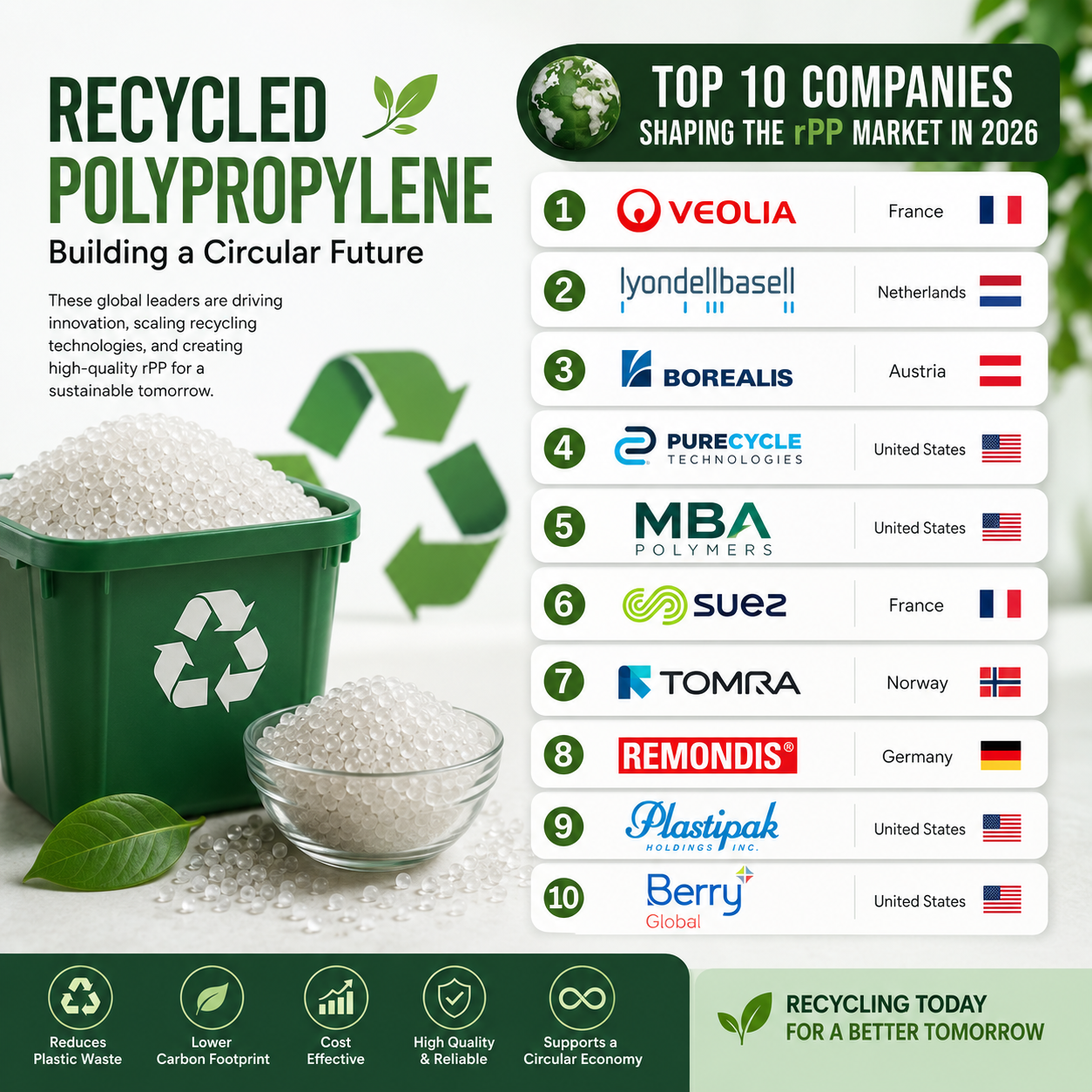
Plastic waste has become one of the world's most pressing environmental challenges. Industries, governments, and consumers are increasingly looking for materials that reduce environmental impact without compromising quality or performance. Among the most promising solutions is Recycled Polypropylene (rPP), a material that supports sustainable manufacturing while extending the life cycle of valuable plastic resources.
Recycled Polypropylene is produced by collecting, sorting, cleaning, and processing used polypropylene products into reusable raw materials. Modern recycling technologies now enable manufacturers to produce recycled polypropylene with improved consistency, durability, and performance, making it suitable for a growing number of industrial applications.
As organizations continue adopting circular economy strategies, recycled polypropylene is becoming a preferred material for reducing carbon emissions, conserving natural resources, and supporting responsible production practices.
Understanding Recycled Polypropylene
Polypropylene is one of the most widely used thermoplastics in the world. It is lightweight, chemically resistant, durable, and highly versatile. After use, polypropylene products can be recovered and reprocessed into recycled polypropylene, allowing valuable materials to remain in circulation rather than ending up in landfills.
Today, recycled polypropylene is being integrated into manufacturing processes across multiple industries while supporting sustainability objectives and reducing dependence on virgin plastic production.
Its growing adoption reflects the global shift toward resource efficiency, waste reduction, and environmentally responsible manufacturing.
Why Industries Are Choosing Recycled Polypropylene
Organizations are increasingly incorporating recycled polypropylene into production because it offers both environmental and economic advantages.
Key reasons include:
• Reduced plastic waste generation
• Lower consumption of virgin fossil-based resources
• Reduced greenhouse gas emissions
• Improved resource efficiency
• Support for circular economy initiatives
• Compliance with sustainability regulations
• Growing consumer preference for recycled materials
• Increased supply chain resilience
• Cost optimization through material recovery
• Improved environmental performance reporting
These factors are encouraging manufacturers to integrate recycled content into both existing and newly designed products.
𝐃𝐨𝐰𝐧𝐥𝐨𝐚𝐝 𝐒𝐚𝐦𝐩𝐥𝐞 𝐇𝐞𝐫𝐞:- https://www.datamintelligence.com/download-sample/recycled-polypropylene-rpp-market
Major Applications of Recycled Polypropylene
The versatility of recycled polypropylene enables its use across numerous industrial sectors.
Common applications include:
• Packaging containers
• Food packaging (where regulations permit)
• Automotive interior components
• Battery cases
• Household storage products
• Furniture
• Industrial pallets
• Plastic crates
• Construction materials
• Electrical components
• Consumer appliances
• Gardening products
• Waste bins
• Textile fibers
• Logistics packaging
Each application demonstrates how recycled materials can replace virgin plastics while maintaining functionality and performance.
Benefits of Recycled Polypropylene
The increasing demand for recycled polypropylene is supported by a wide range of environmental, operational, and economic benefits.
Key benefits include:
• Conserves natural resources
• Reduces landfill waste
• Supports sustainable manufacturing
• Lowers carbon footprint
• Promotes responsible resource management
• Reduces dependency on petroleum-based raw materials
• Encourages material circularity
• Supports corporate sustainability goals
• Enables eco-friendly product development
• Improves waste management efficiency
These advantages contribute to both long-term environmental protection and industrial competitiveness.
Modern recycling technologies continue to improve material purity and consistency, enabling recycled polypropylene to meet increasingly demanding performance requirements. As recycling infrastructure expands, manufacturers gain access to more reliable supplies of high-quality recycled materials, making adoption easier across diverse industries.
Features of Recycled Polypropylene
Recycled polypropylene retains many valuable characteristics found in virgin polypropylene.
Important features include:
• Lightweight structure
• Excellent chemical resistance
• Good impact strength
• Moisture resistance
• Electrical insulation properties
• High durability
• Good fatigue resistance
• Excellent processability
• Recyclable multiple times
• Suitable for injection molding
• Suitable for extrusion
• High dimensional stability
• Wide application versatility
These technical characteristics make recycled polypropylene suitable for both industrial and consumer products.
Circular Economy and Sustainable Manufacturing
The circular economy focuses on keeping materials in use for as long as possible while minimizing waste generation. Recycled polypropylene represents one of the most practical examples of this approach.
Instead of treating plastic as disposable waste, manufacturers increasingly view polypropylene as a valuable resource that can be collected, processed, and reused in new production cycles. This reduces environmental impact while maximizing material value throughout its lifecycle.
Circular manufacturing also encourages innovation in product design, recycling systems, material recovery, and waste collection, helping industries transition toward more sustainable production models.
Key Industry Trends
Several trends are accelerating the adoption of recycled polypropylene worldwide.
Growing trends include:
• Advanced mechanical recycling technologies
• Chemical recycling innovations
• AI-powered waste sorting
• Smart recycling facilities
• Closed-loop manufacturing systems
• Increased recycled content targets
• Eco-design for recyclability
• Digital material traceability
• Sustainable packaging initiatives
• Expansion of post-consumer recycling programs
These developments are improving both the quality and availability of recycled polypropylene for industrial applications.
As technology continues advancing, recycled polypropylene is expected to play a larger role in high-performance applications that previously relied almost entirely on virgin materials. Improved sorting systems, advanced washing technologies, and better quality control are enabling recycled plastics to meet increasingly strict manufacturing standards.
Environmental Impact
One of the strongest advantages of recycled polypropylene is its positive environmental contribution.
Environmental advantages include:
• Reduced plastic pollution
• Lower energy consumption
• Reduced greenhouse gas emissions
• Conservation of natural resources
• Lower landfill dependence
• Reduced ocean plastic leakage
• Better waste utilization
• Support for climate goals
• Improved resource efficiency
• Promotion of sustainable production
These outcomes contribute directly to global sustainability efforts while supporting responsible industrial development.
Business and Economic Benefits
Recycled polypropylene also creates measurable economic value.
Important business benefits include:
• Reduced raw material costs
• Improved operational efficiency
• Enhanced sustainability reputation
• Better regulatory compliance
• Stronger ESG performance
• Increased investor confidence
• Improved resource security
• Greater manufacturing flexibility
• Support for long-term business resilience
• Competitive product differentiation
Organizations increasingly recognize that environmental responsibility and operational efficiency can work together to create lasting value.
Future Outlook
The future of recycled polypropylene is closely linked with innovation in recycling infrastructure, material science, product design, and sustainable manufacturing practices.
Growing investments in recycling technologies, stricter environmental regulations, increasing consumer awareness, and stronger corporate sustainability commitments will continue driving adoption across industries.
As global demand for circular materials expands, recycled polypropylene is expected to become a foundational material supporting cleaner production, responsible resource management, and long-term environmental sustainability.
Rather than being viewed simply as recycled plastic, recycled polypropylene is increasingly recognized as a strategic material that helps industries reduce waste, conserve valuable resources, and build a more resilient circular economy.
Conclusion
Recycled Polypropylene is reshaping modern manufacturing by combining material performance with environmental responsibility. Its versatility, durability, and growing availability make it an important material across packaging, automotive, construction, consumer products, and industrial manufacturing. As recycling technologies continue advancing and circular economy principles become more widely adopted, recycled polypropylene will remain a key contributor to sustainable production, resource conservation, and long-term environmental resilience.

 English
 Arabic
 Français
 Español
 Português
 Deutsch
 Türkçe
 Dutch
Dutch
 Italiano
 Romaian